“No ships for the AI submarine cable construction boom”: Japan also faces an urgent need to replace aging vessels (2) [Global Report]
- Input
- 2026-10-26 10:16:12
- Updated
- 2026-10-26 10:16:12
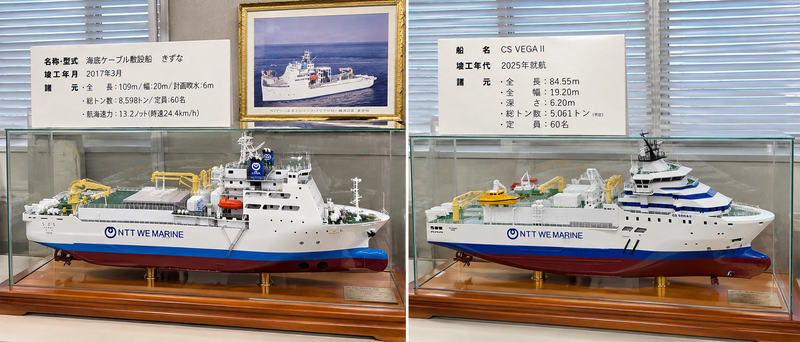
【Financial News correspondent Seo Hyejin in Tokyo】Demand for submarine cable construction worldwide is rising with the spread of artificial intelligence (AI), but specialized vessels needed to lay cables on the seabed and repair them when they break are in short supply. There are only 64 ships related to submarine cables worldwide, while the existing fleet is aging and the cost of building new vessels is soaring. In Japan, the shortage is eroding the profitability of submarine cable businesses, and the government is considering support on economic security grounds.
According to data provided by NTT World Engineering Marine, there were 64 ships related to submarine cables worldwide as of last September. Of these, 56 were large vessels with a gross tonnage (GT) of 5,000 tons or more, while eight were small vessels under 5,000 tons.
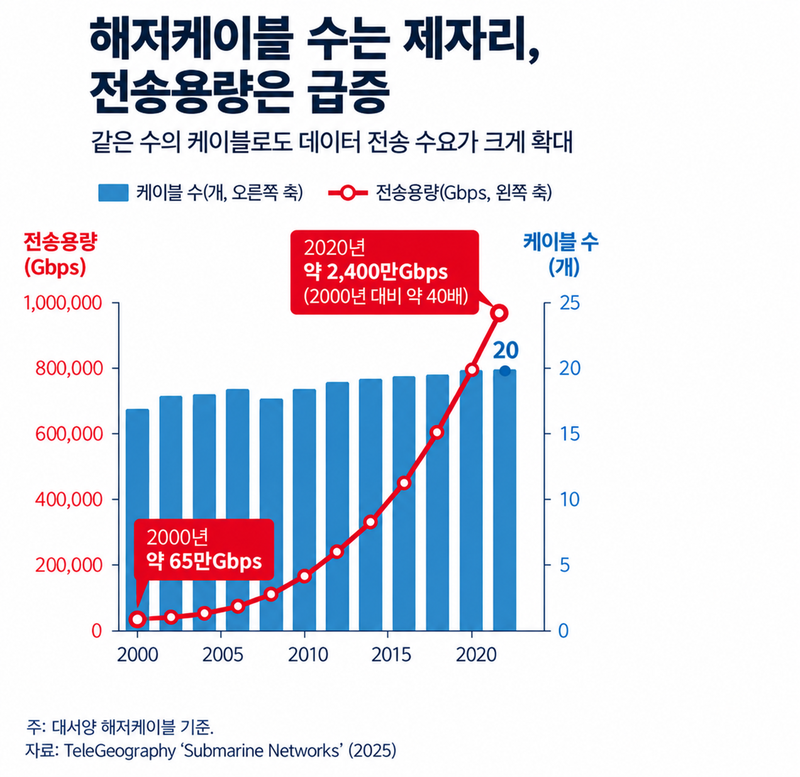
As global tech giants expand investment in undersea communications networks, demand for ships to lay new cables is increasing. But ships are also needed to repair faults in existing networks, intensifying competition to secure a limited number of vessels.
Raising cables from a depth of 7,500 meters...60 people deployed on a single repair ship
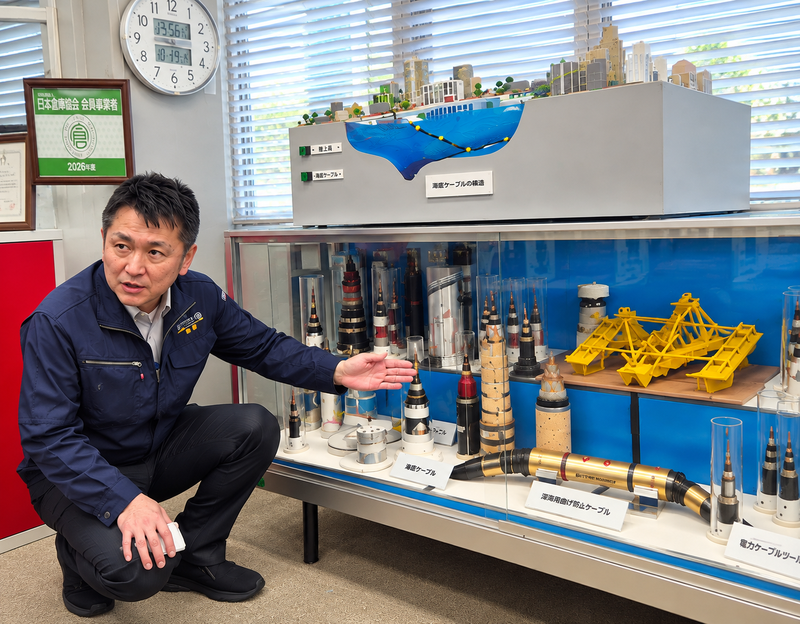
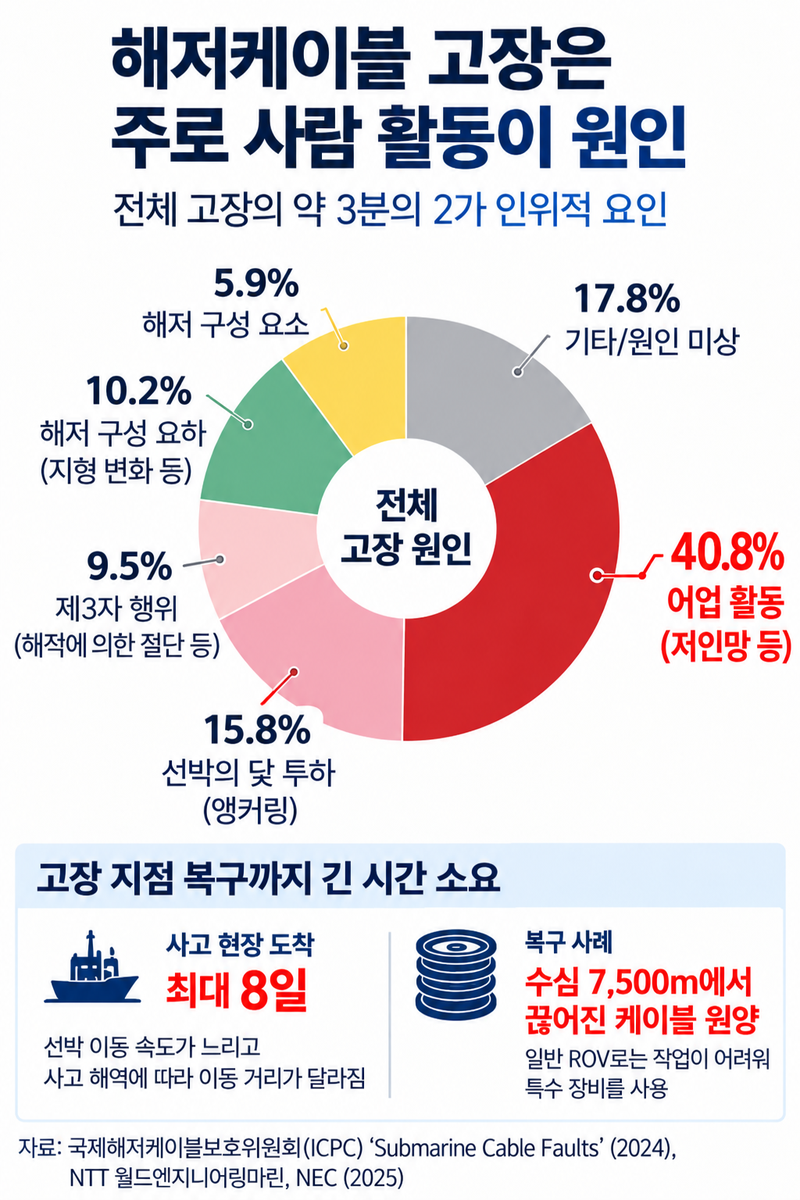
The NTT World Engineering Marine office in Yokohama, Kanagawa Prefecture, Japan, on the 14th. Among the repair cases NTT presented that day was a job to locate and raise a broken submarine cable from a depth of 7,500 meters. That is about twice the height of Mount Fuji.
At such depths, it is difficult to use conventional remotely operated vehicles (ROVs) for subsea work. Repair ships use specialized equipment to locate and haul up cables lying on the seabed. The damaged section is then cut out, a new cable is connected, and the cable is lowered back into the sea.
During the operation, the ship’s position must be maintained with precision despite waves and currents. In addition to equipment for locating and raising the cable, skilled personnel are needed to operate it.
An NTT representative explained, “About 60 people take part in each offshore operation,” adding, “We are training land-based fiber-optic cable technicians so they can also be deployed for offshore work.”
In one case, it took a repair ship eight days just to reach the accident site. Ships travel slowly, and the distance can be considerable depending on where the damage occurs. Even after reaching the site, more time is needed to locate and raise the cable and splice it.
Most submarine cable damage occurs in relatively shallow waters. According to data from the International Cable Protection Committee (ICPC) cited by NTT, fishing activities accounted for 40.8% of submarine cable faults. Ship anchors being dropped (15.8%) and third-party activities (9.5%) bring the share attributable to human factors to 66.1% of all faults.
By depth, 40% of faults occurred in waters 50 meters or shallower, and 34% in the 50–200-meter range. In other words, 74% of all faults occurred in waters 200 meters deep or less. This is why it is important to reduce the effects of ship traffic and fishing on submarine cable maintenance and repair.
Cable-ship construction costs at least quadruple...NEC also struggles to secure vessels
The shortage of ships is adding to the business pressures facing Japanese submarine cable companies. Takahiro Kashima, director of NEC’s Marine Business Development Division, said, “Many of the cable ships currently in operation are 20 to 30 years old,” adding, “In about 10 years, a considerable number of vessels may be retired.”
The cost of replacing aging ships is also a problem. Shinsuke Mitsui, president of NTT World Engineering Marine, explained, “A ship comparable to one built for less than 10 billion yen about 10 years ago would cost at least 40 billion yen (about 338.8 billion won) to build today.” That means construction costs for a comparable vessel have risen more than fourfold.
Submarine cable ships need large tanks to store thousands of kilometers of cable, equipment to lower cables into the sea or haul them up, and systems to maintain the ship’s position with precision. Unlike ordinary cargo ships, they require specialized equipment, making them costly and time-consuming to build.
The shortage of ships is also affecting the profitability of submarine cable construction companies.
NEC told Japan’s parliament in May that its submarine cable business had posted losses for two consecutive years, with offshore construction accounting for about 70% of the causes of those losses. The company said that without its own cable-laying vessels and with a reliance on external ships, it is difficult to manage construction schedules and costs reliably.
NEC is considering securing up to five ships by combining ownership with long-term charters. “To expand the business, we need to secure cable ships that we can use,” Kashima said, adding, “The shipbuilding industry is extremely busy, so it will take time.”
The Japanese government also views submarine cables as critical infrastructure directly tied to economic security and is considering measures to support the acquisition of cable-laying ships and strengthen maintenance and repair capabilities. Even if demand for submarine cable construction increases, a shortage of ships to lay the cables could hamper business expansion, while delays in repairs following a fault could threaten the stability of international communications networks.
As the global submarine cable market grows with the spread of AI, securing ships and skilled workers is emerging as a key challenge that will determine not only companies’ competitiveness in winning contracts but also the stability of national communications networks.
[email protected] Seo Hyejin Reporter