“Electricity base charges should be applied reasonably to early-stage AIDCs”
- Input
- 2026-10-26 10:54:02
- Updated
- 2026-10-26 10:54:02
[Financial News] Calls have been made for the government to apply electricity base charges reasonably to early-stage artificial intelligence data centers (AIDCs), which have no choice but to use less power than their contracted capacity, in order to foster AIDCs designated by the government as a national strategic industry.
The government is also being urged to flesh out early the grid code, a new technical standard for connecting to the power grid, so companies can predict their equipment investment and operating schedules.
Base charges should be calculated with phased ramp-up in mind
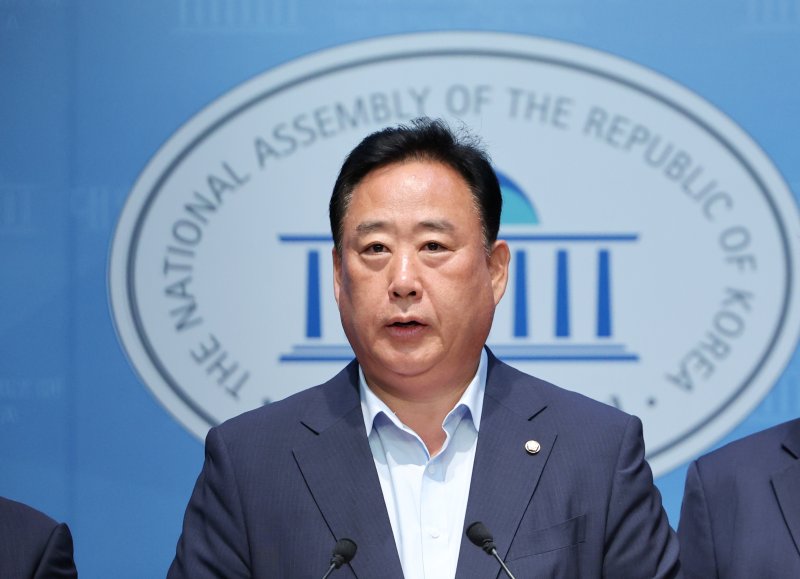
Rep. Uh Ki-koo of the Democratic Party of Korea (Dangjin, South Chungcheong Province; National Assembly Climate, Energy, Environment and Labor Committee) said on the 26th that he had urged the Ministry of Climate, Energy and Environment and Korea Electric Power Corporation (KEPCO) to improve the system to reduce the burden of early operations at AIDCs and uncertainty over power supply.Large-scale AIDCs often increase their power consumption in stages as they bring in servers and secure customers, rather than operating all their facilities as soon as construction is complete. This process of ramping up operations is called “ramp-up.”
Rep. Uh argues that rates and supply plans should reflect the gap between the amount of power ultimately needed and initial consumption.
The issue is how to calculate the base charge. For companies whose base charges are calculated based on peak demand, 30% of contracted capacity is applied as a minimum. Data centers that contract for large amounts of power in advance may therefore have to pay base charges based on a higher capacity, even if their initial peak demand falls below this minimum.
Rep. Uh pointed out that, since base charges cover the cost of securing and maintaining power supply facilities, actual usage and KEPCO’s schedule for bringing facilities online should both be taken into account. He said measures should be developed to reasonably share the initial burden and supply costs by reviewing operators’ phased operating plans alongside KEPCO’s facility investment schedule.
He also proposed that, provided operators submit plans for server deployment and power use and guarantee they will follow through, base charges during the ramp-up period be based on actual peak demand. He added that responsibility should also be defined for cases in which secured capacity goes unused for a long time without a valid reason, to prevent the preemptive reservation of grid capacity or the shifting of costs onto others.
Calls for early clarification of grid code requirements and support for local residents
Improving the predictability of the grid code, which sets standards for connecting to and operating on the power grid, was also identified as a task. The Ministry of Climate, Energy and Environment launched an AI Data Center Research Group last August and said it would establish standards reflecting domestic power system conditions by the end of this year.The grid code sets technical requirements to reduce the impact of large fluctuations in power demand on the grid. Rep. Uh stressed that required performance, applicability and implementation dates should be clearly defined so operators can account for the code from the design and investment stages. He also said transitional measures should be set out for projects already underway, such as exempting them from the requirements or allowing a sufficiently long grace period.
He said that using energy storage systems (ESS) and uninterruptible power supplies (UPS) to stabilize the grid should be designed as an incentive scheme, provided data centers’ emergency power functions are safeguarded. He explained that setting the required performance standards and cost responsibilities in advance could reduce confusion and delays caused by changes to facilities.
Rep. Uh said, “If we want to increase investment in AI data centers, companies must first be able to predict when and under what conditions they can receive electricity.” He added, “We should design base charges and supply plans to reflect the gradual increase in power demand, and quickly flesh out grid connection standards to a reasonable level.”
[email protected] Yoon Hong-jip Reporter