'International law is inferior to cannons'... An Jung-geun's eight characters and a private meeting
- Input
- 2026-10-26 09:33:13
- Updated
- 2026-10-26 09:33:13
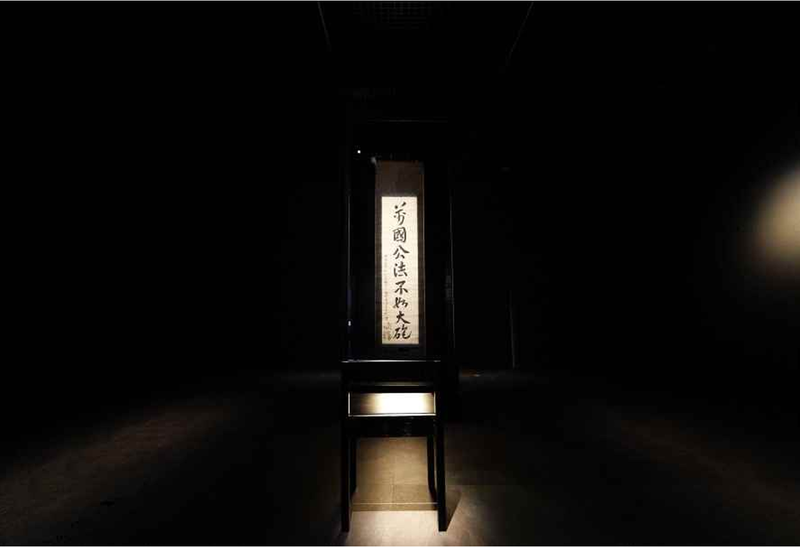
According to the National Palace Museum of Korea under the Korea Heritage Service on the 26th, the exhibition 'Dokdae: The Eight Characters Left by An Jung-geun' will be held from the 27th to December 27th at the museum's special exhibition hall in Jongno District, Seoul. This special exhibition commemorates the 117th anniversary of the Harbin patriotic deed and sheds light on Patriot An Jung-geun's convictions regarding national independence and peace.
The exhibited work, 'International Law Is Not as Good as a Cannon,' is a calligraphy piece written by An Jung-geun in March 1910 at Lushun Prison. It means that international law is inferior to a cannon. It contains a criticism of the reality in which international law, swayed by the logic of powerful nations, fails to protect the sovereignty of weaker nations.
Patriot An Jung-geun also wrote 'Treatise on Peace in East Asia' in Lushun Prison. He viewed Korea's independence and the cessation of Japanese aggression as prerequisites for peace in the East, and envisioned cooperation among Korea, China, and Japan.
The calligraphy returned to Korea last November following on-site investigations and repatriation procedures by the Overseas Korean Cultural Heritage Foundation, and was unveiled to the media for the first time on August 13. On the back, the circumstances under which Sadakichi Kurihara, the warden of Lushun Prison at the time, came to receive the calligraphy are written.
The exhibition space is designed to focus on a single piece of calligraphy. The flow of movement involves passing through a dark corridor designed to resemble the hallway of the old Lushun Prison, leading to an encounter with the illuminated calligraphy. It depicts the moment of the 'private audience' with An Jung-geun at Lushun Prison in 1910.
At the exit of the exhibition hall, a video experience space is provided where visitors can leave their thoughts on peace. If visitors place their hand on Ahn Jung-geun's handprint on the touchscreen and input a message, it will be displayed on a large screen in a vertical writing format.
Admission is free. It is closed on the last Monday of every month and is open from 9:30 AM. It is also open at night on Saturdays.
[email protected] Jang In-seo Reporter