Czech Ambassador to South Korea Ivan Jančárek: “Dukovany is not two nuclear reactors but an industrial cooperation platform” [fn’s People]
- Input
- 2026-10-26 14:48:31
- Updated
- 2026-10-26 14:48:31
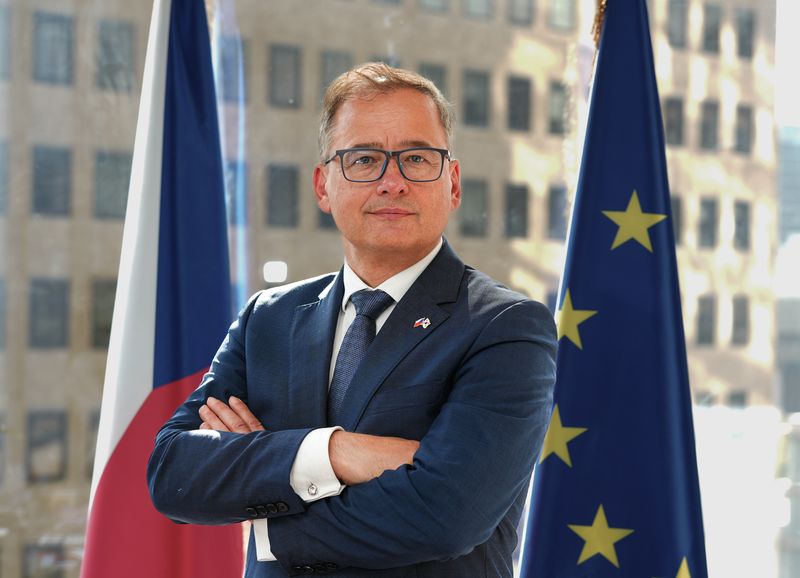
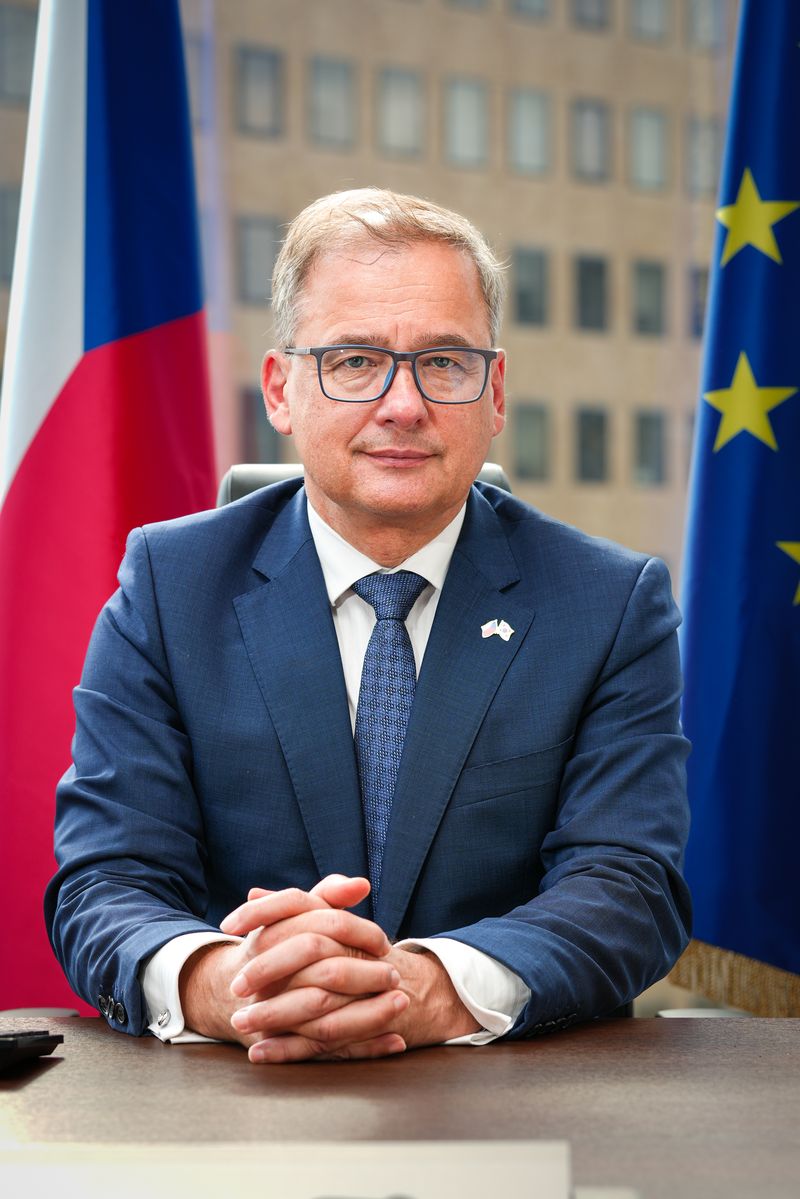
[Financial News]“What we want to gain from cooperation with South Korea is not a growth rate, but an industrial ecosystem. The new nuclear power plant at Dukovany could be a catalyst for boosting the competitiveness of the Czech manufacturing sector as a whole.”In an interview with Financial News on the 26th, Czech Ambassador to South Korea Ivan Jančárek said the new nuclear power plant project at Dukovany in the Czech Republic was not “a contract to build two power plants,” but “an industrial cooperation platform combining the Czech Republic’s manufacturing base with South Korea’s nuclear technology and project delivery experience.” Team Korea, led by Korea Hydro & Nuclear Power, was selected as the preferred bidder for the Dukovany Units 5 and 6 project in July 2024 and signed the final contract last year. The project involves building two APR1000 units in the 1,000-MW class, with a total cost of around 400 billion koruna, or well over 20 trillion won. The Czech Republic already operates four units at Dukovany and two at Temelín, generating about 40% of its electricity from nuclear power.
“The energy industry is a growth engine ... the two countries are alike”
Ambassador Jančárek pointed to manufacturing, particularly heavy industry and mechanical engineering, as common ground between the two countries. He said, “What the Czech Republic is focused on is not simply economic growth, but the creation of a strong industrial ecosystem,” and praised South Korea for “making manufacturing a central pillar of national development while pursuing technology development, workforce training and supply chain development at the same time, thereby raising competitiveness across the industry.”
He added, “If a high level of localization enables Czech companies to participate meaningfully in the supply chain and build new capabilities, this project could become a turning point that transforms the manufacturing sector as a whole, extending beyond nuclear power.” He stressed that “the ultimate goal is to build a long-term partnership in which the two countries grow together and pursue projects together in third-country markets.”
Nuclear power projects in Europe have recently been plagued by construction delays and cost overruns. Finland’s Olkiluoto 3, France’s Flamanville 3 and the United Kingdom’s Hinkley Point C are prominent examples. It is widely believed that South Korea’s on-time, on-budget track record was decisive in the Czech Republic’s choice of South Korea.
He said, “The ability to meet schedules and budgets was one of the most important factors in the evaluation process,” adding that “we examined not only technical excellence but also actual project delivery capabilities in detail.”
He summarized the strengths of South Korea’s proposal in two points: a project schedule that clearly specified the start and completion dates, and a contract structure that imposed liquidated damages for delays if those dates were not met. He said, “It gave us a high level of confidence in project management and commitment to delivery.”
That was further supported by South Korea’s domestic nuclear power projects and its track record at the Barakah Nuclear Power Plant in the United Arab Emirates (UAE). He stressed, “What the Czech Republic valued was not just price competitiveness or technological superiority, but the confidence that comes from a proven track record of completing projects on schedule and within budget.”
Many analysts say the strength of South Korea’s nuclear industry comes not from any single company, but from the concentration within the country of an industrial ecosystem spanning design, manufacture of major components, construction, operation and maintenance, along with a skilled workforce. Only a handful of countries can manufacture key equipment such as reactors, steam generators and turbines all at one plant.
He said, “A closely integrated industrial ecosystem is one of the key competitive strengths of South Korea’s nuclear industry,” explaining that “because its core capabilities are organically connected, both quality control and project predictability are enhanced.” He added, “What the Czech Republic particularly values is that these manufacturing capabilities are integrated into a broader industrial ecosystem.” He stressed that “we could expect reliable project delivery from South Korea, which has built new nuclear power plants for decades, developed its technology, workforce and industrial base, and plans to build additional new nuclear plants at home to sustain them.”
A century of turbines in Plzeň: Doosan Škoda Power
The fact that a Korean company already has Doosan Škoda Power, a turbine manufacturer in Plzeň, Czech Republic, as an affiliate is seen as evidence that it had taken root in the local industrial ecosystem even before technology transfer was discussed. He said, “Cases like Doosan Škoda Power show that industrial cooperation between the two countries did not emerge suddenly, but has built up over a long period,” also citing investment and job creation by Doosan, Hyundai Motor, Hyundai Mobis and Nexen Tire.
He said, “The evaluation took into account technological capability, safety, project delivery capability, economic viability and the potential for long-term cooperation,” adding that “experience with existing industrial cooperation provided a meaningful foundation for understanding each other’s industrial environments and corporate cultures.”
On the Škoda brand, he said it was “a name that symbolizes the Czech Republic’s industrial tradition and engineering heritage,” and praised Doosan Škoda Power’s participation, saying it “shows that the technological and manufacturing capabilities the Czech Republic has built up over a long period remain competitive in future energy projects.”
Hydrogen and renewable energy are seen as areas for expanding cooperation. He said, “In Europe’s energy transition, nuclear power, renewable energy and hydrogen are complementary, not competing,” adding that “if renewable energy is at the heart of decarbonization, nuclear power supports the grid with stable, predictable electricity, and clean hydrogen produced using that electricity could become an important field for the future.”
Korea Hydro & Nuclear Power and the Czech Hydrogen Technology Platform (HYTEP) agreed to cooperate on nuclear-based clean hydrogen production and technology development. Hydrogen and nuclear power were also discussed at the Korea-Czech Republic Industrial and Energy Technology Cooperation Forum held in Prague that same year.
Ambassador Jančárek predicted, “If cooperation expands to include small modular reactors (SMRs), hydrogen, energy storage and renewable energy, the two countries can develop beyond nuclear power partners into comprehensive energy partners.”
[email protected] Kang Gu-gwi Reporter