“Eight surgeries under general anesthesia”: Kim Hong-pyo on why he stopped acting at the height of his career [Health Talk]
- Input
- 2026-10-26 05:00:00
- Updated
- 2026-10-26 05:00:00
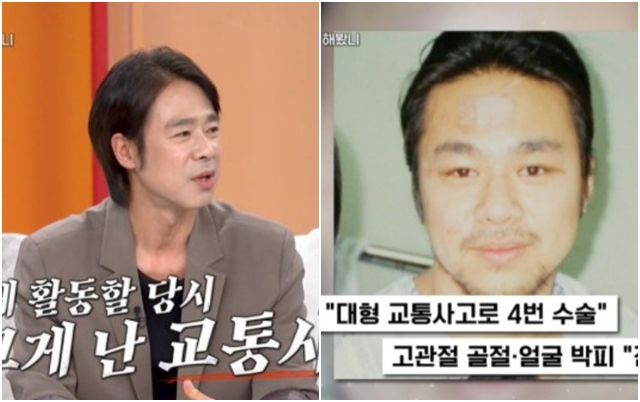
[Financial News] Actor Kim Hong-pyo said he underwent eight surgeries under general anesthesia after a traffic accident and spent a year in the hospital. When someone is hospitalized for a long time after major trauma, it is important to manage not only recovery of the injured area but also complications such as loss of muscle mass and strength and blood clots.
Kim Hong-pyo appeared on MBN’s Dongchimi, which aired on the 24th, and recounted how a traffic accident forced him to stop acting.
Kim Hong-pyo recalled, “I was in a serious traffic accident when I was busy appearing on TV. I was driving a car belonging to an older friend when I got into an accident on the highway. When I opened my eyes, I was in the hospital.”
He continued, “I was in the hospital for a year and had eight surgeries under general anesthesia. I thought I would recover quickly because I was 24, but my recovery was slow.”
He also struggled to continue acting after the accident. He said, “I was working as an actor, but partway through, the work became difficult, so I did something else for about five years.”
He also opened up about mental health difficulties after the accident. Kim Hong-pyo said he was told it would be difficult to return to television and that he had experienced panic disorder, bipolar disorder and obsessive-compulsive disorder.
Comedian Seong-Ho Jeong, who appeared alongside him, said he had been friends with Kim Hong-pyo since university. He recalled that Kim went through a difficult time after the accident, avoiding meeting people, among other things.
Prolonged bed rest quickly reduces muscle mass and strength
Major injuries from a traffic accident may require a substantial recovery period even after surgery. In particular, prolonged immobility can cause changes not only in the injured area but also in otherwise healthy muscles.
According to the “Muscle Loss” information from the Korea Disease Control and Prevention Agency’s National Health Information Portal, muscles decrease in size and function the longer they go unused. Changes caused by reduced muscle use due to prolonged bed rest or immobilization in a splint are called “disuse muscle atrophy.”
A decline in muscle strength due to bed rest can occur even over a relatively short period. The Korea Disease Control and Prevention Agency says muscle strength may decrease by 10–20% within one week of bed rest.
When muscle mass decreases, even basic movements such as walking, climbing stairs and standing up can become difficult. In particular, after a long hospital stay, it may take additional time to regain strength even after the injury itself has healed.
Leeds Teaching Hospitals in the UK says that reduced activity during a hospital stay can lead to “deconditioning,” a decline in strength and mobility. If a lack of movement persists, people may tire easily and their ability to carry out daily activities may also decline.
Kim Hong-pyo also said that, although he was 24 at the time of the accident, his recovery was slower than he had expected. However, the specific injuries and surgical details have not been disclosed, making it difficult to identify why his recovery was delayed.
Reduced movement after surgery also raises the risk of blood clots
During prolonged bed rest, people need to watch for blood clots as well as muscle loss.
A blood clot is a mass formed when blood coagulates inside a blood vessel. Deep vein thrombosis, in which a clot forms in a deep vein in the leg, is a complication that can occur in patients whose movement is restricted after surgery.
The UK’s National Health Service (NHS) classifies significantly reduced mobility or surgery during a hospital stay, as well as being confined to bed for three days or more, as risk factors for deep vein thrombosis.
If the legs are not moved for a long time, blood flow through the veins can slow down. The body’s response to surgery and trauma can also increase the risk of blood clots.
Deep vein thrombosis can cause swelling or pain in one leg. If part of a clot breaks off and blocks a blood vessel in the lungs, it can lead to a pulmonary embolism, which may cause sudden shortness of breath or chest pain.
Royal Free London Hospital in the UK says that, depending on the patient’s condition, early walking, compression devices and anticoagulants may be used to reduce the risk of blood clots after prolonged bed rest and surgery.
However, not every patient can move immediately after surgery. Depending on the injury and treatment—for example, in cases of fractures or spinal injuries—movement may need to be restricted, so activity levels should be adjusted in accordance with medical professionals’ advice.
Recovery after repeated surgeries depends on the extent of the injury and rehabilitation
Undergoing several surgeries under general anesthesia does not necessarily lead to long-term complications. Nor is it easy to determine the recovery period or extent of physical damage based solely on the number of surgeries.
Recovery time is affected by factors such as the type and extent of the injury, the surgical method, whether complications such as infection or bleeding occur, and the patient’s pre-existing health.
The NHS says it is important to maintain as much movement as possible during recovery after surgery. This is because lying down for a long time can cause blood to pool in the veins of the legs, increasing the risk of clots.
Depending on the patient’s condition, rehabilitation is carried out in stages and may include joint exercises, strength training, balance training and gait training.
Mental health problems can also arise after a traffic accident
After experiencing a serious traffic accident, people may develop mental health problems in addition to physical injuries.
After a traumatic event such as an accident, if recurring memories of the accident, anxiety, insomnia or avoidance behaviors persist, a mental health assessment—including an assessment for post-traumatic stress disorder (PTSD)—may be needed.
However, not everyone who experiences a traffic accident develops PTSD. Anxiety or depressive symptoms that arise after an accident do not necessarily mean that a person has PTSD.
Kim Hong-pyo said on the program that he experienced panic disorder, bipolar disorder and obsessive-compulsive disorder after the accident, but did not disclose details of the diagnostic process or whether each condition was caused by the traffic accident.
Assessing mental health and receiving any necessary treatment, separately from physical rehabilitation, is also part of recovery after major trauma.
The NHS recommends early activity suited to a patient’s condition to aid recovery after surgery, while noting that patients with restricted movement need additional care, including measures to prevent blood clots. The Korea Disease Control and Prevention Agency likewise explains that prolonged reductions in activity can lead to declines in muscle strength and physical function.
[email protected] Han Seung-gon Reporter