Kim Jong Un’s surprise China visit: ruling party calls it “groundwork for a North Korea-U.S. talks,” opposition cites “NIS intelligence gaps”
- Input
- 2026-10-25 20:15:05
- Updated
- 2026-10-25 20:15:05
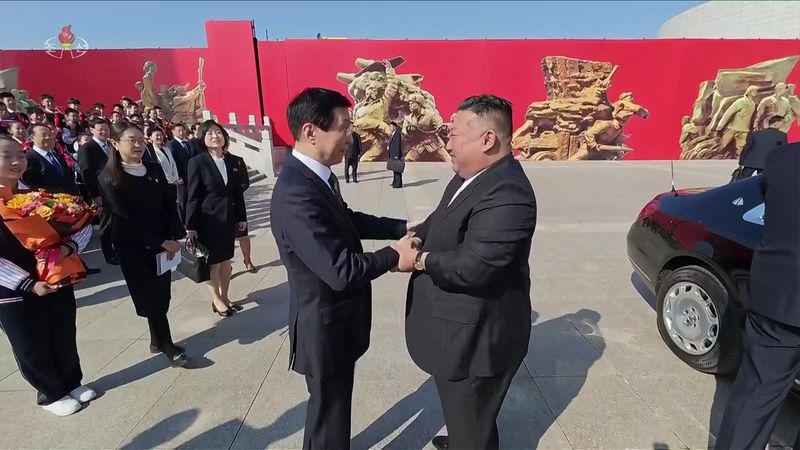
The People Power Party criticized what it called confusion over intelligence during Kim’s visit to China. Kim was initially reported to be meeting Chinese Premier Li Qiang, but it was later confirmed that he had met Wang Huning, chairman of the National Committee of the Chinese People’s Political Consultative Conference, prompting questions about the NIS’s ability to collect and analyze intelligence on North Korea. The party also criticized the government, arguing that it should respond more actively to North Korea’s actions on the international stage.
In response, the Democratic Party of Korea cited the Lee Jae Myung administration’s continued behind-the-scenes coordination for dialogue between North Korea and the United States, which has kept the door to dialogue open, as well as its formal proposal for inter-Korean military talks. It countered, “We should make the South Korea-U.S. alliance the central axis of our diplomacy while avoiding antagonizing any country and expanding opportunities for cooperation.” The party also assessed Kim’s visit to China, saying, “North Korea is expanding trade with China and continuing military cooperation with Russia, while keeping open the possibility of dialogue with the United States and broadening its diplomatic position.”
Earlier, on the 24th, Democratic Party of Korea lawmaker Yun Kun Young, the party’s ranking member on the National Assembly Intelligence Committee, also raised the possibility that Kim’s visit to China could be “a positive signal for a North Korea-U.S. summit.” However, he cautioned that it could also have been an event related to North Korea-China relations, such as the opening of the New Yalu River Bridge, and said it was difficult to conclude that the visit was a move to prepare for a North Korea-U.S. summit.
[email protected] Jiwon Song Reporter