“Why Do You Always Come Home Late, Dad?” ... The Answer I Only Understood After Becoming a Father [Those Words from Back Then]
- Input
- 2026-10-25 20:00:00
- Updated
- 2026-10-25 20:00:00
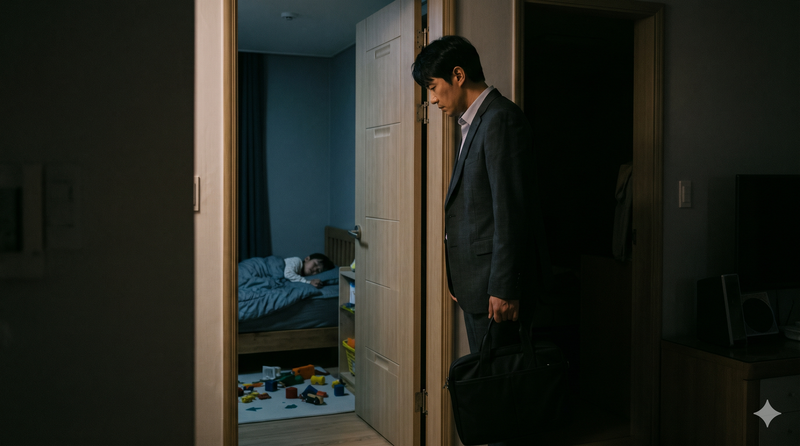
[Financial News] 10:30 p.m. I carefully opened the front door of the apartment. The living room was dark, and the side dishes on the dining table had gone cold. From the bedroom came only the steady sound of my child breathing. The toy they had played with during the day stood beside the bedding.
“Dad, you’ll be home early today, right?”
On my way to work, I promised the child who clung to my trouser leg, “I’ll be home early,” but once again, I failed to keep that promise. As I stroked my sleeping child’s hair, a memory from long ago suddenly came back to me.
“Why do you always come home late, Dad?”
It was a question tinged with hurt that I had asked my father as a child. Decades have passed, and now I’m the one being asked it.
■ The Person I Understood Least in the World
When I was a child, my father always seemed to choose the world outside the home. When I woke up in the morning, he wasn’t there, and more often than not, he came home late at night. On sports day, I envied my friend’s father, who kicked a ball around with me and taught me to ride a bicycle.
There was no way my young mind could know what humiliations my father endured at work or how heavy a burden he carried. All that mattered was that he wasn’t by my side. When he occasionally came home early, the whole family would be excited, but those moments were always far too brief.
■ The Weight of a Mortgage ... The Reality I Faced as an Adult
Time is strange. Once I reached the age my father had been, though I thought I could never understand him,things I hadn’t seen before became clear.
The joy of payday is fleeting. After the mortgage principal and interest, maintenance fees, insurance premiums, and my child’s education expenses are deducted one after another, there’s little left in the account. The ambition of youth has been gone for a long time.
What’s at stake at work now is not my pride but my family’s livelihood. I swallow unfair reprimands, drag my aching body to work, and push through to finish the job, even if it means putting off promises to my family.
On the subway ride home, exhausted, I look at photos of my child on my phone, and just as my heart grows heavy, my father suddenly comes to mind. Before opening the front door, did he ever reproach himself, wishing that just for that day he could be a good dad? I never asked him, but now I think I understand a little.
■ A Father Wasn’t Always a Father
We often mistakenly imagine that our parents have been parents since birth: beings who are always strong, solve every problem, and are expected to sacrifice for their families.
But my father, too, was once a boy with many dreams and an adult inexperienced at living a life for the first time. Behind the joy of holding his child for the first time, there must have lurked a daunting fear of not knowing how to take responsibility for this new life. His child could not see the deep anxiety hidden beneath the coat of “father”—a role that demanded he always be perfect.
They were family, but they spoke different languages when it came to expressing love. My father believed that working himself to the bone was love, while his child saw spending time together, looking one another in the eye, as love. The years passed as they remained out of step: my father grew old, and his child became an adult.
■ The Answer I Want to Give My Child Tonight
11 p.m. My child will ask again tomorrow morning. This time, instead of making the empty promise that I’ll definitely be home early, I want to look my child in the eyes and say this:
“I want to spend lots of time playing with you, too. I may be late today, but let’s definitely play soccer together this weekend.”
I want to engrave my father’s devotion and sense of responsibility in my bones, but I don’t want to pass on the deprivation I felt as a child. That may be the most beautiful way for a child who has become a parent to repay the sacrifices of the generation before them.
Tonight, I think I’ll call my father, who has been taciturn all his life.
“Father, it must have been really hard when you worked at the company back then, wasn’t it?” Nine times out of ten, he’ll brush it off matter-of-factly, saying, “That’s just how life is for everyone,” but now I understand the weight of all the years layered behind that blunt answer.
The many nights when my father came home especially late. Perhaps he wanted to get home early just as much as I do. It was only after 30 years that I finally found something I wanted to say.
“Dad, thank you for working so hard today, too.”
[email protected] Jeon Sang-il Reporter