“They say home prices are up 500 million won, but my bank account is empty”... The startling reality for Seoul homeowners with just one home [House Signal]
- Input
- 2026-10-25 19:00:00
- Updated
- 2026-10-25 19:00:00
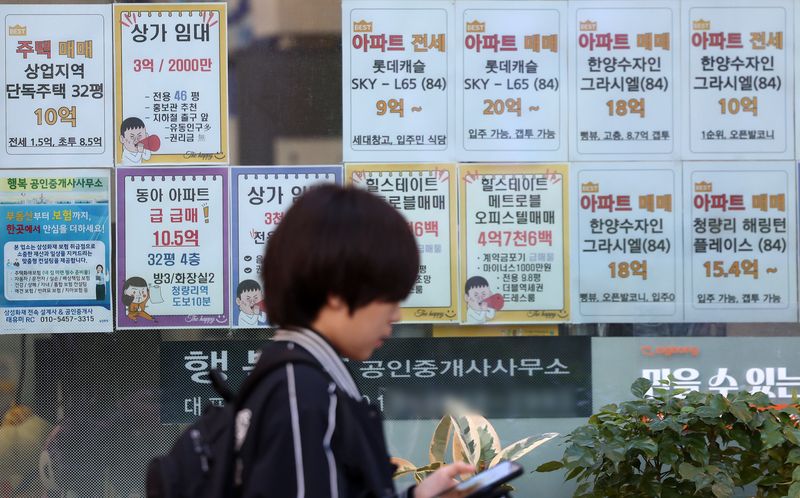
[Financial News] Several years ago, an office worker managed, with difficulty, to buy a single apartment in Seoul. Recently, news spread that the actual sale price of the complex where he lives had risen by as much as 500 million won since he bought it. People around him showered him with congratulations and envy, saying, “You made 500 million won just by sitting there, so now you’re rich.”
But when he checks his bank account on payday, reality is bleak. That 500 million won exists only on the screen of a real estate app.
Once the principal and interest on his mortgage have been deducted, and he has paid for food and tutoring for his rapidly growing child, along with the monthly maintenance fees and utility bills, his bank balance soon hits rock bottom. A 500-million-won rise in home prices does not mean he can buy his child a tastier dinner or take the family on a carefree weekend trip. The home has grown in value, but the family’s life has become no more comfortable.
■ “The ‘sin’ of sitting on my own home”... Holding taxes on an 84m2 Mapo apartment jump by 1.5 million won
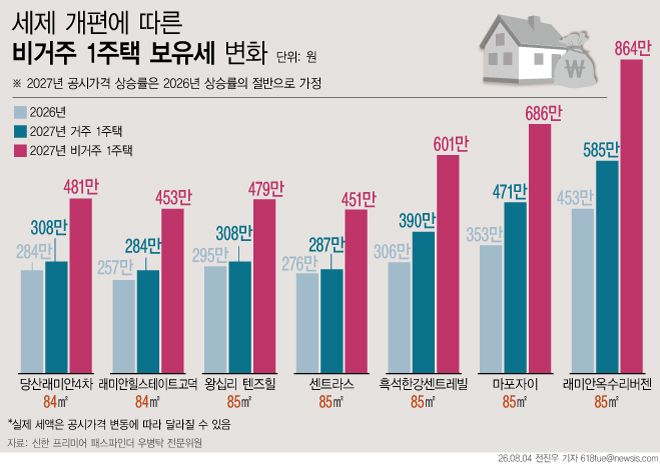
Rising home prices inevitably bring a bill: taxes. Regardless of the owner’s cash flow, the annual cost they must bear simply because their asset has risen in value grows like a snowball.
Estimated figures for actual holding taxes illustrate this. According to apartment price assessment data released by the Ministry of Land, Infrastructure and Transport, the assessed value of an 84m2 unit at Mapo Raemian Prugio in Ahyeon-dong, Mapo District, Seoul, rose about 30.9% (407 million won), from 1.316 billion won to 1.723 billion won.
As a result, the annual holding taxes payable by the household are estimated to rise by about 1.5 million won, from 2.89 million to 4.39 million won. That works out to an additional tax burden of 125,000 won a month. That amount could cover one of a child’s arts or sports classes or help pay a family of four’s food costs for a week. Home prices have risen by hundreds of millions of won, yet the household has 1.5 million won less in cash available to spend—a painful contradiction.
The gap is almost unimaginable when it comes to high-priced homes. The assessed value of an 84m2 unit at Raemian One Bailey in Banpo-dong, Seocho District, has jumped to 4.569 billion won, bringing estimated holding taxes alone to 28.55 million won. Taxes alone have risen by 10.26 million won in a year. That means paying 2.38 million won a month purely in “taxes to keep the home.”
■ The 500-million-won mirage... “If you can’t sell, it isn’t your money”
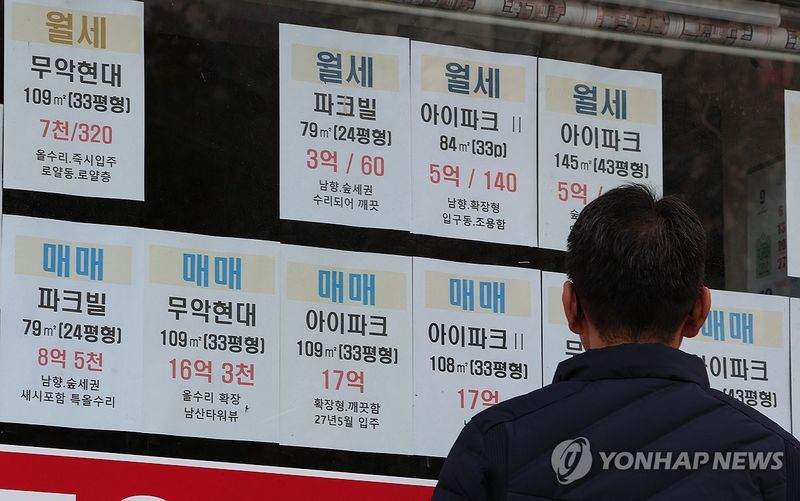
One might retort, “If taxes are a burden, why not sell the home and pocket the capital gain?” But for an ordinary homeowner with just one property, it is not as easy as it sounds.
Suppose an apartment bought for 700 million won five years ago is now worth 1.2 billion won. On paper, that’s a 500-million-won gain. But even if the owner sells to realize that gain, the family needs to find another home if they are to keep living in Seoul. If my home has risen in value by 500 million won, similar apartments nearby have risen by just as much. The sale proceeds are swallowed up entirely by the cost of finding a new home.
Once taxes, brokerage fees and moving expenses are deducted, there is nothing left in hand.
But downsizing or moving far out to the suburbs would exact too harsh a price: the daily hell of commuting and the disruption to the child’s educational environment. In the end, no matter how much home prices rise, a homeowner with just one property cannot get their hands on that 500 million won as long as they remain tied to the home.
■ A 500,000-won pay raise matters more than a 500-million-won rise in home prices
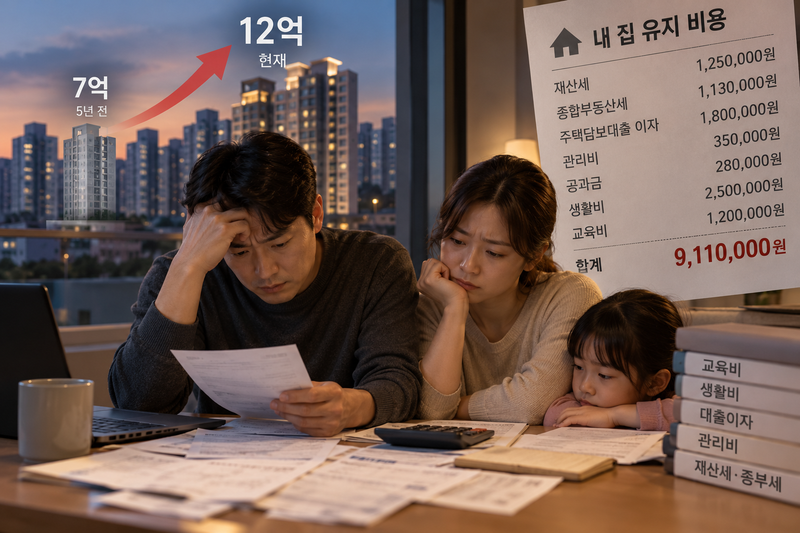
For an ordinary dual-income couple, which would do more to improve daily life: a 500-million-won increase in assets on paper, or a 500,000-won pay raise deposited into their bank account right away?
A 500,000-won increase in monthly pay means 6 million won in additional disposable income a year. They could choose different dishes when eating out on weekends, replace their child’s worn-out sneakers, and get some breathing room from the burden of an overdraft line of credit. By contrast, even if home prices rise by 500 million won, the immediate cash coming in is zero. Instead, squeezed by loan interest and rising property taxes, the household budget becomes even tighter.
On Sunday evening, countless household breadwinners who own just one home once again set their alarms for the morning commute. Their assets have clearly grown by hundreds of millions of won, earning them the label “rich,” but tomorrow they will still head to the company cafeteria to save on lunch. They took on decades of debt to own a home, and now they must endure decades more in a swamp of taxes and interest to hold on to it.
The reality is that the home on paper grows fatter, while the lives of the families living inside it grow ever leaner.
That is why ordinary Seoul homeowners with just one property cannot bring themselves to smile broadly, even when they hear the news that home prices have risen by 500 million won.
[email protected] Jeon Sang-il Reporter