“The heart shifted to the right with every meal”... A strange phenomenon inside a 65-year-old man [Unusual Signs]
- Input
- 2026-10-25 17:30:00
- Updated
- 2026-10-25 17:30:00
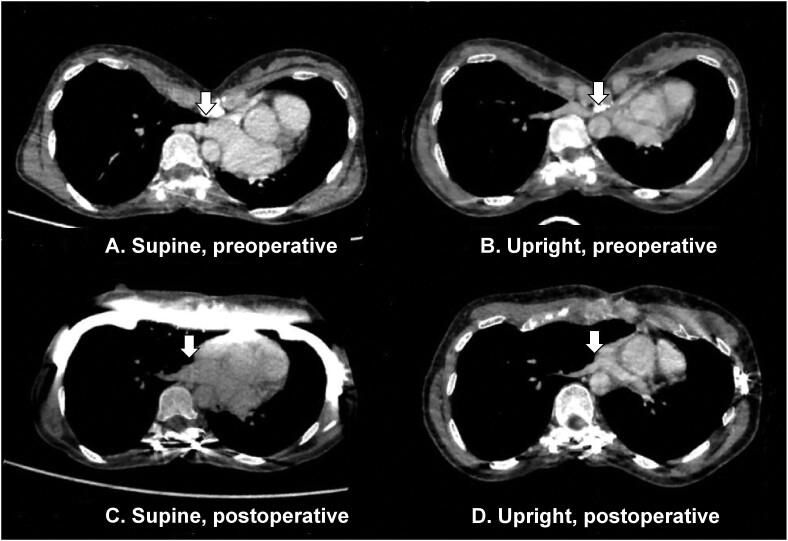
[Financial News] When he ate, his heart was pushed to the right, and once digestion was complete, it returned to its original position. This strange phenomenon in the human body, seemingly straight out of a science-fiction movie, was actually happening inside a 65-year-old man.
On the 23rd (local time), the U.S. medical news outlet Medical Daily covered an extremely rare case of “temporary rightward displacement of the heart” in a 65-year-old man, reported in the international journal Case Reports in Pulmonology.
The man’s condition first came to light when he went to the emergency room with severe chest pain. The medical team could not hide their surprise when they saw him, after he had been diagnosed with acute myocardial infarction (NSTEMI) and taken in for coronary artery bypass surgery. His heart was positioned far to the right of its normal location. At the time, the doctors mistakenly thought the heart had been pushed over because the left lung was excessively expanded while part of the right lung was congenitally absent.
The diagnosis was completely overturned two years later, when the man underwent a detailed abdominal CT scan for severe heartburn after meals. The scan showed that his right lung was present and normal. The real problem lay in the “diaphragm,” the muscle separating the chest and abdomen.
The man had congenital diaphragmatic eventration: the tissue of his left diaphragm was abnormally thin and weak, causing it to rise high into the chest.
This abnormal structure set off a chain reaction every time he ate. As his stomach swelled after a meal, the adjacent colon rose upward. Because the diaphragm was positioned high, the space in his chest became extremely compressed, pushing his entire heart to the right. Once the food was fully digested and the organs contracted, his heart returned as if by magic to its original position. This was entirely different from “dextrocardia,” in which the heart is on the right from birth: it was a physical displacement caused by organ distension that developed later in life.
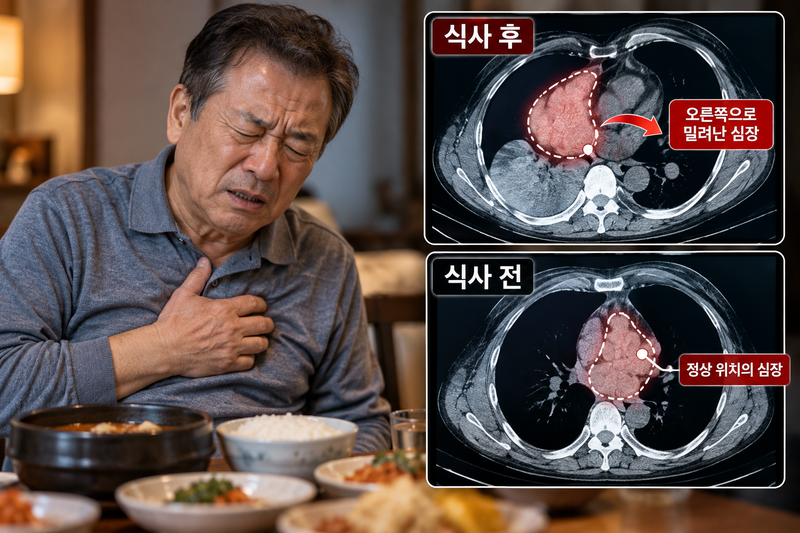
The medical team said this reversible shift of the heart was an exceptionally rare case, with few precedents anywhere in the world.
Fortunately, he had no serious complications such as severe breathing difficulties or bowel obstruction, so he was prescribed conservative treatment with acid-suppressing medication and laxatives rather than undergoing potentially onerous diaphragm repair surgery.
What made this case unusual was that the change in the heart’s position was directly linked to eating. Congenital diaphragmatic eventration itself is rare, but it is even rarer for the heart to shift whenever the digestive organs expand and then return to its original position. There is no need to suspect that your heart is moving just because you experience chest tightness or heartburn after a meal. Post-meal discomfort can also have much more common causes, such as gastroesophageal reflux disease.
The important thing is not to dismiss symptoms as simple indigestion when they recur or worsen. In particular, if chest pain spreads to the left arm or jaw, or is accompanied by cold sweats or difficulty breathing, the possibility of an emergency such as a heart attack should be assessed first.
It came down to the meals we eat every day, and the stomach and intestines swelling as they take in food. An ordinary meal can even change the position of the heart. This case will remain a remarkable and mysterious medical record, demonstrating how precisely and intricately the internal organs of the human body fit and function together.
[email protected] Jeon Sang-il Reporter