[Exclusive] Remodeling added to the “supply-at-all-costs” playbook... MOLIT to hold large-scale meeting next week
- Input
- 2026-10-26 17:05:31
- Updated
- 2026-10-26 17:05:31
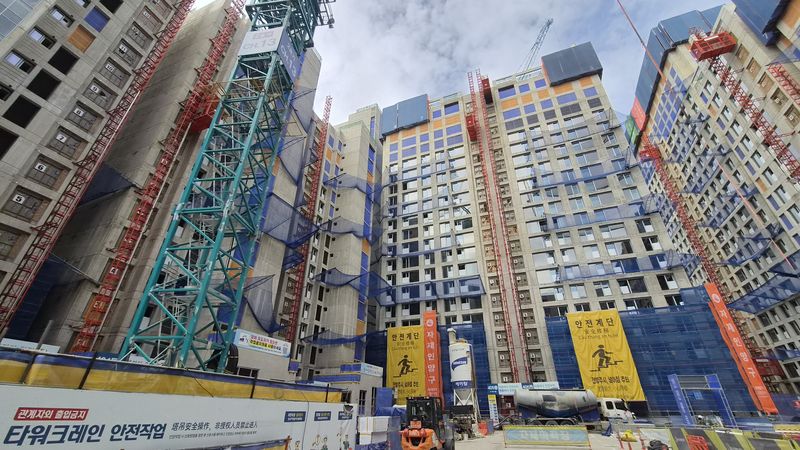
According to this newspaper’s reporting on the 25th, the Ministry of Land, Infrastructure and Transport will invite remodeling industry representatives on November 4 to lay the groundwork for improving the system. The Korea Remodeling Association, the Seoul Remodeling Council, the Korea Remodeling Convergence Society and remodeling safety inspection agencies are expected to attend. The first meeting is expected to serve as a kickoff and introductory session, with the possibility that meetings will later become regular. A ministry official explained, “The aim is to keep hearing about areas for improvement in remodeling and act on them, as with other urban renewal projects such as redevelopment and reconstruction.” The official added, “System improvements were included in last year’s September 7 Housing Supply Plan, but implementation has not been completed in full,” and said, “We plan to continue gathering additional views.”
It has been 13 years since the ministry last organized a meeting directly inviting industry representatives, in 2013. In 2011, it formed a task force (TF) to address the issues of allowing an increase in the number of households and permitting vertical extensions; in 2013, it formed another TF on allowing vertical extensions. The groups held regular meetings once or twice a week for three to four months. Later, in 2016, industry representatives visited the ministry about five times to resolve the issue of moving load-bearing walls between units, but failed to find a breakthrough.
The ministry also held a small meeting with stakeholders, including the Korea Remodeling Association, last December, but this is the first time safety inspection agencies have been brought together as well. The industry is paying attention to this. Lee Dong-hoon, CEO of Muhan Architecture and chair of the Korea Remodeling Association’s Policy and Regulations Committee, said, “The views of safety agencies are paramount in vertical-extension remodeling projects,” adding, “It is highly unusual to organize a large-scale meeting that includes safety agencies.”
With the government making expanded housing supply a key national policy priority, it is signaling that it will give favorable consideration to easing remodeling regulations. In August, it issued for legislative notice a proposed amendment to the Enforcement Decree of the Housing Act that would, among other things, lower the consent threshold for remodeling permits from 75% to 70% and add institutions to review the safety of vertical extensions. A ministry official said, “The amendment is expected to be finally promulgated as early as November,” adding, “It appears likely to take effect immediately next year.”
As successful examples of remodeling projects that increase the number of households have emerged one after another, observers say it is becoming clear that remodeling can deliver a supply impact comparable to redevelopment and reconstruction. The Sharp Bundang Highist, now under construction in Bundang District, Seongnam, will be reborn as a 1,149-unit complex, an increase of 143 units from its current 1,006. According to remodeling master plans drawn up by local governments nationwide, around 2,400 complexes could increase their number of units, encompassing about 1.8 million households. Assuming each increases its number of units by 15% under the current Housing Act, about 2.07 million newly built homes could be supplied.
[email protected] Jeon Min-kyung, Choi Ga-young Reporter