Renewed airstrikes or a negotiated deal? Tensions over Iran flare again
- Input
- 2026-10-25 15:58:57
- Updated
- 2026-10-25 15:58:57
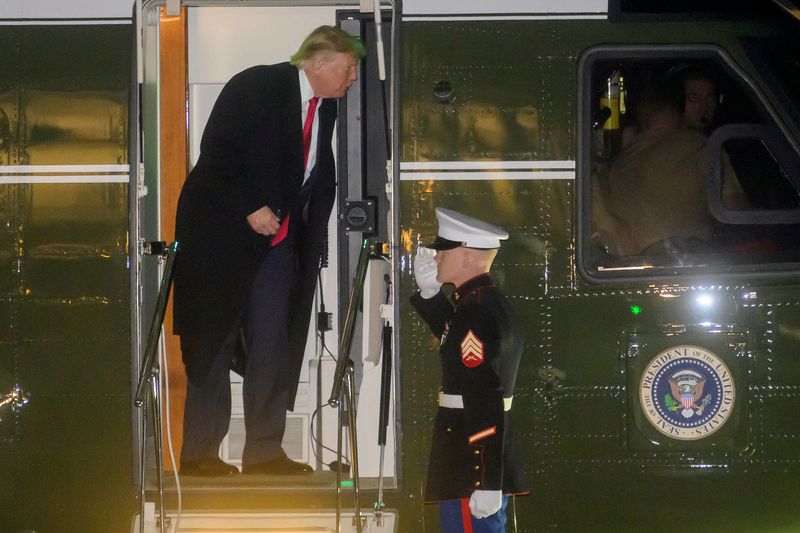
[Financial News] Tensions surrounding Iran are rising again. U.S. President Donald Trump has hinted at the possibility of an early airstrike as well as negotiations with Iran, while Iran has reportedly drawn up plans to attack U.S. officials, including those in the Middle East.
On the 24th (local time), Al Jazeera reported that President Trump had said he was considering attacking Iran as early as the 25th, adding that this showed he was pursuing both options: completing the existing mission through military operations or reaching a negotiated settlement with Iran.
On the 21st, President Trump told reporters that no negotiations were underway with Iran and that something could happen soon. The New York Times (NYT), citing an anonymous U.S. government official, previously reported that the U.S. and Israel had plans to strike Iran again after the U.S. midterm elections early next month.
The NYT said it believes the U.S. and Israel are preparing a third large-scale attack on Iran. It reported that U.S. intelligence agencies had obtained credible information that Iran was planning attacks targeting Americans at home and abroad, posing a risk that the situation could escalate into a full-scale war. It also analyzed that, although both the U.S. and Israel have elections ahead, Israeli Prime Minister Benjamin Netanyahu could attempt a final airstrike, while President Trump may also seek to demonstrate that he is commander in chief.
The Hill, a U.S. political news outlet, reported that United States Central Command (CENTCOM), which is responsible for the Middle East, is ready to launch airstrikes as soon as it receives an order from the White House, and that President Trump will make the final decision on whether to proceed with an operation after considering various options.
Gregory Brew, an Iran expert at Eurasia Group, offered his personal view that “the U.S. appears likely to strike Iran again after the midterm elections.”
The Wall Street Journal (WSJ) reported that a substantial quantity of missiles and ammunition had been supplied to the U.S. Navy aircraft carrier USS George Washington. It said this did not necessarily mean attacks on Iran would resume, but showed that the U.S. was preparing for sudden changes in the security situation and strengthening its readiness.
Iran is warning the U.S. of a hardline stance while also signaling its willingness to negotiate. The Associated Press (AP) reported that Iran’s ambassador to Pakistan, Reza Amiri Moghadam, said the door to dialogue with the U.S. remained open under an agreement reached last June with Pakistan’s mediation. Moghadam said at a seminar in Islamabad that he had conveyed through Pakistan Iran’s readiness to reopen the Strait of Hormuz if the U.S. stopped its naval blockade.
Iranian President Masoud Pezeshkian said many Iranians were struggling to obtain food amid economic sanctions. “It is time to end the situation that is neither war nor peace,” he said, adding that a temporary agreement with the U.S. was needed. The UAE daily newspaper Voice of Emirates (VOE) reported that Pezeshkian’s remarks referred to a situation in which political and security tensions persist without escalating into full-scale war or resulting in a stable agreement.
Meanwhile, with the U.S. expected to launch airstrikes on Iran again within weeks, international oil prices rose. On the 23rd, North Sea Brent crude settled at $116.82 a barrel, up 3.1% from the previous trading day and its highest level since April 29. U.S. West Texas Intermediate (WTI) also surged 3.8% to $103.27 a barrel. Brent crude rose 6.2% last week alone, while WTI gained 2%.
[email protected] Yoon Jae-jun Reporter