Kim Jin-ah advocates using core technologies as diplomatic leverage, presents ‘strategic irreplaceability’
- Input
- 2026-10-25 14:41:21
- Updated
- 2026-10-25 14:41:21
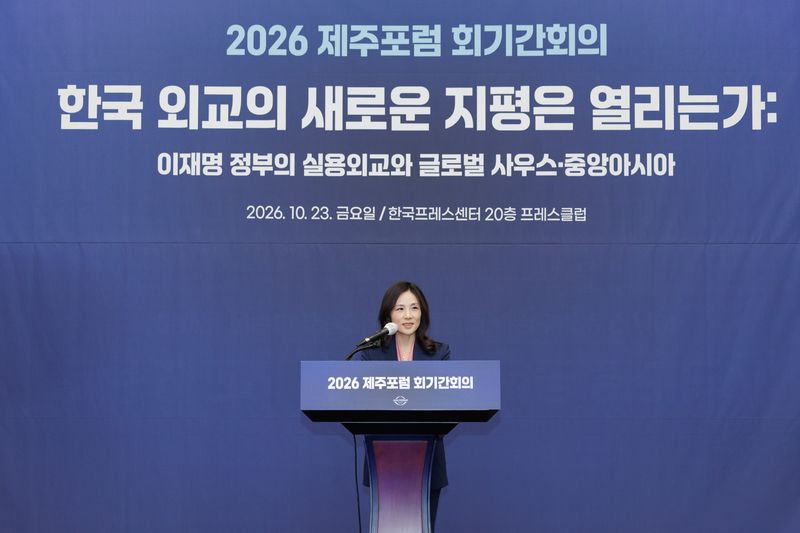
【Financial News, Jeju = Jeong Yong-bok】 A strategy has been proposed for South Korea to secure core technologies and industrial competitiveness and build a diplomatic standing that other countries cannot easily replace. Kim Jin-ah, Second Vice Minister of Foreign Affairs of the Republic of Korea, stressed that South Korea should broaden its diplomatic options by combining self-reliance, alliances and international solidarity, and strengthening supply-chain cooperation with Central Asia.
The Jeju Peace Institute said on the 25th that, in a keynote address at the 2026 Jeju Forum Inter-Sessional Meeting held at the Korea Press Center in Seoul on the 23rd, Kim proposed securing ‘strategic irreplaceability’ as a key task for South Korean diplomacy.
Kim said that the direction South Korean diplomacy should pursue is ‘to move from being a country forced to make choices to one that can influence the choices of other countries.’
Strategic irreplaceability is a strategy to increase bargaining power and influence in international relations by securing technological and industrial capabilities that other countries cannot easily replace. The idea is that the more important South Korea becomes in areas such as advanced technologies, key components and supply chains, the broader its diplomatic room for maneuver will be.
Kim focused on the international environment in which global networks in supply chains, technology, finance and energy serve as a foundation for cooperation between countries while also being used as tools to exert pressure on other countries. The assessment is that a strategy is needed to link economic and industrial competitiveness with diplomatic influence.
As the basic direction for pragmatic diplomacy, Kim proposed a virtuous cycle of self-reliance, alliances and solidarity. The approach is to strengthen the country’s own capabilities while maintaining alliances and broadening cooperation networks with various countries to secure diplomatic options.
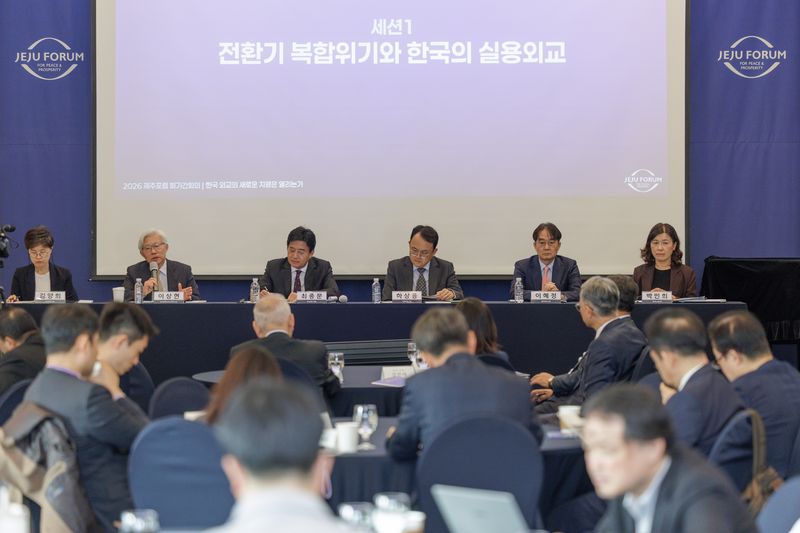
Kim also stressed that alliances and strategic autonomy are not opposing concepts. The point is that diplomatic tools should be chosen flexibly according to the international situation and cooperation partners, while safeguarding the national interest and principles.
Kim identified the Global South and Central Asia as key partners for expanding diplomatic influence. The Global South is a concept that generally encompasses emerging and developing countries in Asia, Africa and Latin America; it does not refer to a single group of countries or an official international organization.
Cooperation with Central Asia is linked to follow-up tasks from the first Korea-Central Asia Summit, held in Seoul on September 16.
At the time, the leaders of South Korea and the five Central Asian countries, including Kazakhstan and Uzbekistan, adopted the ‘Seoul Declaration’ and agreed to make the summit a regular event and expand cooperation in industry and supply chains, as well as in artificial intelligence (AI), science and technology, and energy.
Supply-chain cooperation that combines South Korea’s technological and manufacturing capabilities with Central Asia’s critical minerals and energy resources was a key agenda item. This policy direction aims to reduce dependence on any one country or supplier and diversify resource procurement and industrial cooperation.
Kim said, ‘We will turn the foundation for cooperation established at the summit into concrete projects and results.’ Kim stressed that this would require policy coordination across the government and public-private cooperation.
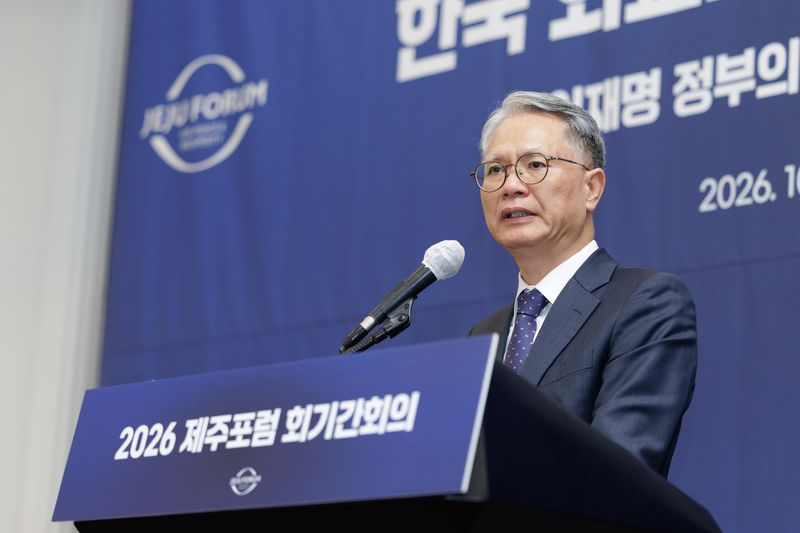
Experts in international relations also said that South Korea should use its position in key technology and industrial sectors as diplomatic bargaining power.
At the first session, titled ‘Complex Crises in a Period of Transition and South Korea’s Pragmatic Diplomacy,’ Kim Yang-hee, a professor at Daegu University, proposed the concept of a ‘strategic nodal state’ that secures key points of connection in global economic, technological and security networks.
A strategic nodal state is a country that secures functions on which other countries rely in important ways within international supply chains and industrial and technological cooperation networks. The concept aims to strengthen South Korea’s ability to respond to external pressure and its bargaining power by increasing its role in the interconnected structure of the global economy.
Lee Sang-hyun, a visiting research fellow at the Jeju Peace Institute, proposed that ‘alliance cooperation, crisis management with neighboring countries and domestic resilience should be linked as a single diplomatic strategy.’
Ha Sang-eung, a professor at Sogang University, stressed that ‘binding outcomes must be secured so that diplomatic agreements do not stop at declarations.’ Ha also proposed clarifying the terms of agreements in writing and diversifying channels for negotiations with the United States.
Choi Jong-moon, a former Second Vice Minister of Foreign Affairs who chaired the session, said that ‘the direction of pragmatic diplomacy centered on the national interest and the strategies and tactics for implementing it in actual diplomatic settings should be examined separately.’ The need to spell out the criteria for judging the national interest and pragmatism was also raised as an issue for discussion.
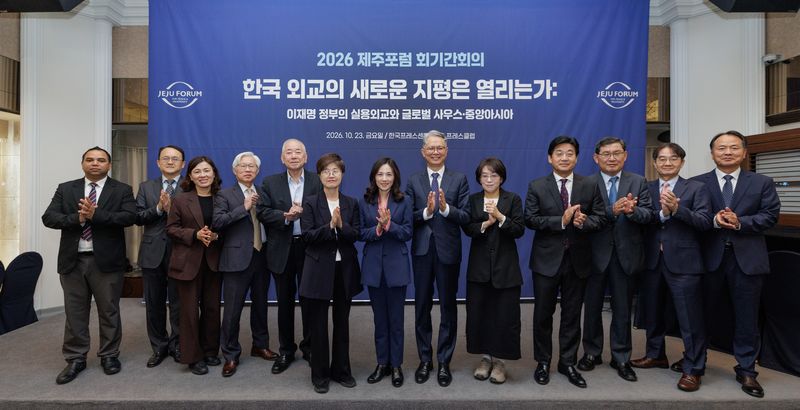
The Jeju Peace Institute, which hosted the meeting, is expanding the Jeju Forum’s role as a venue for policy dialogue where government officials and private-sector experts discuss foreign policy together.
The Jeju Forum Inter-Sessional Meeting is a venue for discussing international affairs and key diplomatic issues between the Jeju Forum’s annual main events. This year’s meeting was held under the theme ‘Is a New Horizon Opening for South Korean Diplomacy? The Lee Jae-myung Government’s Pragmatic Diplomacy and the Global South and Central Asia.’
In his opening remarks, Kang Jeong-sik, president of the Jeju Peace Institute, said diplomacy ‘must directly contribute to people’s lives’ and stressed the need to respond flexibly to the changing international environment while upholding principles.
The Jeju Peace Institute plans to review the main agenda and policy discussion topics for the 22nd Jeju Forum in 2027, drawing on the strategic challenges for South Korean diplomacy and approaches to international cooperation discussed at this meeting.
[email protected] Jeong Yong-bok Reporter