Blue House appears set to postpone crypto-asset taxation again, seemingly taking young people’s views into account
- Input
- 2026-10-25 14:54:04
- Updated
- 2026-10-25 14:54:04
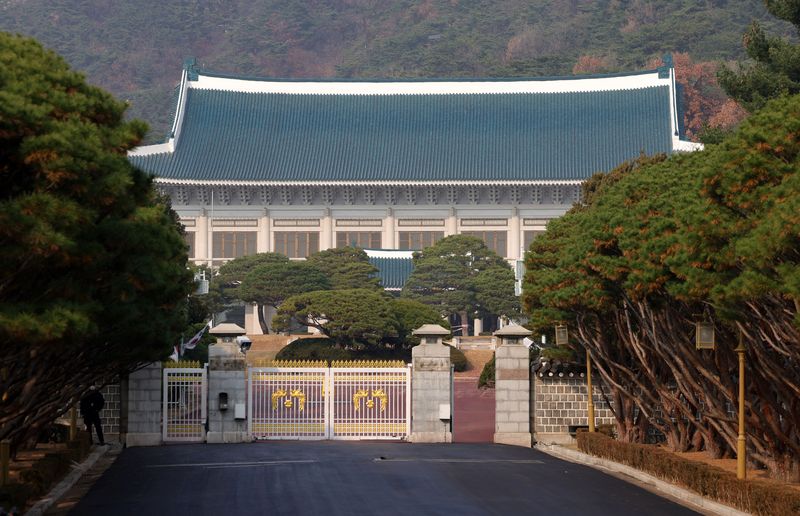
[Financial News] The Blue House is reportedly leaning toward postponing again the taxation of income from crypto assets, scheduled to begin next January. As a result, the tax, already delayed three times, is increasingly likely to face a fourth postponement. Analysts say the decision may also have been influenced by public opinion among young people, who show strong interest in crypto-asset investment, as well as by a lack of preparation for the tax system.
According to ruling party sources and others on the 25th, discussions within the Blue House are continuing, with a further delay to the start of crypto-asset taxation favored. A Blue House official said the proposed delay was “under review,” but added that “nothing has been decided.”
Crypto-asset taxation is a system that taxes income generated through the transfer or lending of crypto assets such as Bitcoin. It is designed to allow a basic deduction of 2.5 million won from annual income, then apply a combined tax rate of 22%—20% income tax and 2% local income tax—to the excess. The relevant legislation was enacted in 2020, with implementation targeted for 2022, but the start date was postponed three times over concerns including insufficient investor protections and tax infrastructure. Under current law, the effective date is January 1, 2027.
The Blue House’s inclination toward a further delay stems from the view that an effective tax system has yet to be put in place. A key issue is that, unlike with domestic exchanges, tax authorities face limits in obtaining information on income from transactions conducted through overseas exchanges.
Cross-border exchanges of transaction information under the Crypto-Asset Reporting Framework (CARF), promoted by the Organisation for Economic Co-operation and Development (OECD), are scheduled to begin next year, but only 46 countries, including South Korea and Japan, will participate initially. The United States, which accounts for a significant share of the global crypto-asset market, is not expected to join until 2029. This raises concerns that taxation could fall disproportionately on users of domestic exchanges. Even for the same income from crypto-asset investment, tax fairness could vary depending on the transaction channel.
The ruling party leadership has also said it intends to consult with the government and reach a decision on whether to implement the tax by the end of this year. Kim Min-seok, leader of the Democratic Party of Korea, stressed the need for in-depth discussions on the issue of crypto-asset taxation, saying, “We need to settle this this year,” on the party’s YouTube program “Minti 07” on the 22nd. In a post on X (formerly Twitter) on the 21st, he also said, “I am also listening to various opinions on the issue of crypto-asset taxation. Through discussions that take a comprehensive look at institutional improvements, young people’s voices and real-world conditions, I will work to help the National Assembly and the government find a reasonable solution,” leaving open the possibility of reconsidering whether to implement the tax.
Legislative efforts to secure a further delay have already begun in the National Assembly. Democratic Party of Korea lawmaker Park Min-gyu introduced an amendment to the Income Tax Act that would effectively push back crypto-asset taxation to 2029. The People Power Party has also adopted a delay as its official party position and is pushing for related legal amendments.
The Blue House is expected to discuss whether to implement crypto-asset taxation in talks between the ruling party and the government after this month’s parliamentary audit concludes, and then finalize its position.
[email protected] Choi Jong-geun Reporter