Jeju builds 35 billion won smart aquaculture facility; National Assembly calls for modernization of existing farms too
- Input
- 2026-10-25 14:29:20
- Updated
- 2026-10-25 14:29:20
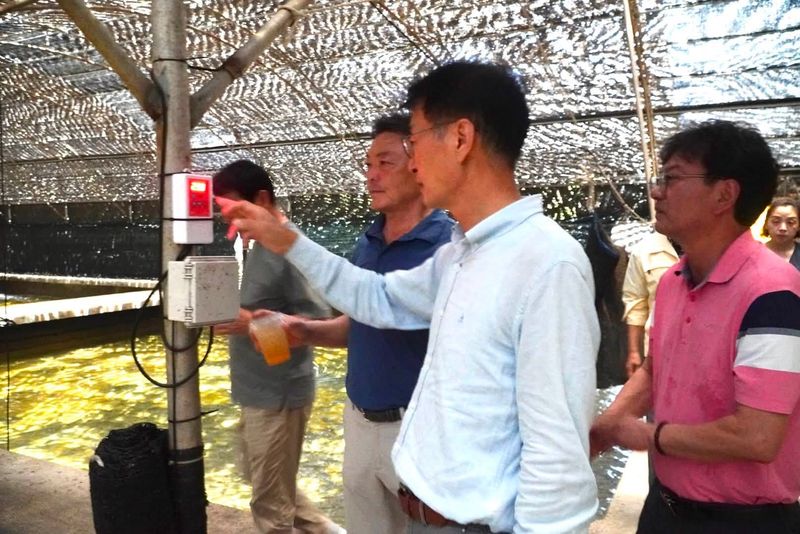
【Financial News, Jeju = Jeong Yong-bok】 As a 35 billion won smart aquaculture demonstration facility is being built in Jeju, a government pilot project to directly modernize existing land-based farms has been proposed in the National Assembly. The proposal calls for introducing advanced technologies intended for new facilities at farms already in operation as well, and verifying how much they can reduce damage from high water temperatures and production costs.
According to the National Assembly and the Ministry of Oceans and Fisheries on the 25th, Rep. Moon Dae-rim of the Democratic Party of Korea, a member of the National Assembly's Agriculture, Food, Rural Affairs, Oceans and Fisheries Committee representing Jeju City A, urged the MOF to pursue a modernization pilot project that would comprehensively apply smart aquaculture technology and energy-saving facilities at existing land-based farms in Jeju.
The project Rep. Moon proposed on the 23rd focuses on improving temperature and water-quality management and facility operations at existing farms, and verifying on-site the effect on reducing production costs and damage from high water temperatures.
The proposal comes against a backdrop of repeated damage from high water temperatures. Data the MOF submitted to Rep. Moon's office show that 125,048,000 farmed fish died nationwide due to high water temperatures from 2022 through September 4 this year. Confirmed losses for 2022–2025 total 205.56 billion won. This year's losses are still being tallied.
In 2024, the year with the heaviest losses, 68,555,000 farmed fish died nationwide, causing 143.04 billion won in property damage. This year, as of September 4, the deaths of 13,533,000 fish at 455 aquaculture farms nationwide had been provisionally tallied.
Jeju, the country's largest flounder-farming region, also suffered heavy losses. In 2024, 2,215,000 animals, including fish and abalone, died at 77 farms, causing 5.345 billion won in damage. Last year, 1,803,000 animals died at 62 farms, with losses reaching 5.227 billion won.
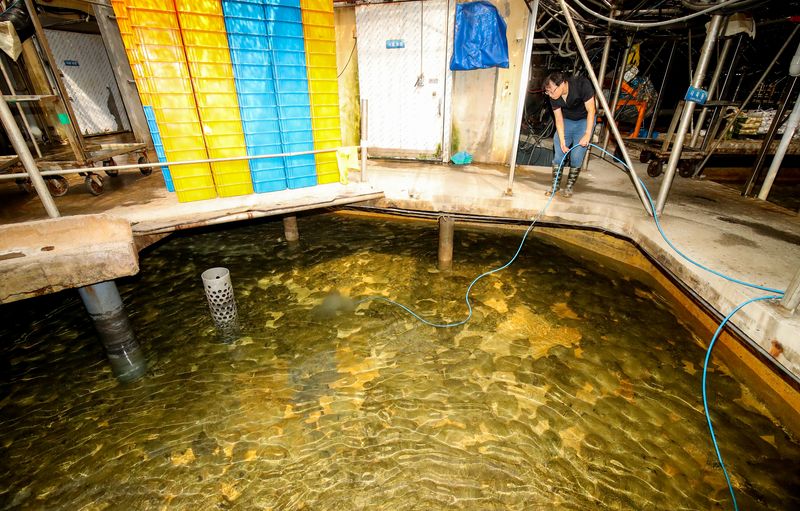
As of September 4 this year, the deaths of 677,000 flounder at 45 farms in Jeju due to high water temperatures had been provisionally tallied. The final scale of the losses will be confirmed after the relevant review process.
Aquaculture also accounts for a significant share of Jeju's industry. According to the National Data Agency's 2025 Survey of Fish Aquaculture Trends, Jeju's farmed-fish output was 27,200 tonnes, or 32.9% of the national total. Its production value was 472 billion won, accounting for 34.8% of the national total.
As of the end of 2025, 373 land-based aquaculture farms were operating in Jeju. Flounder farms account for close to 90%. In an industry concentrated on flounder production, high water temperatures pose a problem directly tied to the production stability of the aquaculture sector across the region, not just to losses at individual farms.
The government is also pursuing a transition in aquaculture to respond to climate change. This year, the MOF introduced the Climate Change Response Pilot Aquaculture Support Program, providing funding to switch to species relatively resilient to high water temperatures or relocate farms to suitable waters. Following two calls for applications this year, 37 sites nationwide had been selected as of September.
However, its support differs from that for a project that upgrades tanks, seawater supply facilities and energy management systems together while keeping existing farms in operation. That is why Rep. Moon called for a separate modernization pilot project.
Facilities to test new aquaculture technologies are already being built in Jeju. The Jeju provincial government is investing 35 billion won—18.5 billion won in national funds and 16.5 billion won in local funds—to develop the Jeju-style Smart Aquaculture Cluster in Haengwon-ri, Gujwa-eup, Jeju City. Construction began in July, and completion is targeted for December 2027.
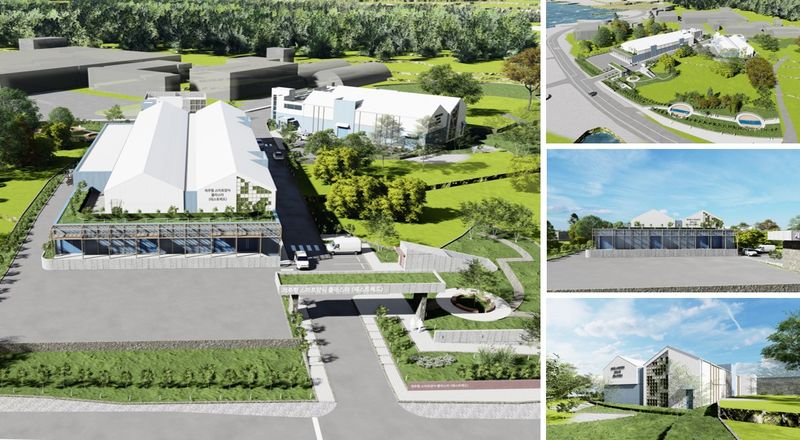
The project's core aim is to test low-water-exchange and recirculating aquaculture technologies that reduce seawater use and filter used water for reuse. It will also build a system that uses artificial intelligence (AI) to manage water quality, equipment conditions and seawater supply volumes in an integrated way.
At present, land-based aquaculture farms in Jeju commonly use a system that supplies fresh seawater each day in an amount equivalent to at least 20 times the tank capacity. The pumps that continuously draw up seawater use a lot of electricity, and the farms are also vulnerable to changes in the temperature of outside seawater.
The smart aquaculture cluster project will test technologies to address these problems and establish a foundation for expanding their use to private farms. Rep. Moon's proposal goes a step further: applying the technologies and equipment at farms already in operation to determine whether conversion is feasible in practice. If the pilot project moves forward, it will be important to verify how power use, production costs and damage from high water temperatures change while using existing tanks and water-intake facilities.
Repeated losses have also increased government spending on disaster insurance. The national subsidy for premiums on aquaculture disaster insurance rose from 13.968 billion won in 2021 to 27.454 billion won last year. A further 28.12 billion won was provided through August this year. These amounts are government subsidies to ease the premium burden on aquaculture farms, not insurance payouts for fish deaths.
Rep. Moon said, "We need to comprehensively apply smart aquaculture technology and energy-saving facilities and verify their effects on reducing production costs, improving productivity and mitigating damage from high water temperatures," and stressed, "We should first confirm whether existing land-based farms can be modernized in Jeju, then develop an aquaculture transition model whose verified results can be expanded to other regions."
[email protected] Jeong Yong-bok Reporter