'Pardoning his father' pledge: Bolsonaro vs. Lula seeking a fourth term in a neck-and-neck Brazil election, one day out
- Input
- 2026-10-25 16:13:57
- Updated
- 2026-10-25 16:13:57
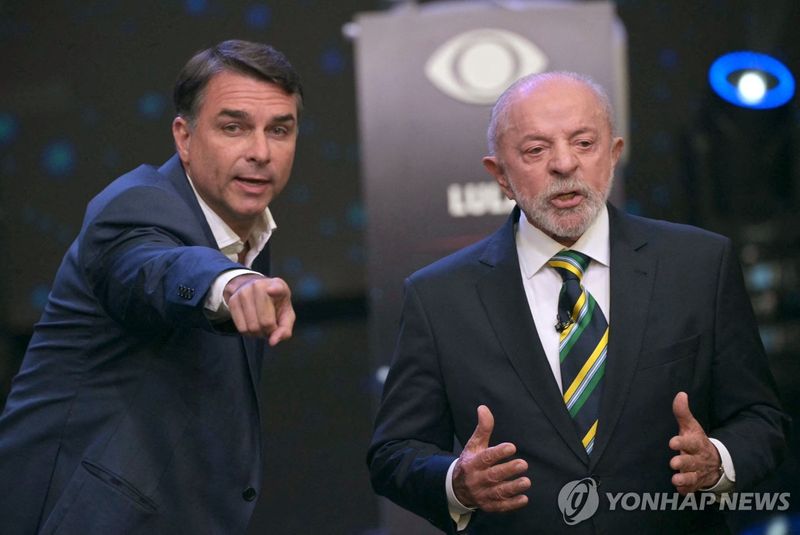
On the 24th, according to France's AFP and other news agencies, a presidential election poll released by Datafolha put support for Bolsonaro, the Liberal Party (PL) candidate, at 51%, two percentage points ahead of President Lula, the Workers' Party (PT) candidate, at 49%. A poll by another firm, Quaest, likewise showed Bolsonaro leading Lula by two percentage points. In both polls, however, the gap remained within the margin of error (±2 percentage points).
Bolsonaro, the candidate and eldest son of former President Jair Bolsonaro, notorious as the “Trump of Brazil,” emerged as a strong contender for victory after defeating President Lula in the first round of the election on the 4th. He has gained momentum recently by attacking the Lula government's economic policy failures amid Latin America's “blue tide,” or wave of conservatism.
However, Lula's supporters rallied in the final stretch ahead of the runoff, leaving the outcome uncertain until the very end. President Lula is strongest among people in the rural Northeast, poorer communities, Catholics and those with lower levels of education, while Bolsonaro leads among voters in the Southeast, where major cities are concentrated, the middle class and evangelical Christians.
The showdown is also significant because it could indicate the direction of the wave of right-wing governments in Latin America. If Bolsonaro wins, Brazil, Latin America's largest economy, will join the blue tide, following Argentina, Ecuador, Bolivia, Chile, Colombia and Peru, among others.
Meanwhile, amid the extremely close race, attention is also focused on whether the result will be accepted after the election. After losing the 2022 presidential election, former President Bolsonaro, the candidate's father, alleged fraud in electronic voting. His supporters later stormed Congress, the Supreme Court and the presidential palace, among other sites, in riots rejecting the result. The former president was sentenced last year to 27 years in prison on charges including plotting a coup and involvement in a plan to assassinate President Lula, but his son has vowed to pardon him as soon as he is elected.
Meanwhile, supporters of President Lula and candidate Bolsonaro continued holding events to rally their bases, staging street demonstrations in major city centers that day as well. Local media reported that “marches by hundreds of thousands of supporters seeking to bring undecided centrists over to their side filled the streets of major cities, including São Paulo.”
[email protected] Hong Chae-wan Reporter