Amid gaps in the framework and youth sentiment... Blue House postpones 'virtual asset taxation' once again
- Input
- 2026-10-25 17:57:50
- Updated
- 2026-10-25 17:57:50
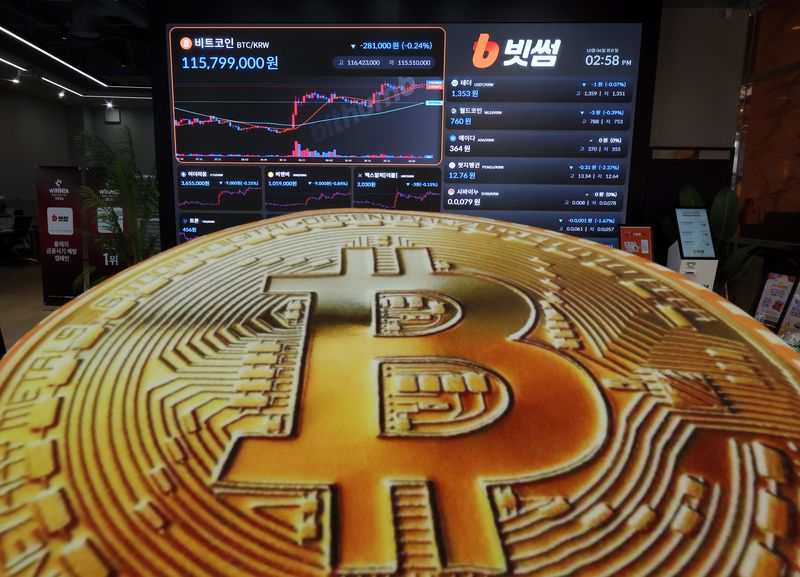
[Financial News] The Blue House is reportedly leaning toward postponing once again the taxation of virtual asset income, which is scheduled to take effect next January. As a result, the tax, which has already been delayed three times, is increasingly likely to face a fourth postponement. Analysts say the decision may also have been influenced by public sentiment among young people, who are highly interested in virtual asset investments, as well as the lack of readiness in the tax system.
According to ruling party sources and others on the 25th, the Blue House is leaning toward further delaying the start of virtual asset taxation. The tax applies to income generated from the transfer or lending of virtual assets such as Bitcoin. A 22% rate, combining other income tax and local income tax, is to be applied to annual income from the transfer or lending of virtual assets after a basic deduction of 2.5 million won. Legislation was drawn up in 2020 with implementation targeted for 2022, but the tax has been postponed three times over concerns including insufficient investor protections and tax infrastructure. Under current law, it is due to take effect on January 1, 2027.
The Blue House’s inclination toward another postponement stems from the view that an effective tax system is not yet in place. None of the country’s five largest virtual asset exchanges—Upbit, Bithumb, Coinone, Digital X and GOPAX—has a fully established tax system. This is because detailed standards, including regulations and forms, have not been finalized. The National Tax Service had planned to finalize its proposed notice on virtual asset taxation by the end of this month and issue an advance administrative notice by the end of next month.
An industry official said, “Building a tax system at a virtual asset exchange takes at least six months, and around nine months or more of preparation is needed when the time required for testing and stabilization is taken into account.” In other words, even if an advance administrative notice were issued as soon as next month, the system would be completed no earlier than May next year, and not until August next year if the process were delayed. Another major issue is that, unlike with domestic exchanges, tax authorities have limited ability to obtain information on income from transactions made through overseas exchanges.
Under the Crypto-Asset Reporting Framework (CARF), an automatic information exchange system for crypto assets promoted by the Organisation for Economic Co-operation and Development (OECD), countries are expected to begin exchanging transaction information next year. However, only 46 countries, including South Korea and Japan, will participate initially. The United States, which accounts for a significant share of the global virtual asset market, is not expected to join until 2029. This raises concerns that taxation could fall disproportionately on users of domestic exchanges. The fairness of taxation could vary depending on the trading channel, even for income from the same virtual asset investment.
The ruling party has also taken this into account and introduced a bill to revise the law so that virtual asset taxation would begin in 2029. The People Power Party is also calling for implementation to be postponed. The Blue House is expected to discuss whether to proceed with virtual asset taxation in consultations between the ruling party and the government after the National Assembly’s audit concludes this month, and then finalize its position.
The virtual asset industry welcomed the move. Kang Seong-hu, chairman of the Korea Digital Asset Business Association (KDA), said, “When taxation was postponed twice before, political circles cited investor protections on par with those for stocks and tax standards on par with those for stocks as justifications, but neither of these two standards has yet been met.” He stressed, “The Digital Asset Act and standards for virtual asset taxation should be established as soon as possible, so that there is no fourth postponement of taxation.”
A Blue House official said the possible postponement of virtual asset taxation was “under review,” adding that “nothing has been decided.”
[email protected] Choi Jong-geun, Han Young-jun Reporter