Hanwha opts to acquire, HD Hyundai to build anew ... Who will win MASGA?
- Input
- 2026-10-25 14:01:21
- Updated
- 2026-10-25 14:01:21
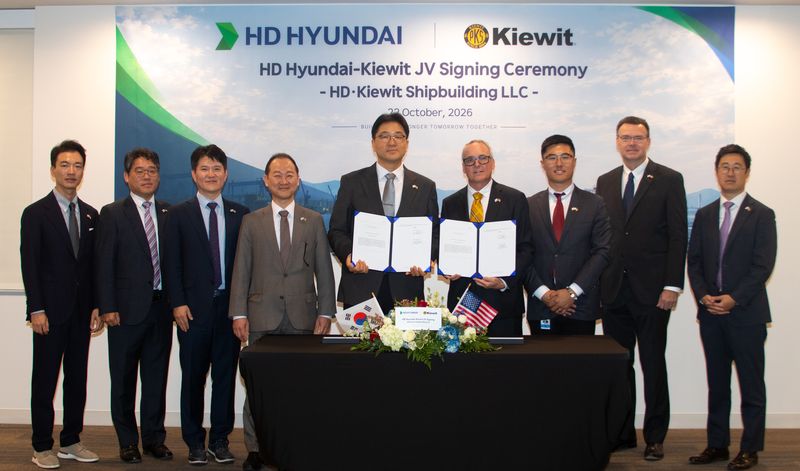
[Financial News] As the Korea-U.S. Shipbuilding Cooperation Project, Make American Shipbuilding Great Again (MASGA), gathers momentum, Hanwha and HD Hyundai have made different bets on capturing the U.S. shipbuilding market. Hanwha acquired the existing Philly Shipyard and secured contracts to build specialized vessels for the U.S. government, while HD Hyundai decided to build a new smart shipyard in the United States.
■ HD Hyundai to build new shipyard instead of acquiring an aging one
According to industry sources on the 25th, HD Hyundai signed an agreement with U.S. construction and engineering company Kiewit on the 22nd (local time) to establish a joint venture, HD Kiewit Shipbuilding. The two companies aim to build a new smart shipyard on an existing industrial site in the United States, break ground in 2027 and begin full-scale operations in 2029. They plan to introduce digital twins, robotic welding and automated production systems, and seek opportunities to build logistics support ships for the U.S. Navy and commercial vessels, as well as produce ship blocks and modules for local shipbuilders.The analysis is that HD Hyundai opted to build a new facility rather than acquire one because of the aging condition of local shipbuilding facilities. “It appears to have judged that, given the high cost of renovating existing U.S. shipyards, it would be better to design the production facilities and workflow layout from scratch,” an industry source explained. “Another advantage is that it can draw on Kiewit’s experience building large facilities in the United States.”
The specific construction site, investment amount, number of docks and annual vessel-building capacity have yet to be determined. HD Korea Shipbuilding & Offshore Engineering also disclosed on the 23rd that plans to expand investment on a trillion-won scale and raise capital through a paid-in share offering are under discussion. The joint shipyard project is understood to be proceeding separately from the investment fund for MASGA, the $150 billion Korea-U.S. shipbuilding cooperation project. However, there are expectations that it could become the top priority for support once the MASGA agreement is finalized and the fund begins operating.
■ Hanwha expands U.S. ship orders by leveraging an existing shipyard
Unlike HD Hyundai, which is building a new shipyard, Hanwha chose to expand production capacity by acquiring an existing one. After acquiring Hanwha Philly Shipyard in the United States in December 2024, Hanwha announced a $5 billion facility expansion plan last year. The plan is to increase the number of docks and piers and introduce advanced production equipment, eventually expanding annual shipbuilding capacity from less than two vessels to as many as 20 over the long term.Shipbuilding using existing production facilities is also brisk. The shipyard has delivered four of the five multipurpose vessels ordered by the U.S. government for training and disaster relief, and is building the remaining one. It is also building three container ships for U.S. shipping company Matson. Last year, it secured commercial shipbuilding work, including an order from its affiliate Hanwha Shipping for two liquefied natural gas (LNG) carriers.
Hanwha is also making progress in the U.S. defense-related ship market. After being selected last July to build a Missile Range Instrumentation Vessel (MRIV) for the U.S. Missile Defense Agency (MDA), it signed a contract on the 7th of this month to build the first vessel. Two more vessels are options, and delivery of the first is targeted for 2030. One advantage is that the vessel shares about 70% of its design with multipurpose vessels already being built for the U.S. government, allowing the shipyard to use its existing facilities and skilled workforce. In March, Hanwha also took part in a design review project for the U.S. Navy’s next-generation logistics support ship.
Industry observers say that, as the United States prioritizes the rapid supply of naval vessels amid its competition with China for naval strength, the ability of South Korean shipyards to respond to demand will determine their competitiveness.
“Securing production competitiveness over the medium to long term is important, but the key to future competition for contracts will likely be how quickly shipbuilders can provide the capacity to build the vessels the United States needs now,” an industry source explained.
[email protected] Jung Won-il Reporter