“No Rest Even When Sick” ... Firefighters Carry Their Wounds as They Rush into the Flames [Firefighters: Tears in Red Uniforms]
- Input
- 2026-10-26 15:18:15
- Updated
- 2026-10-26 15:18:15
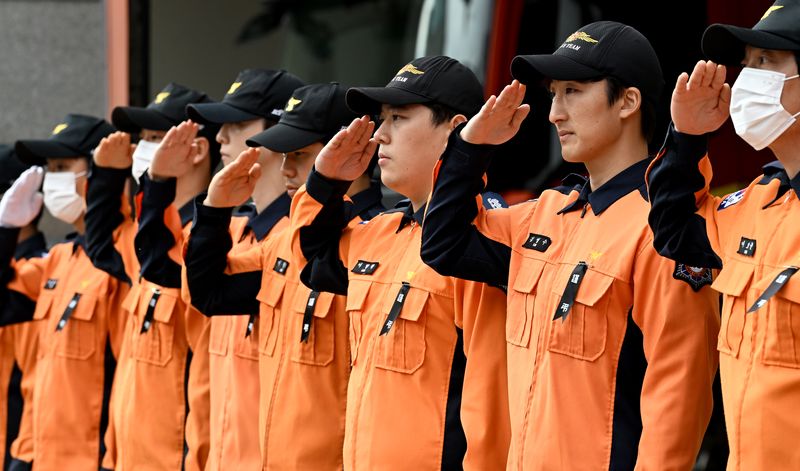
[Financial News] In the wake of the “Bucheon factory fire” in which Fire Lieutenant Kim Jin-seok died in the line of duty, more frontline firefighters are speaking out about hardships including staff shortages and post-traumatic stress disorder (PTSD). They said that despite exhaustion from their demanding work, the fulfillment of saving lives and a simple “thank you” from citizens give them the strength to rush back into the flames.
A review of Financial News’ reporting on the 26th found that firefighters, from rookies to veterans with 20 years of experience, described having no chance to rest easy despite coping with life-threatening dangers and mounting fatigue. Staff shortages force them to give up leave and training, and they continue to suffer psychological trauma from incidents even after a response has ended.
Firefighter A (25), in their third year of service in Incheon, cited fighting the “Ganghwa Island wildfire” in 2024 as their most difficult experience. During a 24-hour duty shift, they put out a rubbish fire halfway up a mountain during the day and responded to a road fire at night. In the early hours of the following day, they received another report of a wildfire and had to climb a rugged mountain trail that even fire engines could not reach, wearing fire-resistant gear, carrying a backpack pump and holding a shovel.
“There weren’t enough responders, so climbing the mountain when I was already physically exhausted was extremely hard, both physically and mentally,” Firefighter A said. “We weren’t relieved until 9 p.m. that day, at the scene on the mountain. All the support we got was water and a single piece of bread.” A added, “In particular, there aren’t enough paramedics, so people without the proper qualifications sometimes drive ambulances.”
There were also concerns that small crews have limited ability to protect their colleagues when responding to emergencies. Fire Captain Lee (48), appointed in 2006 and based in Yangsan, South Gyeongsang Province, said, “When firefighting drags on and there aren’t enough relief staff, or vacancies arise because of leave or injuries, colleagues who were off duty have to come in and fill the gaps. You don’t even have the luxury of being sick.” Lee explained, “A pumper truck generally needs five people, but many places in South Gyeongsang Province send out trucks with just three. With five, some can stay outside and rescue a colleague who gets into danger. But if all three of us have gone inside and a colleague gets into trouble, I worry about who would come to rescue me. The fewer people there are, the fewer firefighting strategies we can choose from.”
Lee added, “Even if I take a short leave or attend training, a colleague has to cover my shift, so I feel too guilty to go. The fatigue builds up, and the risks at the scene increase. We need enough staff to ensure firefighters can complete training on time to keep up with changing fire conditions, such as electric-vehicle fires.”
The psychological toll of encountering deaths and injuries was also considerable. Fire Lieutenant Kim (45), who joined the force in 2009 and is based in Seoul, recalled that about six years ago, while responding first to a call in another jurisdiction, a report of an infant in cardiac arrest came in within Kim’s own jurisdiction. “The call I arrived at was simply a report of an intoxicated person,” Kim said. “Another ambulance crew responded, but the infant died after their airway became blocked. My own child was young at the time, so I empathized, and I struggled for a while with the regret that I should have gone to save the infant.”
The fire captain also recalled an elementary-school-aged child watching their mother take her own life, saying, “I couldn’t get the thought of how that child would go on living out of my mind.” Lee added, “Many people struggle with memories like these but hide the fact that they’re receiving treatment because they’re afraid of seeming weak to their colleagues. Even when counseling is available, it’s difficult to open up right away to someone you’ve just met. We need a system that lets people meet regularly with the same counselor.”
Dealing with various complaints and protests also wore firefighters down. Fire Lieutenant Kim said, “When we’re transporting an emergency patient, a hospital may say it can’t take them. Even while we’re looking for another hospital, we face angry complaints from the patient’s caregiver asking, ‘Why is this taking so long?’ I understand that they’re anxious, but it takes time to find a hospital suited to the patient’s condition and confirm that it can accept them. Sometimes the stress from complaints is greater than the work itself.”
The firefighters said that expressions of gratitude from citizens give them the motivation to stay on the front line. Firefighter Kim (27), based in Seoul, who began their career last April, said, “After putting out a fire, I was resting and sweating when a citizen brought me a bottle of water. I thought, ‘So I really have become a firefighter.’ Pride in the job and recognition and encouragement from citizens give me the greatest strength.” Fire Lieutenant Lee (42), a 15-year veteran in Daegu, said, “I still remember coming out after putting out a fire in an underground karaoke room and an elderly person placing rice cakes in my hand and saying, ‘Thank you.’ I’m scared, but I keep going because of the fulfillment I get from working for citizens.”
[email protected] Seong-hyun Park Reporter