Supreme Court of Korea: Breathalyzer results obtained without providing water to rinse the mouth cannot be used as evidence
- Input
- 2026-10-25 11:28:38
- Updated
- 2026-10-25 11:28:38
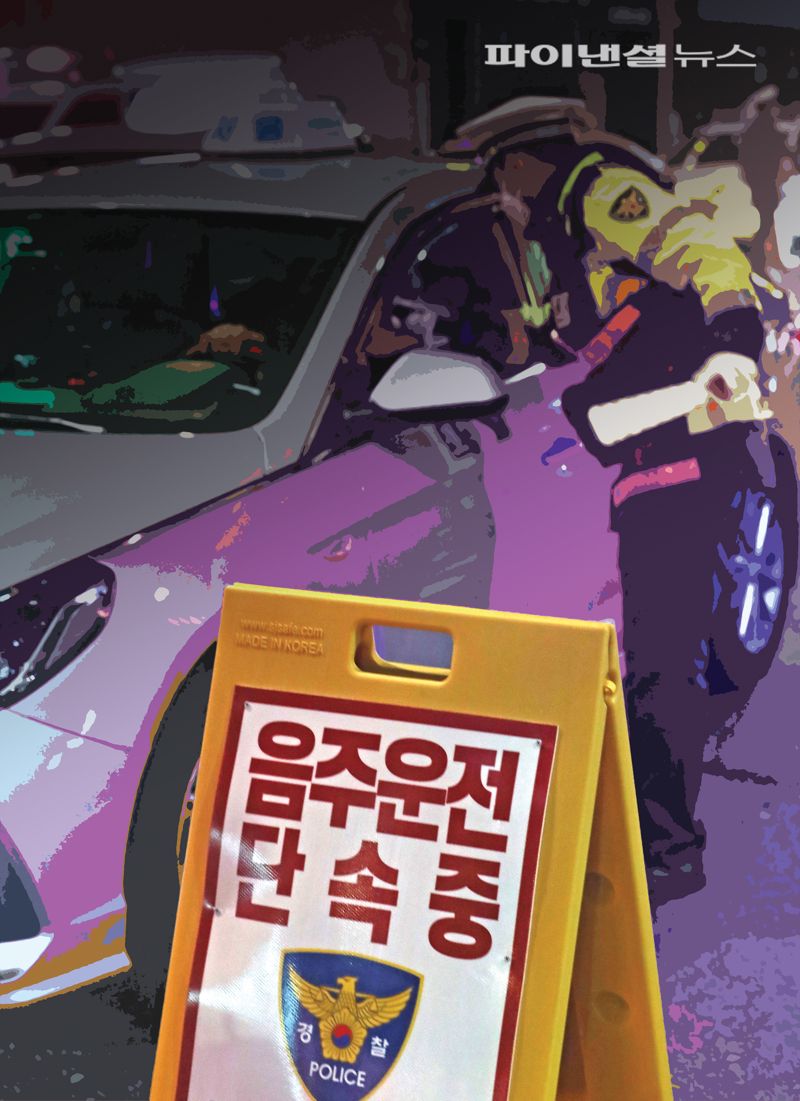
According to legal circles on the 25th, the Supreme Court of Korea’s First Division, with Justice Cheon Dae-yeob as the justice in charge of the case, overturned on the 1st a lower court ruling that sentenced A, who was indicted on charges of violating the Road Traffic Act (drunk driving), to one year in prison, suspended for two years, and remanded the case to the Daejeon District Court.
At around 8:25 p.m. on December 9, 2023, police received a 112 call reporting that “someone is asleep in the driver’s seat with the vehicle’s engine running in the middle of the road.” They arrested A and laid A on a bench at a local police substation. One officer filled a paper cup with bottled water and approached the bench, but did not wake A and suggest rinsing the mouth. At another officer’s gesture, the officer turned away with the cup still in hand. The officers repeatedly brought the breathalyzer mouthpiece near A’s mouth while A was lying down. At around 8:50 p.m., the blood alcohol concentration was 0.081%. A, whose 1 million won fine for the same offense was finalized in March 2019, was indicted as a repeat offender.
The issue was whether the test results obtained without providing water to rinse the mouth were admissible as evidence. Both the first and second trials found A guilty, but for different reasons. The first trial found that providing rinse water was a procedure under internal police guidelines that had no binding force externally, and that there was no need to rinse because 20 minutes had passed since the drinking ended. The second trial found that A had suddenly gotten up and blown into the device, making it impossible to provide water; because the responsibility lay with A, it considered the matter one of reliability alone.
The requirement to provide water for rinsing the mouth was set out in an internal National Police Agency guideline in March 2017, which required 200 mL of drinking water. On July 4, 2023, the requirement was elevated to the Enforcement Rule of the Road Traffic Act. The stop took place about five months later.
The Supreme Court of Korea found that the provision in the enforcement rule met both the form and substance of an order with the force of law. Because providing water to rinse the mouth constitutes “due process” under Article 308-2 of the Criminal Procedure Act, the results of a breath test conducted without following this procedure are, in principle, inadmissible as evidence. The exclusionary rule for illegally obtained evidence is a principle under the Criminal Procedure Act that evidence collected without following due process cannot be used as grounds for a conviction.
The court began by noting that drivers need not actually rinse their mouths; it is sufficient to provide drinking water and explain and recommend that they rinse. It then said, “The procedure itself must actually be carried out; the fact that the driver is asleep does not mean that compliance with the procedure can be waived.” It also rejected the first trial’s reasoning that the effects of residual alcohol in the mouth disappear 20 minutes after drinking ends. The relevant studies assume controlled experimental conditions in which belching, vomiting and other factors are controlled, so their findings cannot be applied as is to real-world enforcement.
The Supreme Court of Korea also declined to recognize an exception. Although there was no evidence to replace the test results, it found that the substance of the procedure had been violated. The court said it might have ruled differently if A had rinsed the mouth or the police had checked beforehand, but neither had occurred.
[email protected] Kim Dong-kyu Reporter