SK hynix to Continue NAND Investment Despite Solidigm IPO Review Halt, Seeks to Diversify Funding
- Input
- 2026-10-25 14:24:25
- Updated
- 2026-10-25 14:24:25
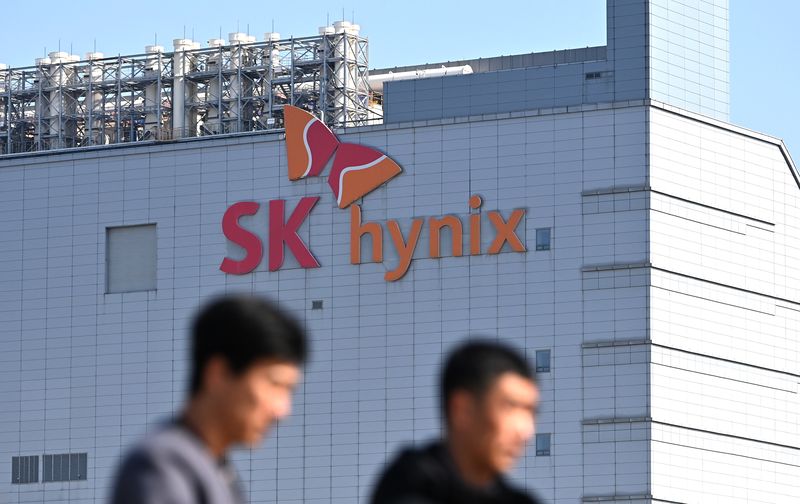
[Financial News] SK hynix’s halt to its review of a potential IPO for Solidigm, its U.S.-based NAND flash grandchild subsidiary, has made securing funding for investment in a new U.S. plant a key challenge. As demand for enterprise solid-state drives (eSSDs) for AI data centers grows and Chinese competitors gain ground, the need to expand NAND production capacity is increasing. The focus is expected to shift toward finding alternative funding sources beyond a stock listing. The possibility of revisiting an IPO in the future remains open, but the financial authorities’ stance on regulating dual listings and the need to protect existing shareholders remain challenges to be addressed.
According to semiconductor industry sources on the 25th, SK hynix announced on the 23rd that it was halting its review of a pre-IPO and IPO for Solidigm. Headquartered in the United States, Solidigm currently has its main NAND production facilities in Dalian, China, and has been pursuing the construction of production facilities in the United States to diversify its production base and strengthen cooperation with major big-tech customers.
Earlier, market observers speculated that Solidigm could raise up to $15 billion (about 20 trillion won) through a listing and use the proceeds to build a new plant in the United States, among other things. The halt to the IPO review has prompted assessments that finding alternative sources of investment funding has become important.
SK hynix is expected to explore various funding options, including using its own funds, issuing corporate bonds, borrowing from financial institutions and having customers participate in investment. Analysts say it is important to spread the investment burden, as the company is also continuing large-scale investment to expand high-bandwidth memory (HBM) production capacity and develop next-generation DRAM.
The need for proactive investment is growing further as demand for eSSDs for AI data centers rises rapidly and competitors such as Yangtze Memory Technologies Corp. (YMTC) accelerate capacity expansions. SK Group Chairman Chey Tae-won recently also stressed the need to increase investment, saying, “If Chinese and U.S. companies expand capacity faster, Korea’s market share could shrink.”
As the need to expand NAND investment grows, attention is also turning to why the IPO, which had been cited as a funding option, was halted. The company cited capital market conditions and other factors, but some observers have raised the possibility that the financial authorities’ stance on regulating dual listings and opposition from domestic shareholders also played a part. After Lee Chan-jin, governor of the Financial Supervisory Service, classified a Solidigm listing as a dual listing on the 19th, Financial Services Commission Chairman Lee Eok-won also said at a parliamentary audit on the 22nd that a U.S. Nasdaq listing was “subject to the dual-listing guidelines.”
The financial authorities’ position is that, rather than restricting overseas listings themselves, companies should thoroughly analyze the impact on shareholders of the parent companies, SK hynix and SK Square, and establish measures to protect shareholders. An official from the financial authorities explained, “We are not saying that companies must not pursue dual listings. We are saying they should analyze the impact on parent-company shareholders, first propose measures to protect them, and go through a process to obtain their consent.”
Even if SK hynix revisits an IPO in the future, taking market conditions and the need to secure investment funding into account, establishing shareholder-protection measures and completing procedures related to dual listings are expected to remain key challenges.
[email protected] Park So-hyeon, Lim Su-bin Reporter