“National status in name only, with two bosses”: Union Chairman Jeong Yong-woo [Firefighters: Tears in the Red Uniform]
- Input
- 2026-10-26 15:18:10
- Updated
- 2026-10-26 15:18:10
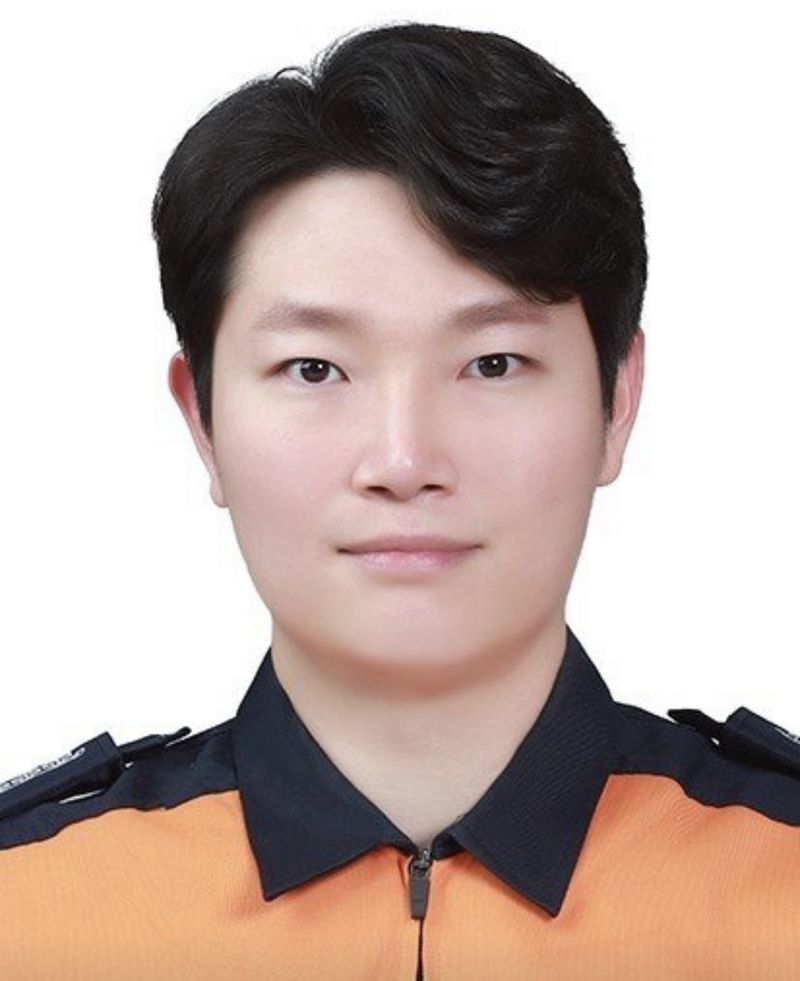
【Financial News, Suwon = Jang Choong-sik】 Controversy over remarks on fire-service budgets that erupted during a recent parliamentary audit, along with distressing line-of-duty deaths, has sparked fervent calls for fundamental changes to firefighters’ working conditions and the system.
Jeong Yong-woo, chairman of the Future Firefighters Federation Labor Union, whose headquarters are in Gyeonggi Province—the region with the country’s highest concentration of disasters and emergency callouts—and which was formed solely through the efforts of “100% frontline firefighters,” without outside interests, stressed that the latest controversy should not end as a fruitless debate. Instead, it should serve as a turning point for resolving the fire service’s dysfunctional command and funding structure and chronic staff shortages.
Gyeonggi’s fire service is overloaded... “The nation’s highest number of emergency callouts amid rapid population growth and complex disasters”
Speaking to Financial News on the 26th, Chairman Jeong singled out the urgent need to address the unique circumstances and limitations of Gyeonggi’s fire service, which faces the country’s most challenging conditions for frontline response.He said, “Gyeonggi Province has the largest population of any province due to a continuous influx of people. It is also a region facing highly diverse, complex disasters, with high-rise apartment buildings and industrial complexes concentrated here and mountain and water-related accidents also occurring. Despite having the nation’s highest number of emergency callouts relative to its population, the province is severely short of essential frontline personnel, leaving firefighters with the most extreme levels of fatigue and risk.”
He warned that, given Gyeonggi’s unique circumstances, the current system—which relies solely on the fiscal capacity of local governments—would struggle to meet the rapidly increasing demand for disaster response.
“A dysfunctional system with two bosses... Firefighters must become full-fledged national civil servants, like the police”
The biggest hardship facing frontline firefighters is the “dual command and funding system,” which remains unresolved even after their status changed in 2020.Although firefighters’ status changed to that of national civil servants, nearly 90% of the budget still depends on local governments, and command authority is also fragmented, leaving confusion on the ground.
Chairman Jeong pointed out, “Today’s fire service answers to both the central government and local governments—in short, it is a dysfunctional system with ‘two bosses.’ Six years have passed, but national status is in name only; in practice, disparities in equipment provision and firefighting services across regions have widened considerably depending on local governments’ fiscal circumstances.”
He cited the National Police Agency, which operates entirely as a national organization, as a key point of comparison, explaining, “Only by moving to a ‘fully national’ system, in which the central government—as it does for the police—takes unified responsibility for budgets, authority and command, can people receive high-quality safety services on equal terms anywhere in the country, including Gyeonggi Province.”
“Resolving chronic staff shortages is the top priority... At least 100,000 fire service personnel are needed”
More urgent than expanding equipment or improving systems, the key issue frontline personnel are calling to address is undoubtedly the “staff shortage.”The assessment is that, as complex disasters surge, the current staffing structure has clear limits in protecting both frontline firefighters and the lives of the public.
Chairman Jeong strongly argued, “The nationwide fire service workforce is about 70,000, only half the size of the police force. Even if matching the police force’s staffing level is difficult, we must quickly increase the number to at least 100,000 to protect frontline firefighters and preserve the golden hour.”
Visit to Gyeonggi Provincial Government calls for measures to prevent further line-of-duty deaths and increase central government funding
Amid these challenges, the union went beyond simply voicing concerns and took direct action to develop concrete administrative and fiscal measures.On October 20, the union visited the Gyeonggi Provincial Government and strongly urged Gyeonggi Province Governor Choo Mi-ae to develop fundamental measures to prevent further line-of-duty deaths among firefighters.
The union said, “Internal investigations led solely by the National Fire Agency (NFA) have limits in establishing the full facts beyond the organization and implementing prompt improvements,” and requested comprehensive measures and an implementation plan drawing broadly on outside experts and administrative and fiscal resources.
It also urged Gyeonggi Province to actively cooperate in expanding central government funding and establishing a fully national system to close safety gaps arising from differences in local governments’ fiscal capacity.
Chairman Jeong said, “I don’t know how long we will have to keep facing the loss of our colleagues,” and added, “It is heartbreaking that attention turns to each line-of-duty death but soon fades, and that colleagues’ sacrifices are used up solely as political issues.” He offered his heartfelt condolences to the bereaved families and asked the public for its continued warm support.
[email protected] Jang Choong-sik Reporter