Joo Byung-ki: “A surcharge of 1% of revenue is needed when companies refuse investigations” ... draws the line at coercive investigative powers
- Input
- 2026-10-25 13:04:47
- Updated
- 2026-10-25 13:04:47
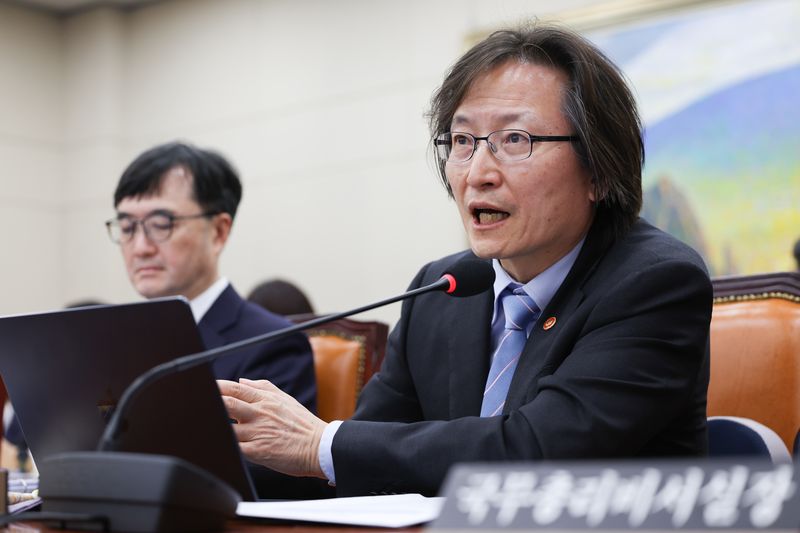
[Financial News] Fair Trade Commission Chairman Joo Byung-ki said penalties should be strengthened for companies that refuse on-site inspections. He said the relevant laws should be revised to allow surcharges and enforcement fines to be imposed when companies refuse to cooperate, and that surcharges should be raised to around 1% of total revenue.
Appearing on KBS’s “Sunday Diagnosis” on the 25th, Chairman Joo said, regarding ways to strengthen the Fair Trade Commission’s investigative powers, “Even with only administrative investigative authority, there is no major difficulty in enforcing the law.” He added, “When an investigation is refused, a surcharge is imposed. Rather than being a slap on the wrist, setting the surcharge at around 1% of total revenue would make enforcement of the law more effective.”
Calls have recently been made to give the Fair Trade Commission coercive investigative powers, following Coupang’s refusal to cooperate with an on-site inspection and Hanwha’s refusal to submit documents. His remarks suggested, however, that there is little need for such powers. Instead, the view is that tougher penalties under the existing administrative investigation system would be effective.
In particular, other laws under the Fair Trade Commission’s jurisdiction allow surcharges and enforcement fines, as well as criminal penalties, for obstruction of investigations. But in connection with Coupang’s violation of the Act on Fair Transactions in Large Retail Business, for which the commission tried but failed to conduct an on-site inspection, obstruction of an investigation can currently result only in an administrative fine; surcharges and criminal penalties are not available.
On this issue, Chairman Joo stressed, “The law should be revised to allow surcharges to be imposed, and enforcement fines should also be allowed.”
He also pushed back against claims in some quarters of the United States that the Fair Trade Commission’s penalties against Coupang discriminate against U.S. companies. “The commission’s enforcement of the law does not discriminate by country,” he said, adding, “If anything, we enforce the law much more strongly against domestic companies.”
He added that surcharge rates for domestic companies are relatively higher, and explained that the absolute amounts of surcharges imposed on foreign companies such as Google and Microsoft are large because their related revenues are themselves substantial.
Amid suspicions that information from the Fair Trade Commission’s investigation into trademark licensing fees had been leaked to Hanwha, he was asked whether the matter involved personal misconduct by a commission employee. He replied, “That has not been confirmed,” adding, “Since suspicions have been raised, we will conduct a thorough internal investigation.”
Responding to criticism that courts have recently been granting stays of execution of Fair Trade Commission decisions at a higher rate, he explained that stay-of-execution proceedings and lawsuits on the merits are separate. Chairman Joo said, “A stay being granted does not mean a finding that the commission’s decision was unlawful,” adding, “I will do my utmost to ensure that the legality of the commission’s decisions is upheld in lawsuits on the merits.”
[email protected] Lim Su-bin Reporter