Endless Cornfields, Shifting Voter Sentiment ... A ‘Blue Wave’ Sweeps Iowa
- Input
- 2026-10-25 14:30:14
- Updated
- 2026-10-25 14:30:14
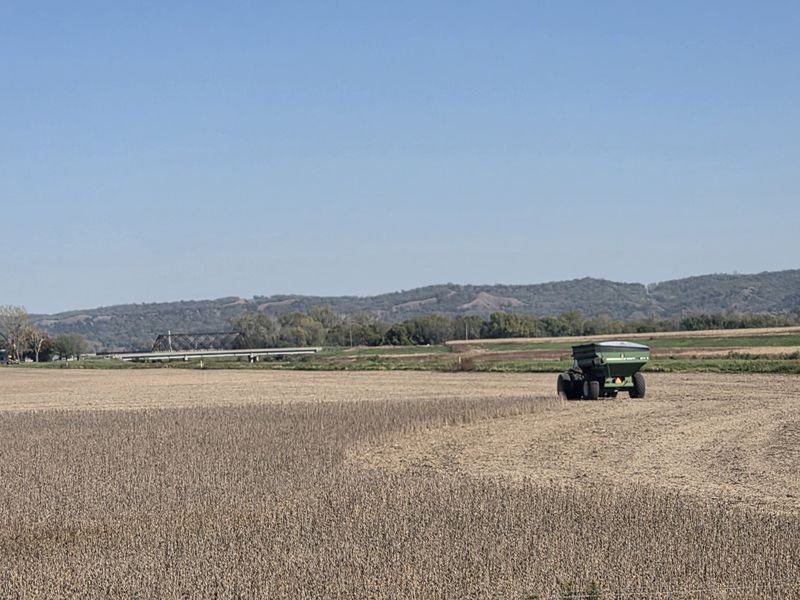
Iowa has emerged as an important state for gauging the strength of the so-called “blue wave” building ahead of the U.S. midterm elections. It was once a swing state where Democrats and Republicans competed fiercely. Former President Barack Obama won the state in the 2008 and 2012 presidential elections, but Iowa has chosen Donald Trump in all three presidential elections since 2016.
However, a series of polls showing tight races for the U.S. Senate and governor has hinted at a shift in Iowa’s political landscape. According to a race-rating analysis released on the 20th by the Cook Political Report, a U.S. election analysis organization, seven of the 35 U.S. Senate seats up for election in this year’s midterms were classified as competitive, including Iowa’s. In August, the Cook Political Report changed its rating of the Iowa Senate race from “Republican Favored” to “Toss-up.” It also changed its rating of the gubernatorial race from “Toss-up” to “Lean Democrat.”
The key issues in the elections here are tariffs, high prices and health care. Chase Privett, a professor at Morningside University in Sioux City, stressed to the reporter that “the economy and cost of living, health care, and foreign policy are important issues in this midterm election.” He went on to point to the vulnerability of rural health care, saying that “hospital closures and shortages of doctors and nurses are serious problems in rural Iowa.”
Uncertainty in agricultural export markets has grown as a result of President Trump’s signature tariff policy, while the fallout from the war in the Middle East has driven up diesel and fertilizer prices, increasing farmers’ production costs. Rising diesel prices, which farmers need to run their machinery, are a direct burden during harvest season.
Dissatisfaction with the Republican Party was also evident on the ground. A 75-year-old voter we met near an early voting site at Morningside University in Sioux City on the 22nd (local time) described himself as a “swing voter (an undecided voter).” He said he had voted for both Democrats and Republicans over the past 50 years. “The biggest issue in this midterm election is tariffs,” he said. “I’ve heard that tariffs are hurting Iowa farmers. In the end, Iowa is being hurt, too.”
He criticized the state’s leadership, saying, “Republicans have led Iowa’s state government for the past 10 years, but things aren’t getting better—they’re getting worse.” Of President Trump, he also said, “I’ve been listening to what he’s said for the past 12 years. Now I don’t care what he says.”
That does not necessarily mean Iowa’s Republican support base has collapsed. President Trump held a campaign rally at Sioux Gateway Airport in Sioux City that day and is scheduled to return to Iowa on November 1, two days before the election. His visiting Iowa twice within 10 days
is seen as an effort to boost turnout among his traditional supporters.
President Trump campaigned for Republican candidates, voicing his support for candidates including Senate candidate Ashley Hinson and gubernatorial candidate Jack Ran.
Strong support for President Trump was also evident at the rally. Richard Ducker, 68, who attended the event, said, “President Trump is the most important president in my lifetime. He supports freedom and wants America to be a great country.” He added, “He puts the American people first and puts America first. That is very important to me.”
Kim Dong-seok, head of the Korean American Voters Alliance, also said that it would be difficult for growing Democratic support to change Iowa’s political landscape in a short time. “Iowa used to be a swing state, but it has recently become an agricultural state where support for Republicans has grown stronger,” he said, predicting that “it will be difficult for Iowa to turn Democratic this time, too.” He added, “The blue wave came late.”
[email protected] Lee Byung-chul, Correspondent Reporter