Jeju Draws 13.84 Million Tourists; National Assembly to Examine Police Staffing and Autonomous Police Powers
- Input
- 2026-10-25 08:52:45
- Updated
- 2026-10-25 08:52:45
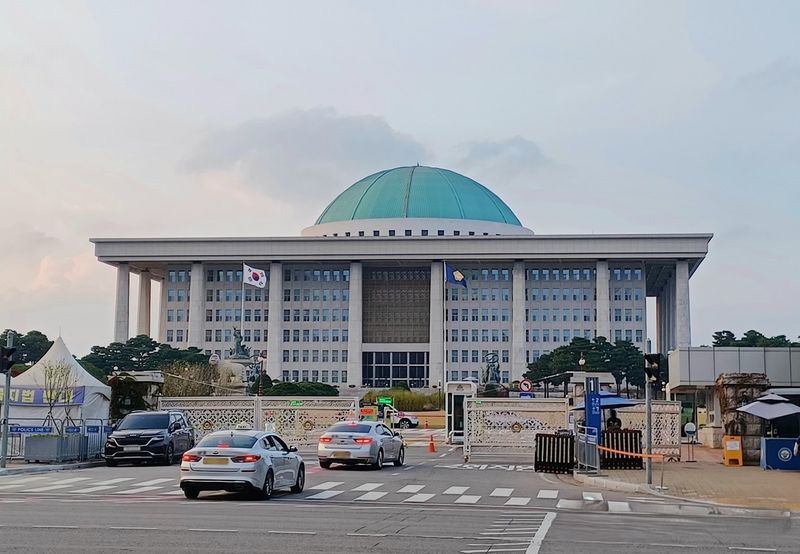
【Financial News, Jeju = Reporter Jeong Yong-bok】 The National Assembly will discuss plans to allocate police personnel in line with actual public safety needs and adjust the roles of the national and autonomous police in Jeju, which attracts more than 13.84 million tourists a year.
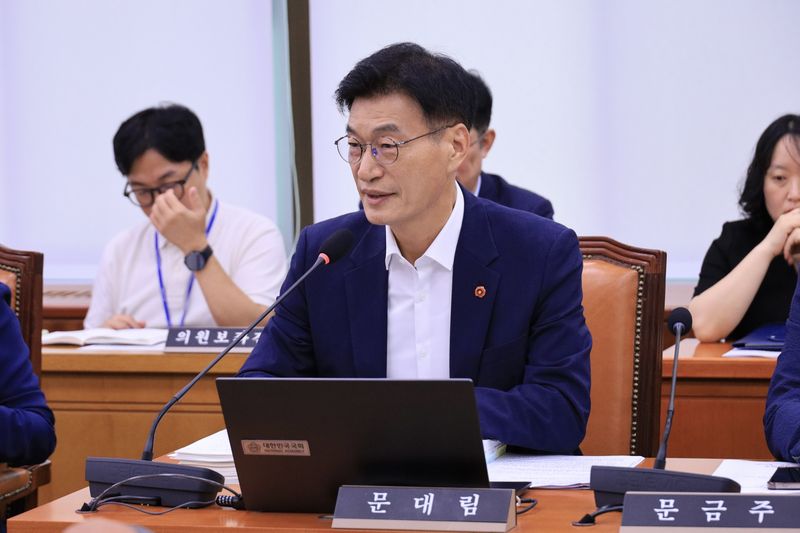
According to the office of Democratic Party of Korea lawmaker Moon Dae-rim on the 25th, a debate will be held at 2 p.m. on the 26th in Room 6 of the National Assembly Members’ Office Building under the theme, “Jeju, with 13 million tourists: Are police staffing and autonomous police powers adequate?”
Kim Young-jin, chair of the National Assembly’s Security and Public Administration Committee, and Lee Hae-sik, the committee’s secretary, will co-host the event with lawmakers Kim Han-gyu, Kim Seong-beom, Lee Joo-hee and Kim Dong-ah. The committee is a standing committee that reviews legislation and budgets under the Korean National Police Agency.
The discussion starts from the gap between Jeju’s actual public safety needs and the criteria used to allocate police personnel. The Jeju Tourism Association counted 13,846,961 visitors to Jeju last year. The island has regional characteristics that require it to take into account not only registered residents but also tourists and short- and long-term visitors.
Police staffing allocations are not determined solely by the registered population. In drawing up a plan last year to reallocate authorized police positions, the Korean National Police Agency used not only the population per police officer but also crime rates, 112 dispatches and the number of cases reported. A key issue at the debate is whether the existing indicators adequately reflect seasonal and regional public safety needs in tourist areas.
Police handling of cases and the oversight system are also under review. In Jeju, a police officer was indicted while in custody on suspicion of falsely closing two missing-person cases reported in May and July this year. Both missing people were later found dead.
The Jeju Provincial Police Agency reviewed all 298 missing-person cases handled by the officer and found 25 additional cases of improper handling, including false closures. On the 8th, the Jeju Western Police Station voted to dismiss the officer. The first trial is scheduled for the 28th.
The prosecution’s investigation also revealed that superiors had not provided effective direction or supervision while missing-person cases were being closed during night shifts. Apart from the size of the police force, ensuring the effectiveness of internal controls—from the receipt of a report through the search, case closure and supervisory review—remains an important challenge.
The structural limitations of Jeju’s autonomous police system will also be discussed. In 2006, Jeju launched the country’s first autonomous police unit under a local government. When the nationwide autonomous police system was introduced in 2021, an organization handling autonomous police duties also began operating within the Jeju Provincial Police Agency.
The autonomous police unit under the Jeju provincial government handles public safety, traffic management and local security, and exercises special judicial police powers in some areas. However, it lacks the authority to investigate ordinary criminal cases, so the national police handle cases such as violent crimes. When duties overlap in the field or cases must be transferred to another agency, continuity of response and accountability may become issues.
As of last May, the Jeju Autonomous Police Unit operated with an authorized strength of 175. It is a separate police organization responsible for the entire region, but its authority to investigate ordinary crimes and take urgent action at the scene is limited. This is why, alongside an increase in police staffing, a division of responsibilities and adjustment of powers between agencies are needed.
Dr. Jo Byeong-in of the Korean Institute of Criminology and Justice (KICJ) will chair the debate. Choi Eung-ryeol, professor emeritus in the Department of Police Administration at Dongguk University, is scheduled to present proposals for improving police deployment standards in response to changes in Jeju’s public safety needs. Lee Sang-hoon, a professor in the Department of Police Studies at Daejeon University, will present proposals to redesign the policing system with tourists and the resident population in mind.
Participants in the discussion will include Oh Dae-ho, head of the Organization Section at the Korean National Police Agency’s Planning and Coordination Office; Ko Jeong-geun, police policy officer at the Jeju Special Self-Governing Province Autonomous Police Unit; and Kim Byeong-ju, an immigration control officer at the Ministry of Justice.
“The recent spate of violent crimes and controversy over the handling of missing-person cases must not be dismissed as isolated incidents,” Moon said. “When Jeju residents report feeling at risk, the police must respond swiftly, and the public safety system must function properly so that residents who need protection can be protected to the very end.”
He added, “Through this debate, we will examine the roles and responsibilities of the national and autonomous police and seek improvements to laws and systems that will provide the personnel and powers needed in the field.”
[email protected] Jeong Yong-bok Reporter