“U.S. allies push for satellite communications independence from SpaceX... Going it alone is a long, hard road”
- Input
- 2026-10-25 07:11:12
- Updated
- 2026-10-25 07:11:12
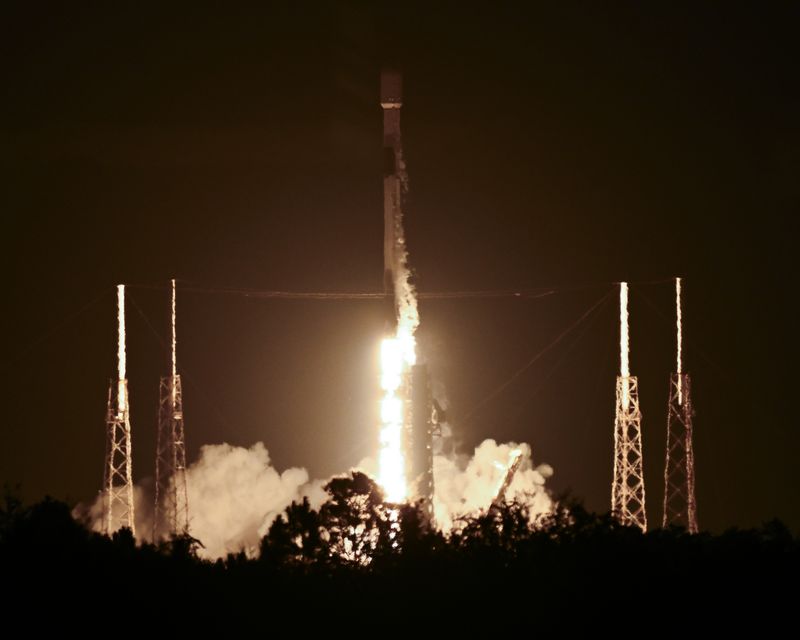
The Wall Street Journal (WSJ) reported on the 24th (local time) that U.S. allies have recognized the vulnerabilities of the satellite communications networks they relied on SpaceX to provide and are seeking to become independent.
They had witnessed firsthand the chaos that followed a sudden restriction on the speed of SpaceX’s Starlink satellite communications service used by Ukraine, a decision made by CEO Elon Musk. They have begun to realize that relying on the United States for satellite communications, a vital piece of infrastructure, is reckless.
Europe recognizes the need for satellite communications independence
European countries have begun to realize how dangerous it is to rely on a system with a built-in “kill switch.” The Ukraine crisis made them realize that Musk could disable a vital communications network without consulting Europe if he chose to.
Polish Foreign Minister Radosław Sikorski criticized Musk on the social media platform X. “The more you try to do politics with your products, the more your brand will be damaged,” Sikorski said. Poland covers part of the cost of Ukraine’s Starlink service.
Concerns over reliance on SpaceX are also growing in the U.S.
Even within the Republican Party, the U.S. ruling party, voices of concern are being raised about relying on Musk’s SpaceX.
Senator Kevin Cramer (North Dakota) said on the 23rd that the United States “should not be so dependent on one system, one person, one company.”
There is no alternative
The problem facing customers of Starlink, SpaceX’s satellite communications network, is that there is no system to replace it in the short term. There is only one European company that can compete with the low Earth orbit satellite system dominated by SpaceX: OneWeb, a subsidiary of France’s Eutelsat. OneWeb currently operates about 650 satellites and plans to expand that number to about 1,300 by 2030. Last month, it commissioned Airbus to build low Earth orbit satellites worth €1 billion (about 1.48 trillion won).
But it is unclear whether OneWeb’s satellite communications network can replace SpaceX’s Starlink. Starlink currently has more than 11,000 low Earth orbit satellites.
Moreover, OneWeb’s technology is outdated and less efficient. Its satellite communications terminals are particularly large and heavy, and consume a lot of power, making them difficult to deploy on the front lines. Switching Starlink or its military version, Starshield, to OneWeb would also require replacing thousands of terminals. Because SpaceX uses proprietary technology, Starlink terminals cannot connect to OneWeb’s network.
Ukraine to cooperate with Finland
Despite this, Ukraine, which took a hard hit in the recent crisis, agreed on the 22nd to take part in Finland’s satellite communications network plan. The two countries announced a €300 million support package (about 500 billion won) and agreed to use part of the funding to participate in building a satellite communications network being pursued by Finnish satellite communications operator ICEYE and telecommunications equipment maker Nokia. The first satellite launch is scheduled for 2028.
Canada and the EU also plan their own satellite networks
Canadian satellite communications company Telesat is also pursuing Lightspeed, a low Earth orbit satellite communications network. It plans to launch 288 satellites this December and begin operations in early 2028.
The European Union (EU) has signed a contract with three companies, including Eutelsat, to build a national satellite communications network consisting of 348 satellites, known as IRIS2. The project is expected to cost about $17.5 billion (about 23 trillion won). The first satellite will be launched in 2029.
In Europe, Starlink primarily provides satellite internet services for households, businesses and airline passengers, and is gradually expanding into military use, though its role there remains limited.
Tom Withington, an associate research fellow at the UK defense think tank Royal United Services Institute (RUSI), said military satellite communications networks must be difficult to hack or jam and provide a broad range of frequencies. “In that respect, there is currently no technology that can replace Starlink,” he said. He added that developing such technology takes time because it combines multiple technologies, and that it would be remarkable if Ukraine were to develop it.
A costly financial battle
Another key factor making it difficult for countries to go it alone in satellite communications is their financial resources.
With a market capitalization of about $2 trillion (about 2,653 trillion won), SpaceX has financial resources that are difficult for most countries to match.
Germany, Europe’s largest economy, has pledged to invest about $40 billion in space-related defense by 2030. French President Emmanuel Macron decided last year to increase France’s space defense budget by 70% by 2030, but even then it would amount to only about $11 billion.
German Defense Minister Boris Pistorius called satellite communications networks “the Achilles’ heel of modern society” and said Germany would operate orbital surveillance systems and satellite operations centers, among other things. But its planned constellation will comprise only a little over 100 satellites.
Germany’s Isar, the only private rocket launch company on the European continent, also lags far behind SpaceX in launch capacity. Isar launched its Spectrum rocket last month. The rocket carried five small satellites. By contrast, SpaceX’s Falcon rocket is more than twice the size of Spectrum. OneWeb, Canada’s Telesat and others use Falcon rockets to place satellites in Earth orbit.
[email protected] Song Kyung-jae Reporter