“A 12-year-old girl complained of a headache; her blood pressure was a staggering 225” ... The deadly “something” found in her aorta [Warning Signs]
- Input
- 2026-10-24 17:00:00
- Updated
- 2026-10-24 17:00:00
[Financial News] She was only 12. A girl of elementary school age had an unbelievable blood pressure reading: “225/158 mmHg.” It was a deadly warning sign that required immediate emergency treatment even in adults.
The girl had suffered from recurring headaches for more than five months. Each episode lasted three or four hours, followed by dizziness, vomiting, and fatigue. The cause of her pain, which had remained unknown, came to light when her blood pressure was measured at a local hospital.
Her blood pressure at the first measurement was 205/140 mmHg. Vasodilators and blood pressure medication were administered immediately, but had no effect. Shortly after she was transferred to a higher-level hospital, her systolic blood pressure soared to a staggering 225 mmHg.
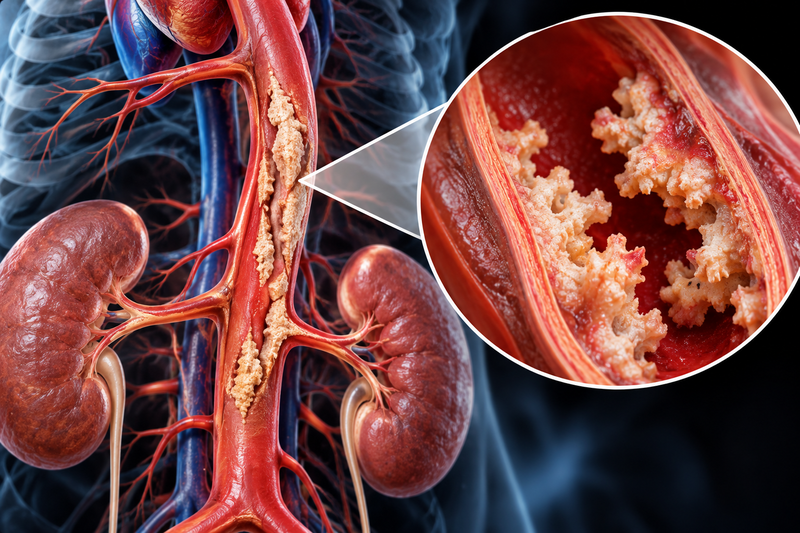
The medical team began a detailed examination and encountered an unexpected, bizarre lesion. A chest computed tomography (CT) scan showed hard calcium deposits irregularly accumulated inside the descending aorta, which carries blood from the heart to the rest of the body. It was a condition medically known as “coral reef aorta,” so named because its appearance resembled a coral reef under the sea.
This shocking rare case, reported by doctors at the First Affiliated Hospital of Xinjiang Medical University in China’s Xinjiang Uygur Autonomous Region, was recently published in the international journal Journal of Medical Case Reports.
The aorta is the main channel that supplies blood to the major organs in our body. In the girl’s case, a hard, coral reef-shaped calcified lesion in the vessel wall was completely blocking the arteries leading to her left kidney and intestines. The right renal artery was also moderately narrowed.
This was the decisive cause of her severe hypertension. The kidneys serve not only to remove waste but also as a control tower for regulating blood pressure. When blood flow to the kidneys decreased, the body mistook this for a drop in blood pressure and excessively secreted hormones that raise it. As a result, renovascular hypertension developed, causing blood pressure throughout the body to rise explosively.

Coral reef aorta is a rare disease found mainly in adults with risk factors for vascular disease, such as hyperlipidemia, diabetes, and smoking. Its occurrence in a 12-year-old girl, and without any obvious genetic or metabolic defects, is extremely unusual even in the medical community.
Treatment was carried out swiftly and precisely. Taking into account that the girl was still growing, the medical team opted for balloon angioplasty—using a catheter inserted through a blood vessel in the groin to expand the narrowed right renal artery—instead of inserting a fixed metal mesh (stent). Her blood pressure dropped significantly immediately after the procedure, and she later regained a stable condition with medication as well.
Experts warn that headaches in children and adolescents should never be taken lightly.
If recurring headaches are accompanied by vomiting or dizziness and hypertension that cannot be controlled with medication develops, the underlying cause—such as structural abnormalities in the blood vessels and kidneys—should be investigated rather than focusing solely on the blood pressure reading itself. The headache of a 12-year-old girl who had seemed perfectly ordinary was an urgent distress call from an aorta blocked tight, sent out to her entire body.
[email protected] Jeon Sang-il Reporter