Kim Jong Un visits China via new Yalu River bridge for first time in a year; likely to meet Xi Jinping
- Input
- 2026-10-24 15:21:05
- Updated
- 2026-10-24 15:21:05
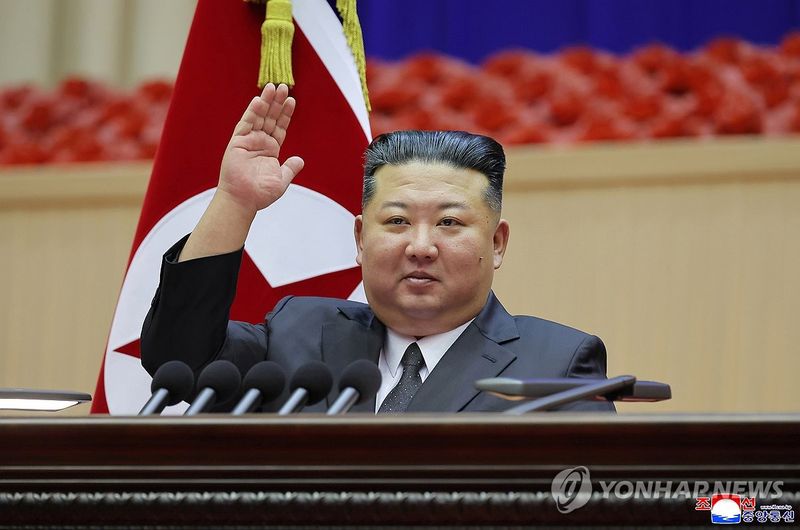
[Financial News] Attention is focused on where North Korean leader Kim Jong Un will go next and the purpose of his visit to China after he arrived in Dandong, China, on the 24th via the New Yalu River Bridge. There is speculation that he may discuss ways to expand economic cooperation at a summit with Chinese President Xi Jinping while also coordinating strategy for negotiations with the United States ahead of U.S. President Donald Trump's visit to China next month. Attention is also on whether diplomatic activity surrounding the Korean Peninsula will accelerate as North Korea restores ties with China after strengthening military cooperation with Russia.
According to the Ministry of Unification, Kim arrived in China that day via the New Yalu River Bridge, which connects Sinuiju in North Korea with Dandong in Liaoning Province, China. North Korea and China have not yet disclosed specific details of the visit's schedule or purpose. It has also not been confirmed whether Kim will stay in Dandong or travel to another city, such as Beijing.
The main question is whether Kim will meet with Xi. If Kim travels to Beijing, the two leaders will sit down together again about four months after Xi's visit to Pyongyang last June. In September last year, Kim attended a parade in Beijing marking the 80th anniversary of Victory Day and stood on the Tiananmen rostrum alongside Xi and Russian President Vladimir Putin. The next day, September 4, he held a separate summit with Xi, and the two agreed to expand high-level exchanges and economic cooperation. If a summit takes place this time, it could provide an opportunity to review progress in implementing the agreements reached then and flesh out plans for further cooperation.
Who receives Kim or takes part in talks on the Chinese side is also a point of interest. If a summit with Xi takes place, it would signal the top leadership's determination to manage bilateral relations strategically. If, on the other hand, the visit focuses on contacts with senior officials of the Chinese Communist Party or local governments, it could be interpreted as placing emphasis on expanding border trade and economic cooperation. However, the Chinese officials who will receive Kim and his meeting counterparts have not yet been confirmed.
The timing of the visit to China is also drawing attention. President Trump is expected to visit China next month to attend the Asia-Pacific Economic Cooperation (APEC) summit, which will be held in Shenzhen on the 18th and 19th. Although the possibility of a meeting between the North Korean and U.S. leaders has been discussed, foreign media reported on the 23rd that U.S. and South Korean officials viewed the chances of a North Korea-U.S. summit taking place within the year as low. With North Korea not responding to the U.S. offer of dialogue, what role China might play in contacts between North Korea and the United States remains an unknown.
In this context, if Kim meets with Xi, the resumption of North Korea-U.S. dialogue could also be a key topic. As China is in a position to communicate with both North Korea and the United States, it could serve as a diplomatic channel for conveying each side's position. However, there is still no direct evidence that this visit to China is intended to prepare for a North Korea-U.S. summit. North Korea may instead seek to send a message that it will not rush negotiations with the United States by strengthening its ties with China.
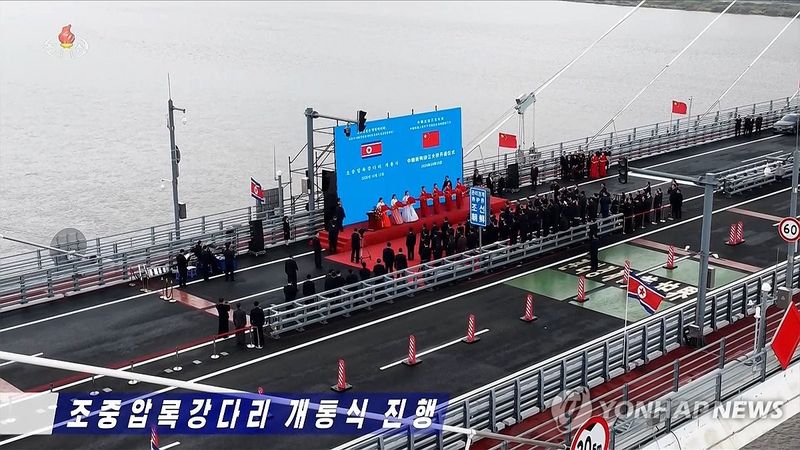
Economic cooperation is an area where more concrete results can be expected. The New Yalu River Bridge, in particular, symbolizes the significance of Kim's visit to China. The bridge connecting Dandong in China and Sinuiju in North Korea was completed in 2014 but remained unopened for 12 years because, among other things, connecting facilities on the North Korean side were not ready. It officially opened on the 15th. Unlike the existing China-North Korea Friendship Bridge, it has four lanes and is well suited to transporting freight by large trucks. Kim's decision to use the bridge himself just nine days after it opened is seen as an effort to highlight the restoration of North Korea-China economic cooperation.
Professor Eul-Chul Lim of the Institute for Far Eastern Studies at Kyungnam University forecast that “the capacity to handle cargo volumes in border areas will expand significantly compared with existing levels” following the opening of the New Yalu River Bridge. Expanding trade with China could also help North Korea secure the materials and equipment needed to build local industrial facilities and pursue economic development.
The restoration of North Korea-China ties is also intertwined with closer North Korea-Russia ties. Since the war in Ukraine began, North Korea has strengthened military and security cooperation with Russia, gaining some room to reduce its dependence on China. China has reason to be wary of a weakening of its influence over North Korea. North Korea, in turn, may pursue a strategy of maintaining military cooperation with Russia while securing economic benefits from China.
North Korea-China relations have in fact improved rapidly this year. Following Xi's visit to Pyongyang last June, Wang Huning, China's fourth-ranking official and chairman of the Chinese People's Political Consultative Conference (CPPCC), visited North Korea in July. The New Yalu River Bridge opened this month, and visits to China by delegations from North Korean local governments have continued. The two countries' restored ties appear to be expanding beyond summit diplomacy into economic and local-government exchanges.
However, it is difficult to see North Korea-China-Russia cooperation developing immediately into a unified military and economic bloc. Military cooperation is central to North Korea's relationship with Russia, while China has comparatively greater interests in stability on the Korean Peninsula and maintaining its economic influence. Even as China strengthens its ties with North Korea, it may be concerned that heightened tensions on the Korean Peninsula could further advance security cooperation among the United States, South Korea and Japan.
Sanctions against North Korea are also a constraint on expanding economic cooperation. Hanbeom Cho, a distinguished research fellow at the Korea Institute for National Unification, pointed out that “structural constraints in the form of sanctions against North Korea remain in place in connection with the recent normalization of North Korea-China trade.” In other words, even with the opening of the New Yalu River Bridge, trade in goods subject to sanctions will not become unrestricted.
[email protected] Kim Kyung-min Reporter