Japan weighs counting AI and infrastructure budgets as defense spending to counter US pressure to boost outlays
- Input
- 2026-10-24 13:34:30
- Updated
- 2026-10-24 13:34:30
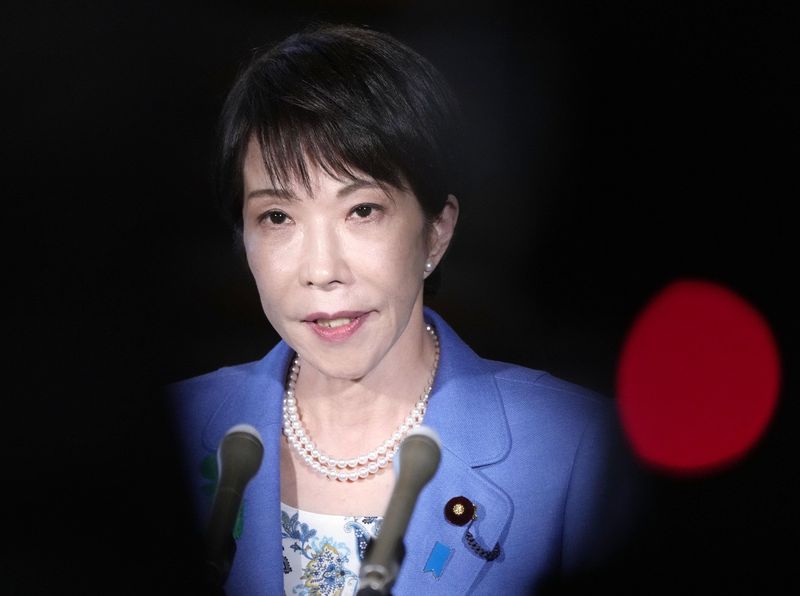
[Financial News] Japan's government is considering including security-related government spending—such as spending on artificial intelligence (AI), energy and infrastructure, and development assistance—in defense spending. The move is intended to respond to US demands for Japan to increase defense spending to 3.5% of gross domestic product (GDP) by broadening the range of budgets counted as defense spending.
According to the Nikkei on the 24th, the Sanae Takaichi Cabinet has begun considering broadening the range of government expenses that can be counted as defense spending.
The Japanese government plans to revise this year what are known as the “three key security documents”: the National Security Strategy, the National Defense Strategy and the Defense Buildup Program. The Defense Buildup Program will set out the budget needed over five years from fiscal 2027 for the Japan Self-Defense Forces (JSDF) to acquire equipment and maintain its capabilities.
The existing plan, drawn up in 2022, set total defense spending at ¥43 trillion (about ₩363 trillion) over five years. The new plan is expected to raise that figure to ¥60 trillion–¥80 trillion (about ₩506 trillion–₩675 trillion).
However, even a sharp increase in the budget would fall short of the 3.5% of GDP demanded by the United States. Estimates suggest that annual defense spending of about ¥20 trillion would be needed to meet the US demand.
In response, the Japanese government is considering counting spending related to economic security as defense spending, extending beyond traditional military spending. This could include budgets related to energy security, official development assistance (ODA) that contributes to security, and AI investments closely linked to defense capabilities.
However, the Japanese government is taking a cautious approach to explicitly stating in its new defense spending plan the 3.5%-of-GDP target demanded by the United States. It intends to maintain its existing principle of first deciding which projects and equipment are needed, then adding up the required budget.
The fiscal burden is the problem. According to the Tokyo Shimbun, fixed costs alone—including payments under past weapons procurement contracts and personnel expenses—will amount to about ¥30 trillion (about ₩253 trillion) of defense spending over the five years from fiscal 2027. This means that even if total defense spending rises, the funds available for new equipment and strengthening capabilities could remain limited.
The tax-cut policies pursued by the Sanae Takaichi Cabinet are also adding to the fiscal burden. The Japanese government plans to temporarily lower the consumption tax on groceries starting next year, but has not provided specific details on how it will fund the increase in defense spending and the tax cuts.
The cost of energy subsidies is also rising as the situation in the Middle East drags on. The Japanese government and ruling party are considering gradually reducing subsidies paid to refiners to keep gasoline prices around ¥170 per liter (about ₩1,435), and adjusting consumer prices to around ¥180 per liter (about ₩1,519).
As Japan seeks to stabilize energy prices, cut taxes and strengthen its defense capabilities at the same time, the burden of managing government finances is expected to grow further.
[email protected] Kim Kyung-min Reporter