Iran war reshapes energy market: Qatar, an LNG exporter, signs import deal with the U.S.
- Input
- 2026-10-24 13:03:07
- Updated
- 2026-10-24 13:03:07
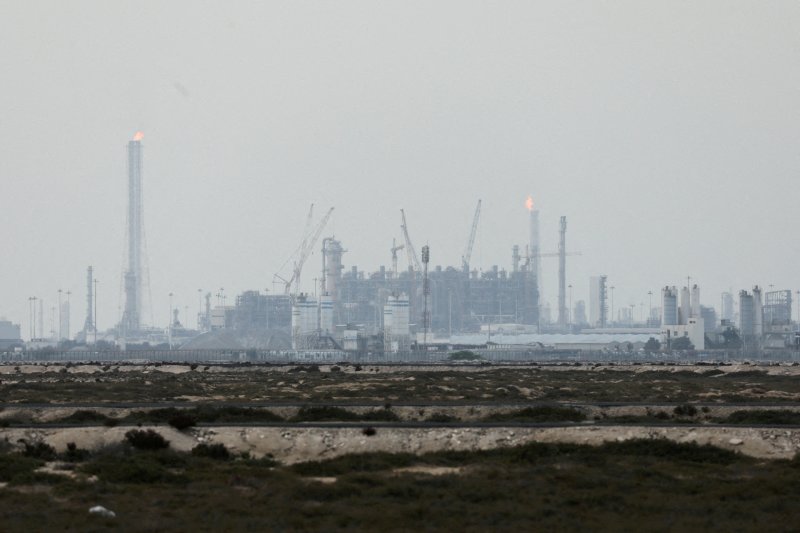
[Financial News] Qatar, once one of the world’s largest natural gas exporters, has found itself buying liquefied natural gas (LNG) from the United States, its biggest competitor, just eight months after the war with Iran began.
On the 23rd (local time), business news network CNBC reported that QatarEnergy, Qatar’s state-owned energy company, had signed a long-term contract with Cheniere Energy, the largest U.S. LNG exporter, to receive 4 million cubic tons of LNG annually through 2054. The purchase price will be based on U.S. Henry Hub gas prices plus a fixed fee, and deliveries are scheduled to begin in the 2030s.
Cheniere CEO Jack Fusco said, “We look forward to being able to supply QatarEnergy reliably through our Sabine Pass and Corpus Christi facilities through the latter half of this century.”
The volume in this deal is less than 1% of the more than 400 million tons of LNG traded globally each year, but Alex Munton, global gas and LNG director at Houston-based Rapidan Energy Group, said it was “one of the largest deals of its kind seen in the United States.”
The deal clearly shows how the war with Iran is reshaping the global energy market in favor of U.S. companies. Since the war began, shares in Cheniere and Venture Global, two major U.S. LNG exporters, have surged 26% and 40%, respectively.
Before the war, Qatar was the world’s second-largest LNG exporter, behind the United States. But its exports plunged after Iran bombed Ras Laffan, one of Qatar’s key production facilities, this past March. The attack severely damaged two production trains, wiping out about 17% of Qatar’s total LNG export capacity.
Qatar’s Minister of Energy, Saad Sherida Al-Kaabi, said, “It will take about three years just to repair the damage.” Since the attack in March, Qatar has declared “force majeure” every month, meaning it cannot fulfill its contracts.
In an interview during the UN General Assembly in September, Minister Al-Kaabi acknowledged, “Our production capacity has suffered a major blow for the next several years,” adding, “Exports through the Strait of Hormuz are impossible, so our current export volumes are extremely low.”
The problem is that it remains unclear whether security in the Strait of Hormuz will be restored even after repairs to the Ras Laffan facility are complete. Analysts say Qatar is preparing for the risk that freedom of navigation through the strait may not be fully restored, as Iran continues to attack oil tankers.
Experts point out that there is virtually no way to bypass the Strait of Hormuz, given that LNG must essentially be transported by sea. Facing the double blow of destroyed production facilities and a blockade of the strait, QatarEnergy is seeking a way forward in the LNG trading business through its contract with Cheniere.
Manav Gupta, an analyst at Swiss bank UBS, said, “Qatar secured $3 billion in loans from Chinese banks earlier this month,” adding, “It appears to be using the funds to secure additional U.S.-produced LNG and fulfill the volumes in its existing international supply contracts.” QatarEnergy is also reportedly in the final stages of negotiations with U.S. company Venture Global for a supply contract covering 3 million tons annually.
Optimistic forecasts for U.S. LNG companies are pouring in on Wall Street. Nearly 90% of equity analysts covering Cheniere have issued “buy” ratings, and the average price target of $314 reflects significant potential for further gains. UBS has set a price target of $340 for Cheniere. About 60% of analysts also recommend buying Venture Global shares.
Munton of Rapidan Energy Group said, “Buyers around the world are once again turning to the United States to diversify their supply chains.” He forecast, “With facilities being built on a massive scale across the United States, the country’s share and influence in the global LNG market will become even more dominant.”
[email protected] Yoon Jae-joon Reporter