“All in Korean stocks, but...” — Stock-market cash on the sidelines plunges to a yearly low, from ₩140 trillion to ₩88 trillion
- Input
- 2026-10-24 10:31:22
- Updated
- 2026-10-24 10:31:22
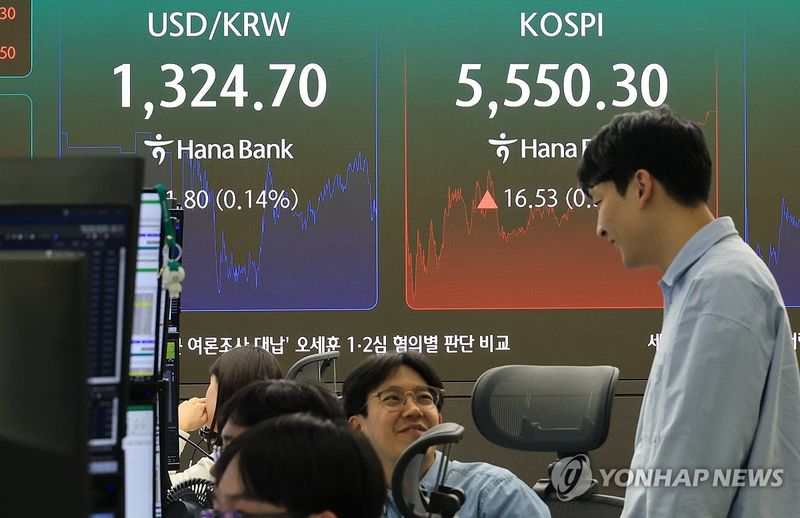
[Financial News] Investor deposits, which surged alongside the rise in the KOSPI Composite Index in the first half of the year, have fallen by more than 50 trillion won in just over four months.
According to the Korea Financial Investment Association, investor deposits stood at 88.6841 trillion won as of the 22nd, their lowest level since Jan. 13, when they were 88.0489 trillion won—the lowest level recorded this year. After dipping below 90 trillion won on the 21st for the first time in more than nine months, deposits fell further, reaching their lowest level of the year.
Compared with June 4, when deposits stood at 139.6947 trillion won, close to 140 trillion won, they fell by 51 trillion won—36.5%, or more than a third of the total—in just over four months. After hitting an all-time high in June, they have returned to levels seen at the start of the year.
Investor deposits are funds that individual investors have placed in brokerage accounts to buy stocks but have not yet invested; they serve as money on standby for stock investments. These deposits increase when individuals transfer money from banks and other sources for investment or sell stocks they had previously bought. Conversely, they decline when investors buy stocks or transfer funds to banks and elsewhere.
Looking at individual investors’ stock-market trading from June 4, when deposits peaked, through the 23rd, they were net buyers of more than 44 trillion won (44.1661 trillion won) on the main board. Their net purchases of KOSDAQ stocks also reached 3.1456 trillion won, and they bought large amounts of exchange-traded funds (ETFs).
Since June 4, net purchases of ETFs have totaled 28.2538 trillion won. Individual investors are also estimated to have bought several trillion won worth of stocks through brokerage accounts, in addition to their net purchases through individual retirement pension (IRP) and pension savings accounts. Given individuals’ net purchases across the various markets, most of the 51 trillion won decline in deposits appears to have been invested in domestic stock markets, including the main board.
An industry source said, “This means that a large amount of stock-market funds probably did not move back into banks and elsewhere,” adding, “A substantial portion of the deposits may have been used to buy stocks and could now be tied up amid the recent market downturn.”
In the first half, investor deposits actually increased even as individuals bought large amounts of stocks. This was because, in a rising market, more money flowed into brokerage accounts than was spent on stock purchases. But since deposits peaked, despite continued net buying by individual investors, the amount of additional money flowing into the stock market appears to have fallen sharply amid the uncertain downturn.
Unlike in the first half, when massive sums were poured into the market to absorb foreign investors’ selling, falling investor deposits could leave the stock market vulnerable to downward pressure amid a shortage of funds. On Jan. 13, when deposits were at their lowest level this year, the KOSPI Composite Index stood at 4,692.64, more than 800 points below its level of 5,533.77 on the 22nd.
[email protected] Kim Hee-sun Reporter