“The same price, so why different portions?”—A restaurant’s discriminatory “men’s noodles, women’s noodles” [What do you think?]
- Input
- 2026-10-25 07:00:00
- Updated
- 2026-10-25 07:00:00
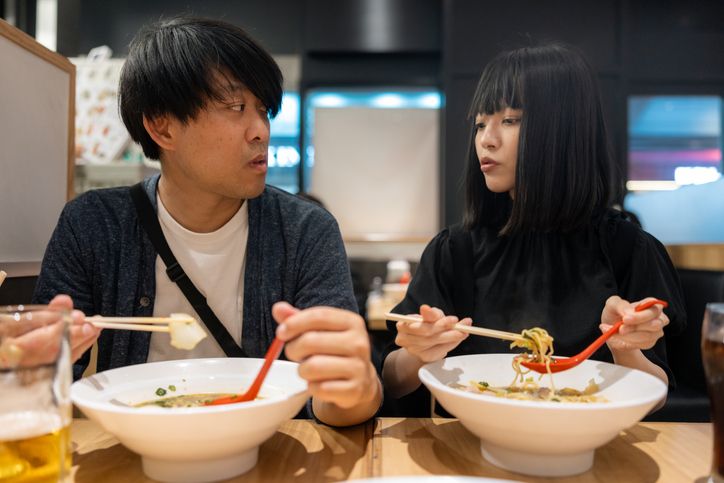
[Financial News] Online debate is intensifying over a restaurant’s practice of serving different portion sizes according to customers’ gender, despite offering the same menu at the same price.
A man identified as A recently shared his story on the social media platform Thread, saying he had an unpleasant experience after visiting a nearby restaurant with a female coworker.
According to A, the two ordered the same noodle dish. But the employee taking their order called out to the kitchen, “One portion of men’s noodles, one portion of women’s noodles.” When the two bowls arrived a short while later, the difference in portion size was obvious at a glance. The noodles served to his female coworker were noticeably less than those in A’s bowl.
When his coworker complained, “We paid the same price, so why are the portions different?”, the server replied, “Women usually eat less than men, don’t they? If you find you don’t have enough, we’ll give you more.” A said his coworker finished her meal without asking for more, but felt uncomfortable and made clear she would not return.
After the story came to light, most online commenters condemned the restaurant, saying it was unfair to serve smaller portions based on gender at its own discretion without first asking customers what they wanted.
Comments online included: “Serving less just because of someone’s gender when they paid the same price is clearly consumer deception and discrimination”; “Common sense is to serve the standard portion first and offer refills to anyone who needs more”; and “If you intend to serve less, you should charge less too.”
Similar accounts poured in, along with reactions such as, “Many women eat more than the average man, just like big-eating YouTubers do; assuming how much someone eats based on gender is nothing but a stereotype.” Some commenters criticized what they described as a recurring practice: “When I dined out with my husband, the rice bowl came only half full”; and “The amount of meat in the rice bowl was different from what male customers got. When I complained, they rudely threw in a few extra pieces.”
Some, however, cautiously suggested that it may have been a desperate measure by a small-business owner trying to reduce food waste from uneaten leftovers.
As the controversy grows, some are also calling for improvements to the ordering system—not simply dividing portions by gender—to reduce leftovers and increase customer satisfaction. One commenter noted, “Reasonable alternatives are needed, such as offering large, medium, and small portions of rice or noodles so customers can choose for themselves, or discounting the price when someone chooses a smaller portion.”
[email protected] Moon Young-jin Reporter