France deploys 70,000 police ahead of mass protests, brings in armored vehicles too
- Input
- 2026-10-24 08:42:32
- Updated
- 2026-10-24 08:42:32
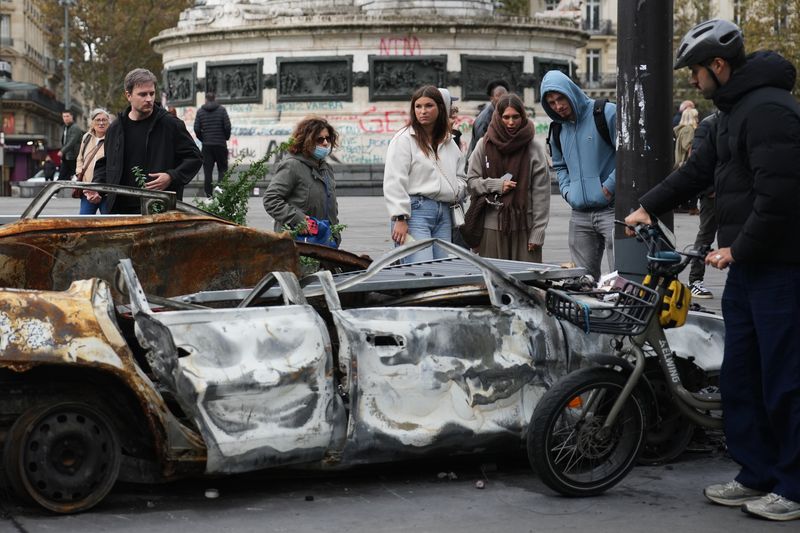
[Financial News] The French government has decided to deploy 70,000 police across the country in preparation for large-scale anti-government protests this weekend. It plans to mobilize armored vehicles, water cannons and even counterterrorism special units to prevent violence. Tensions are mounting after a shooting also took place near Paris, a day before the demonstrations.
On the 23rd, local time, AFP and other news agencies reported that French Interior Minister Laurent Nuñez said at a press conference that 70,000 police would be deployed for protests scheduled nationwide on the 24th. The government plans to deploy around 20 armored vehicles, 15 water-cannon vehicles, helicopters and drones, and assign special teams responsible for counterterrorism operations to guard major public facilities.
Minister Nuñez warned on social media that some radical groups were inciting violence and looting, and said the authorities would respond firmly to illegal acts. According to a French police union, at least 75% of the entire police force is expected to be deployed for the security operation.
The government has also restricted protest locations and march routes. In Paris, marches will be allowed only at Place de la Bastille and along some routes in the east of the city, while weekend protests have been banned in Lyon. In Marseille, protests have also been banned except for a rally organized by a labor union and approved by the authorities.
Opposition parties and human rights groups pushed back against the measures, saying they infringed on freedom of assembly. Amnesty International criticized them as threatening the right to peaceful protest.
The protests began with student rallies calling for improved education conditions and grew to include grievances over insufficient public-sector investment and the high cost of living. President Emmanuel Macron met directly with student representatives for the first time on the 23rd, but the two sides failed to narrow their differences. The students say they will continue protesting and are demanding concrete measures from the government.
A shooting spree also took place near Paris ahead of the protests. That morning, a man traveling by car in Trappes and La Verrière fired at passersby, killing one person and injuring five. Among the injured was a 12-year-old girl who was hit by multiple bullets.
Police arrested a 39-year-old male suspect, and the National Anti-Terrorism Prosecutor’s Office is investigating whether hatred based on race or religion was the motive for the crime. President Macron visited the scene and condemned the incident as a “racist terror attack.”
Political tensions are another factor in the protests. The far-right National Rally (RN) is holding its party convention in Orléans this weekend, while anti-racism groups and others have announced counter-rallies. Local authorities expect up to 30,000 people to attend the counter-rallies.
Stores in Paris and other major cities are preparing for looting and property damage, including by boarding up their windows. President Macron has also postponed a planned trip to Africa to respond to the situation at home.
[email protected] Kim Kyung-min Reporter