U.S. Says Iran War Could Last Another Year, Diverging from Trump’s Calls for an Early End
- Input
- 2026-10-24 08:25:43
- Updated
- 2026-10-24 08:25:43
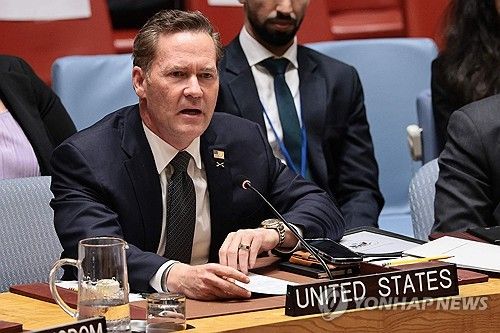
[Financial News] The U.S. government is preparing for a prolonged standoff with Iran, leaving open the possibility that the war could continue for at least another year. Although U.S. President Donald Trump has repeatedly emphasized the possibility of an early end to the war, the two sides’ positions have barely converged on Iran’s nuclear program and the restoration of normal transit through the Strait of Hormuz.
In an interview with the British Financial Times (FT), published on the 23rd (local time), Mike Waltz, the U.S. ambassador to the UN, acknowledged the possibility that even a year from now, the United States and Iran may not have reached a nuclear deal and transit through the Strait of Hormuz may not have returned to normal.
Asked about the possibility of a prolonged deadlock, Ambassador Waltz said, “I don’t want to talk about hypothetical situations,” but added, “I hope Iran engages in meaningful negotiations before then.” Rather than offering a timeline for when the war might end, he made clear that a change in Iran’s stance was the priority.
The United States intends to maintain military and economic pressure until Iran agrees to negotiate. Ambassador Waltz said the U.S. Navy could maintain a naval blockade of Iranian ports for a considerable period, and explained that the Trump administration was also tightening economic sanctions.
He cited limits on Iran’s nuclear development as a key condition for ending the war. He stressed that the United States could consider its strategic objectives achieved only if Iran’s highly enriched nuclear material were removed and a substantive agreement were reached on uranium enrichment activities.
These remarks contrast with President Trump’s claims that the war will end soon. Trump continues to maintain that the war can be brought to a quick end, but in actual negotiations, differences over limits on nuclear development and maritime transit remain unresolved. The possibility that the United States will maintain pressure on Iran for an extended period can no longer be ruled out.
Ambassador Waltz also signaled a major overhaul of UN peacekeeping operations (PKO). He criticized some peacekeeping missions for lasting decades, consuming vast sums of money while failing to contribute to resolving conflicts.
The United States is pushing to end peacekeeping missions currently underway in Lebanon, Somalia and Western Sahara. In particular, it stressed the need to withdraw the United Nations Interim Force in Lebanon (UNIFIL), saying it should not continue its mission in its current form.
This is seen as a move by the Trump administration to prepare for a prolonged standoff with Iran while scaling back financial support for the United Nations and international peacekeeping operations.
[email protected] Kim Kyung-min Reporter