Winter international flights to 44 countries, 5,353 flights a week; inaugural routes include Busan–Guangzhou
- Input
- 2026-10-25 11:00:00
- Updated
- 2026-10-25 11:00:00
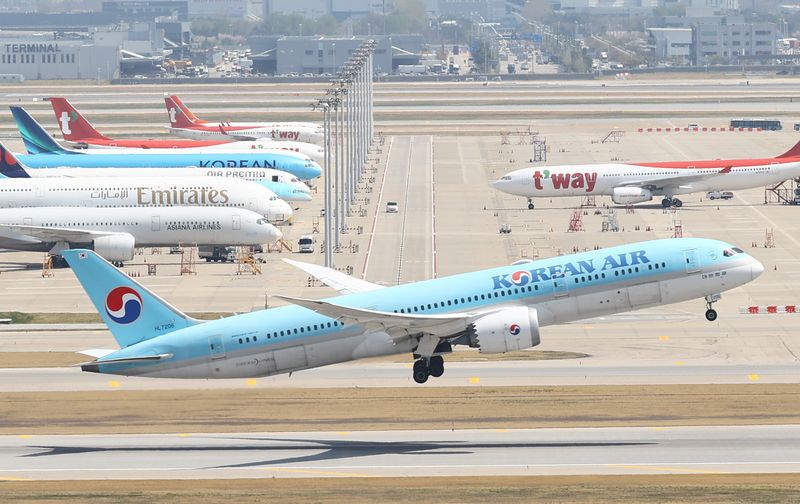
[Financial News] The Ministry of Land, Infrastructure and Transport has finalized the schedules for regular international and domestic flights for the winter season, from the 25th of this month through March 27 next year. The schedule includes inaugural routes such as Busan–Guangzhou.
On the 25th, the Ministry of Land, Infrastructure and Transport said that during the winter season, 84 airlines are expected to operate regular international passenger services to 44 countries on 264 routes, with up to 5,353 flights a week. The carriers include 11 South Korean airlines and 73 foreign airlines.
Japan is the destination seeing the largest increase in flights. Demand for travel by South Koreans and for visits to South Korea by Japanese travelers is growing. Services will increase by 314 flights a week compared with the same period last year. Incheon International Airport has 29 routes to Japan, including Tokyo Narita and Haneda. Gimhae International Airport has nine, Cheongju International Airport 10, Daegu International Airport four, Jeju International Airport three and Gimpo International Airport three. Demand for travel to smaller Japanese cities, including Matsuyama and Sendai, is rising, and optimism is being felt in the aviation industry.
China will also see 232 additional flights a week, with new routes launching for the first time. These include Air Busan’s Busan–Guangzhou service, Eastar Jet’s Cheongju–Xiamen service, Air Premia’s Incheon–Ningbo service and Spring Airlines’ Jeju–Shijiazhuang service. Incheon Airport has 43 routes to China, including Beijing Daxing and Capital, Shanghai Pudong and Hong Kong. Gimhae has 12, Cheongju seven, Daegu five, Jeju 15 and Gimpo three.
Routes to Northeast and Southeast Asia, including Japan, China and Taiwan, will also operate from airports across the country.
For routes to the Americas, Incheon will operate 17 routes to the United States, including to New York JFK, Newark, Washington and Los Angeles (LA), as well as three routes to Canada, including Toronto, and two to Mexico. Gimhae Airport alone operates a route to Guam; other regional airports do not operate flights to the Americas. Flights to Europe, the Middle East, Africa and Oceania operate only from Incheon Airport.
Domestic services will operate 1,735 times a week across 20 routes, including 13 routes to Jeju and seven inland routes. After demand was confirmed, the Incheon–Jeju service was increased from two to three flights a week.
The Ministry said it drew up the regular flight schedules with a focus on avoiding inconvenience to consumers as the merger of Korean Air and Asiana Airlines is set to be completed on December 17. It closely reviewed the airlines’ operating and safety management plans and actively supported them in obtaining approval from foreign aviation authorities.
The assessment that Incheon Airport’s achievement of the top spot in international passenger numbers, according to Airports Council International (ACI) statistics, had laid the groundwork for revitalizing regional airports was also taken into account. Based on data through September, passenger numbers at regional airports are projected to reach 19.93 million when annualized. That would be a sharp increase from 16.89 million last year and 14.63 million in 2024.
Jeong Chae-gyo, the Ministry of Land, Infrastructure and Transport’s head of aviation policy, said, “We will continue working to expand the choices available to the public and improve travel convenience day by day, while taking even greater care to ensure airlines manage safe operations.” He added, “Passenger numbers at regional airports are also increasing significantly thanks to proactive policies to revitalize them.”
[email protected] Kim Yun-ho Reporter