Jeju Province reviews flood and airport response plans ahead of Typhoon Champi; 150 mm or more forecast in mountainous areas
- Input
- 2026-10-23 16:46:55
- Updated
- 2026-10-23 16:46:55
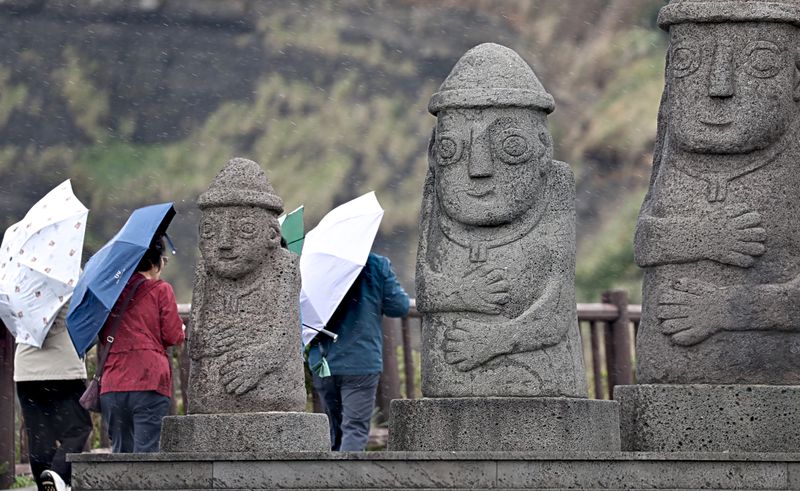
【Financial News Jeju = Reporter Jeong Yong-bok】 With the 30th typhoon, Champi, moving north, 150 mm or more of rain is forecast in Jeju’s mountainous and mid-mountain areas through the 25th. Jeju Province has begun clearing storm drains to prevent flooding, inspecting facilities vulnerable to strong winds, and preparing to assist stranded passengers in the event of flight cancellations.
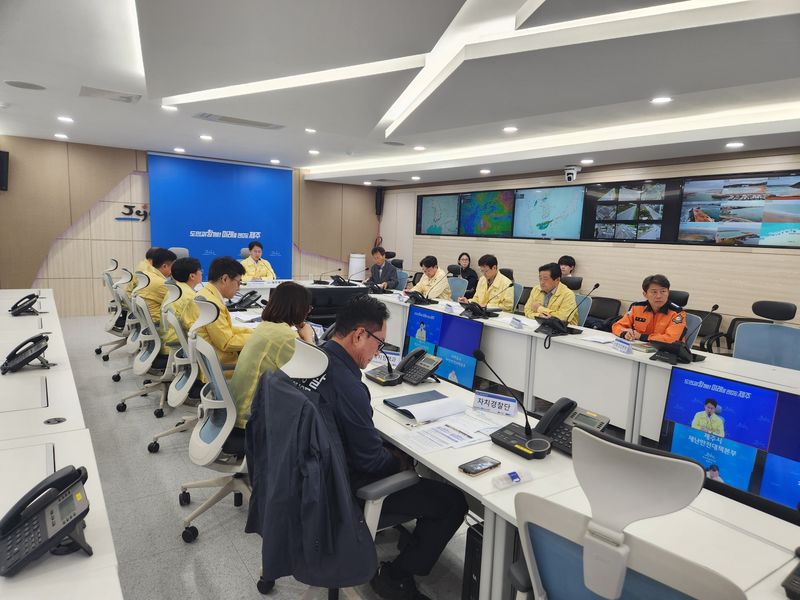
According to Jeju Special Self-Governing Province on the 23rd, a typhoon response meeting was held that day at the provincial Disaster and Safety Countermeasures Headquarters, with relevant departments and agencies in attendance, to review the weather outlook and safety management plans for each sector.
According to the Jeju Provincial Meteorological Administration, Typhoon Champi is expected to turn northeast over waters east of Taiwan and move toward Kyushu, Japan. It is expected to weaken into an extratropical low between the night of the 25th and the early morning of the 26th.
The chance of the typhoon passing directly over Jeju is low, but preparations for strong winds, heavy rain and high waves are needed.
Rain is forecast to begin in Jeju during the day on the 23rd, with 50–100 mm expected through the 25th. Some mountainous and mid-mountain areas could receive 150 mm or more. In some areas, rain is expected to continue until the early morning of the 26th.
In particular, heavy rain of 20–30 mm per hour is possible from the night of the 23rd to the early morning of the 24th, and from the night of the 24th to the early morning of the 25th. Strong winds are expected from the afternoon of the 23rd, and waves are also expected to rise, especially in waters south of Jeju.
Jeju Province identified storm drains clogged by autumn leaves and trash, causing water to pool on roads and in low-lying areas, as a major risk. It therefore ordered inspections of drainage facilities in flood-prone areas and the removal of sediment obstructing drainage.
The possibility of tourists being stranded because of flight cancellations and delays was also reviewed. In preparation for passengers becoming stranded at Jeju International Airport, the province checked the arrangements for sharing information and providing support among relevant agencies.
Safety inspections of signs, banners and temporary structures at construction sites vulnerable to strong winds were also strengthened, and risk factors were to be addressed before the weather worsened. In the agriculture and fisheries sectors, officials reviewed facility safety management and responses to changes in marine weather.
The central government also took action. The Ministry of the Interior and Safety (MOIS) held a meeting with relevant agencies that morning and called for proactive access controls in hazardous areas, including breakwaters and rocky shores in Jeju and along the southern coast; safety management of fishing boats and aquaculture facilities; and maintenance of drainage facilities in low-lying areas.
Jeju Province plans to strengthen monitoring of vulnerable areas while tracking the typhoon’s path and weather advisories, and to operate a phased emergency response system that activates the Disaster and Safety Countermeasures Headquarters depending on circumstances, such as the issuance of advisories.
Jo Sangbeom, head of Jeju Province’s Safety and Health Office, said, “Even if the typhoon’s direct impact is not significant, we must thoroughly inspect potential hazards,” adding, “When a weather advisory is issued, we will immediately activate the Disaster and Safety Countermeasures Headquarters to ensure the safety of residents and tourists.”
[email protected] Jeong Yong-bok Reporter