U.S. Treasury tightens investment restrictions on China in “sensitive technologies” such as AI and biotech
- Input
- 2026-10-23 16:17:13
- Updated
- 2026-10-23 16:17:13
[Financial News] The Donald Trump administration has proposed rules to more strictly restrict U.S.-based investment in China’s sensitive technology sectors, including artificial intelligence (AI), advanced semiconductors, hypersonic weapons and biotechnology, the British newspaper the Financial Times (FT) reported.
According to the FT, the U.S. Treasury Department released draft implementing rules on the 22nd (local time) for the “Comprehensive Foreign Investment National Security Act,” which Congress passed last year. The law was designed to protect national security by tightening investment screening for adversarial countries, including China, Iran and Russia.
The newly released draft rules target not only advanced semiconductors and AI but also biotech-related technologies and materials, including brain-computer interfaces. Therapies that modify specific cells or genes, as well as immunotherapies, were also included among the prohibited activities.
The Treasury Department was concerned that some advanced biotechnology technologies could heighten real risks related to biological weapons and the proliferation of brain-computer interfaces, and could be used for military, intelligence and large-scale surveillance purposes.
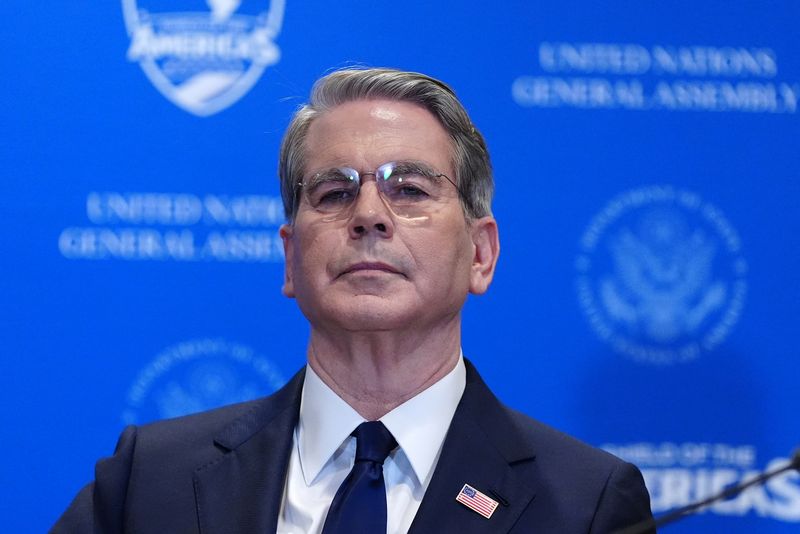
Treasury Secretary Scott Bessent explained that the rules were “a measure to prevent critical technologies that threaten national security from being developed in adversarial countries with U.S. investment.” He added that providing clear standards for U.S. and foreign investors would create an “open investment environment.”
Experts identified tighter investment restrictions in the biotechnology sector as a key feature of the proposed rules.
Craig Singleton, a research fellow at the think tank Foundation for Defense of Democracies (FDD), said, “The Treasury Department is warning investors that money flowing into China’s biotech industry could affect U.S. national security and would face much stricter scrutiny going forward.”
The biotech industry pushed back. The Biotechnology Innovation Organization (BIO) warned that “overly broad regulations could undermine the competitiveness of the U.S. biotech industry.” In recent years, U.S. biotech companies have increasingly relied on China for early-stage drug development.
However, licensing deals for new drugs that U.S. pharmaceutical companies such as Eli Lilly and Pfizer have made with China may avoid the restrictions if they involve cash transactions only, with no equity investment.
The move came one month after President Trump invited Chinese President Xi Jinping to Washington, D.C., and agreed to extend the “trade truce” by two months, through January next year.
[email protected] Lee Seok-woo, International Affairs Correspondent Reporter