“You take off your watch to sleep, but keep this on” ... How far can you take a 24-hour “doctor for your finger” smart ring? [Smart Wellness]
- Input
- 2026-10-24 17:00:00
- Updated
- 2026-10-24 17:00:00
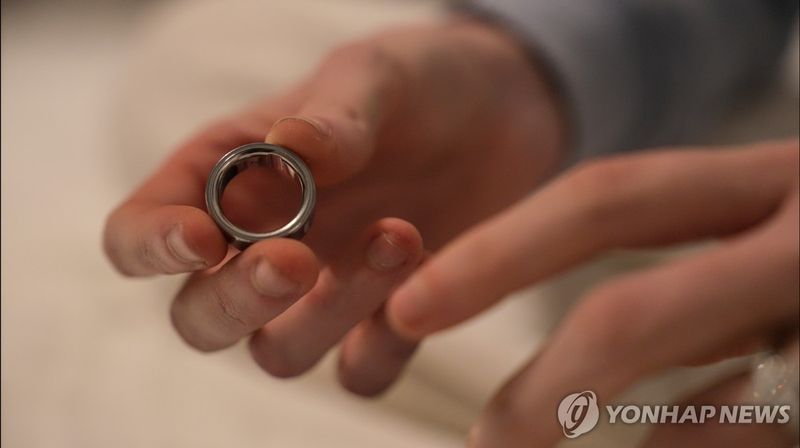
[Financial News] Global attention is turning to healthcare devices worn on the finger as Finland’s Oura, a smart ring maker, begins the process of going public on the U.S. stock market (IPO) and signals the launch of a next-generation product. As wearable technology, once dominated by watch-shaped devices, expands to include small, lightweight rings, interest in how to use smart rings is also growing.
Lightweight, long-lasting devices without screens... From sleep management to predicting cardiovascular disease
A smart ring is, quite literally, worn like a ring. Lighter than a wristwatch and without a display, it can be used continuously for several days on a single charge. It precisely measures heart rate, heart rate variability (HRV), blood oxygen saturation and changes in skin temperature around the clock, using capillaries on the inside of the finger. The global smart ring market is currently led by Oura, Samsung Electronics and Ultrahuman, among others, which have successively introduced products.
Smart rings can monitor sleep patterns, recovery from chronic fatigue, daily stress levels and exercise-related energy expenditure. Their most effective use is in “sleep healthcare.” By tracking movement during sleep, sleep stages including REM and deep sleep, and nighttime breathing, they can provide an overall score for sleep quality and detect early signs of sleep apnea.
HRV, which reflects changes in the autonomic nervous system overnight, and trends in skin temperature fluctuations can also be used to assess accumulated fatigue and declining immune function. More recently, smart rings have been expanding their role in health management beyond sleep and fatigue tracking, to include predicting women’s menstrual cycles and detecting warning signs of cardiovascular disease.
Look for “trends,” not an “absolute diagnosis”... How to use smart rings properly
To get the most out of a smart ring, observe weekly and monthly “trends” rather than reacting to each day’s numbers. If your nighttime heart rate is higher than usual or your temperature rises by 0.5 degrees or more, it is best to treat that as a signal to consider heavy drinking, overwork or an early-stage infection, and to get some rest.
There are also some precautions to keep in mind. The device’s design means that safety and hygiene require attention, too. A ring that is too tight can impede blood flow, so choose the correct size. After washing your hands, dry the ring so no moisture or soap remains on the inner sensor; this can help prevent contact dermatitis or eczema.
Also, because the ring is made of hard metal, avoid wearing it during activities involving strong external forces, such as weight training. It could catch on equipment and cause a degloving injury, in which skin tissue is torn away. Keep in mind, too, that if the ring rotates while you are asleep and the sensor faces the back of your hand, measurement errors can increase.
Ways to make life healthier and more vibrant are closer than you think. [Smart Wellness] shares insights on caring for the body and mind, drawing on scientific evidence and the latest trends. Subscribe to the reporter’s page to receive [Smart Wellness] with ease.
[email protected] Kim Hyun-sun Reporter