NEC special prosecutor: “No mention of coercive questioning in deceased NEC employee’s suicide note” ... at odds with lawyer’s claim
- Input
- 2026-10-23 16:10:37
- Updated
- 2026-10-23 16:10:37
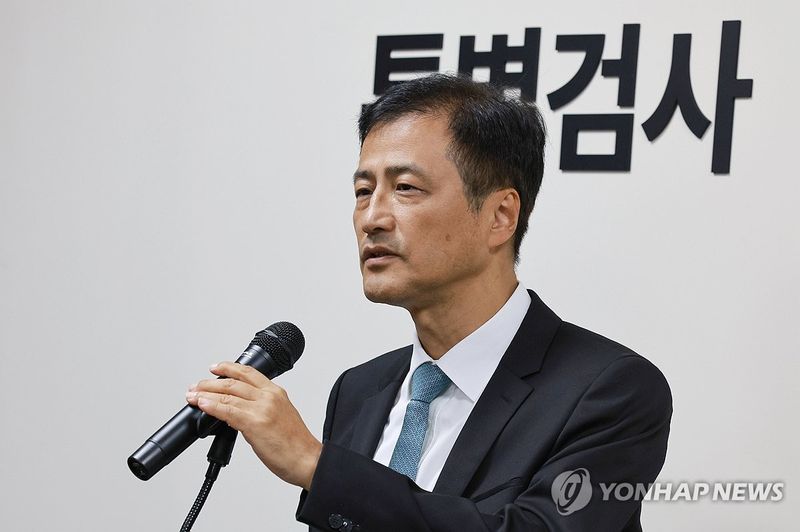
[Financial News] The team led by special prosecutor Lee Tae-han, which is investigating allegations of misconduct involving the National Election Commission (NEC), said the suicide note of a recently deceased Central NEC official contained “no mention whatsoever of coercive questioning.”
With a lawyer who was present during the deceased’s questioning raising allegations of coercive investigation, the special prosecutor’s team has again refuted them, citing the note, leaving the two sides at odds.
In a statement on the 23rd, the special prosecutor’s team said it had “reviewed the deceased’s suicide note to prevent unnecessary controversy” and announced that “there was no mention whatsoever in the note of coercive questioning during the investigation.”
It added that “on the contrary, the note said the deceased did not resent the NEC special prosecutor’s team and pointed out problems within the NEC organization, among other things.”
The special prosecutor’s team plans to establish the facts behind allegations of misconduct, including collusion between the NEC and companies and preferential treatment in contracts, and determine who is responsible, based on objective materials such as work logs.
This contradicts the claims of the lawyer who was present during the deceased’s questioning. The previous day, lawyer Kim Nam-ju of Dodam Law Firm said in a statement that “the explanation that there was no coercive atmosphere is not true,” and claimed, “When the deceased answered that he didn’t know, the prosecutor shouted while standing, ‘No, I’m asking you to tell me what’s generally done—are you saying you don’t know?’”
Kim said the objection at the time was that “It’s coercion to decide the facts in advance and pressure someone by standing and shouting because they aren’t giving you the answers you want.” The point was that the investigators had predetermined their conclusion and demanded the statement they wanted.
Kim also raised concerns about the questioning methods. Kim claimed that the special prosecutor’s team cited the rule limiting late-night questioning, which requires consent for questioning after 9 p.m., to pressure the suspect by suggesting that questioning could continue until then.
Kim also explained that the questioning was led by an assistant investigator, a judicial police officer (a police corporal), while the prosecutor asked questions from the side and a special investigator from behind, leaving the deceased to answer questions coming at him from multiple directions.
Earlier, at around 7 a.m. on the 21st, a man in his 40s identified as A, who worked for the Central NEC, was found dead in the flower bed of an apartment building in Hwaseong, Gyeonggi Province. Police suspect that he fell from the apartment where he lived. A had been questioned by the special prosecutor the previous day, and the suicide note reportedly contained an appeal about the sense of injustice he felt during the investigation.
On the day of A’s death, the special prosecutor’s team issued a statement to the media and expressed its condolences, while denying allegations of coercive investigation. According to the team, A was questioned once, for the first time, on the 20th as part of investigations by the joint prosecution-police investigation headquarters and the special prosecutor, with the questioning ending at around 8:55 p.m. in the presence of his lawyer.
The special prosecutor’s team said the actual questioning lasted 7 hours and 35 minutes, excluding 3 hours and 20 minutes of break time, including meal breaks. It explained that after questioning ended, A reviewed the record from 9:15 p.m. to 11 p.m. and personally amended around 40 answers.
[email protected] Choi Eun-sol Reporter