“Let’s replace telecom fee reductions with digital vouchers... and expand support to AI and content”
- Input
- 2026-10-23 11:23:16
- Updated
- 2026-10-23 11:23:16
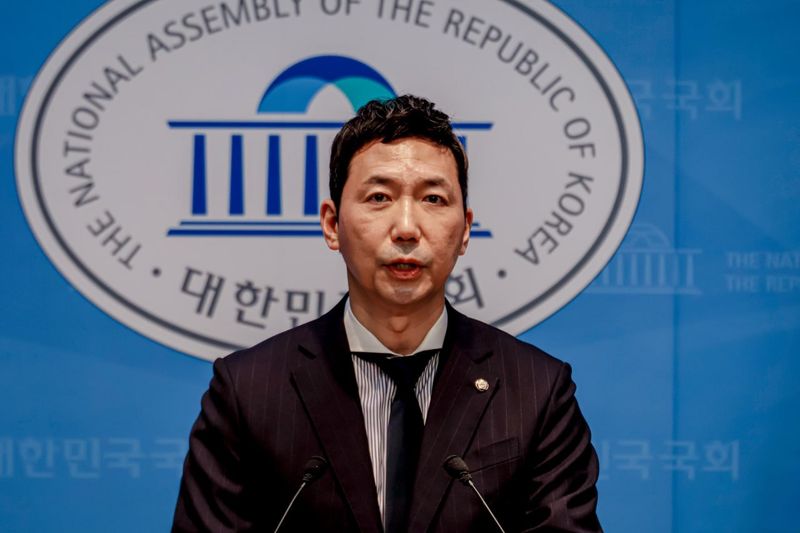
On the 23rd, Rep. Lee Jeong-heon of the Democratic Party of Korea, a member of the National Assembly’s Science, ICT, Broadcasting, and Communications Committee, called for replacing the telecom fee reduction program for vulnerable groups with digital vouchers. Citing a bill to partially amend the Telecommunications Business Act that he introduced as its lead sponsor in 2024, Lee proposed switching support for vulnerable groups to a digital voucher system.
According to the Ministry of Data and Statistics’ Household Income and Expenditure Survey, the share of telecom services in household information and communications spending fell from 79% in 2012 to 60% in 2025. Over the same period, the share of digital content rose from 7% to 13%, while that of digital devices increased from 13% to 27%.
The current telecom fee reduction program is intended to ease the burden of telecom costs for people with disabilities, low-income households, basic pension recipients, and others. Lee said that as digital spending has expanded to include AI, content, platform fees, and device purchases, discounts limited to telecom line charges are inadequate to reflect the actual needs of vulnerable groups.
Lee argued that the program should be changed so that users can choose which necessary items—including telecom services, AI, content, and devices—to receive support for, rather than simply setting the amount of the reduction. The aim is to broaden the scope of support to ensure vulnerable groups’ digital access and right to use digital services.
He also proposed improving the funding structure. According to the Korea Telecommunications Operators Association’s (KTOA) 2026 Mobile Telecommunications Industry and Services Guidebook, telecom companies’ fee reductions for vulnerable groups rose about threefold, from 463 billion won in 2017 to 1.4 trillion won in 2025. Lee’s office said that the content and device industries have yet to contribute funding.
The amendment introduced as its lead sponsor by Lee would move away from having service providers directly discount fees and instead require the government to provide digital vouchers to vulnerable groups and operate and manage the system. Its main provisions would impose universal service obligations not only on facilities-based telecommunications operators that meet certain thresholds, but also on value-added telecommunications service providers.
“We must guarantee not only the right to connect to communications networks but also the right to use digital services, including AI,” Lee said. “We need to change the welfare system so users can choose the support they need and the government and businesses in the digital ecosystem share responsibility.”
He added, “During this parliamentary audit, I will review the government’s findings on the bill and the progress of the project, and call for a detailed implementation plan that includes the scope of support and how the funding will be shared.”
[email protected] Yoon Hong-jip Reporter