Chronic disease management platform Wellcheck shares its know-how; at least 2,000 attend seminar
- Input
- 2026-10-23 10:58:18
- Updated
- 2026-10-23 10:58:18
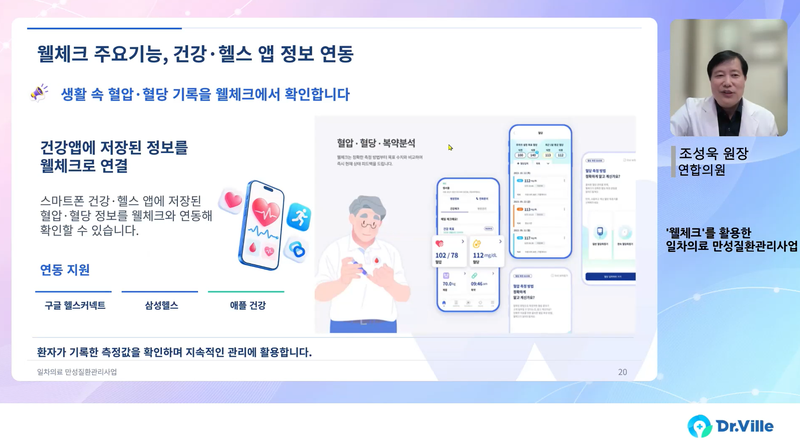
M Circle said on the 23rd that a total of 2,786 people watched the live seminar held on the 15th on the Doctorville platform. Jo Seong-uk, director of Yeonhap Clinic in Hongseong, South Chungcheong Province, who spoke at the seminar, presented challenges encountered while participating in the program, examples of using Wellcheck, and operating strategies for clinics newly joining the program.
Yeonhap Clinic registered 127 new patients over the three months from July to September this year. Director Jo stressed the importance of streamlining administrative work involved in running the program, including patient registration, education and counseling.
The primary care chronic disease management program is a national program in which neighborhood clinics develop care plans for patients with hypertension and diabetes and provide education, counseling and ongoing monitoring. It began as a pilot program in 2019 and became a full-fledged program in September 2024. For participating patients, the out-of-pocket rate for follow-up consultation fees and designated tests, among other services, is reduced from 30% to 20%. Clinics can claim separate fees for services provided, including developing care plans and providing education and counseling.
However, the program requires several procedures, including patient registration and consent to the use of personal information, comprehensive assessments, care plan development, records of education and counseling, and submission of data to HIRA. The resulting administrative burden has been a barrier to participation for clinic-level medical institutions.
Wellcheck provides the functions needed to run the program, from patient registration and care plan management to educational materials, remote patient management and support for submitting related documents. Clinics can guide patients to sign up for the app and provide electronic consent by text message or QR code, and information patients enter in the app’s questionnaire can be used to develop care plans. The platform also supports temporarily saving related documents in HIRA’s system before finalizing and submitting them.
The platform also offers patient education materials, two-way messaging and the ability to view health data, such as blood pressure and blood glucose measured at home. It supports data integration with Samsung Health, Apple Health and Google Health Connect. Monthly estimated reimbursement reports allow clinics to review their operating status.
Director Jo recommended that clinics just starting the program first register a small number of patients who need management, review their workflow and then expand to more patients. He said clinics should check the program guidelines and staffing requirements before joining, and divide responsibilities so that medical staff focus on patient selection, education and counseling, while other staff handle registration, appointments, records and billing.
Director Jo said, “This is not a system that generates income simply by registering patients; clinics must provide actual services and document them according to the standards,” adding, “They should gradually establish a system that allows them to maintain the quality of patient care while completing documentation and billing.”
A M Circle representative said, “It is important to reduce the burden of running the program so healthcare professionals can focus on patient care,” adding, “We will support neighborhood clinics in managing chronic diseases based on real-world cases.”
[email protected] Jeong Sang-hee Reporter