Seoul speeds up plans to supply 2,121 homes through Moa Housing projects in Myeonmok and Sadang... seeks to improve project feasibility and start construction in 2027
- Input
- 2026-10-23 11:15:00
- Updated
- 2026-10-23 11:15:00
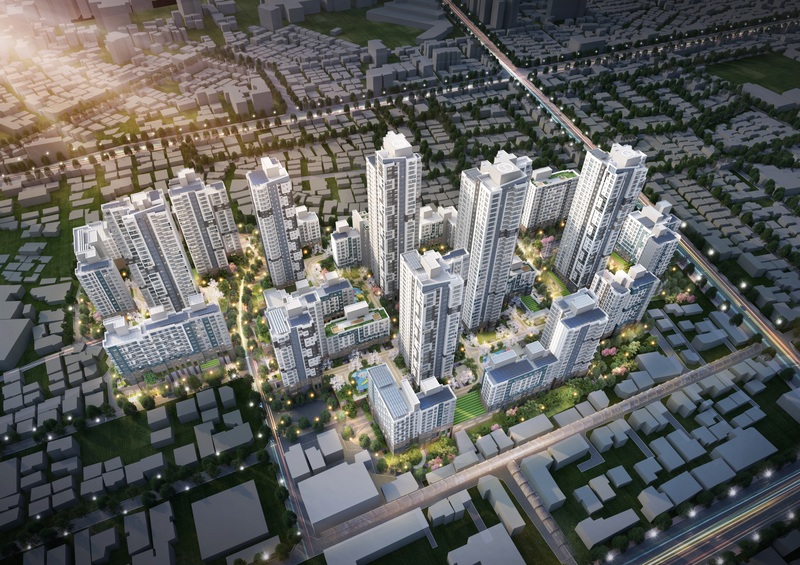
[Financial News] The Seoul Metropolitan Government plans to supply a total of 2,121 homes through five Moa Housing projects in Myeonmok-dong, Jungnang-gu, and Sadang-dong, Dongjak District, Seoul.
According to the Seoul Metropolitan Government on the 23rd, the 12th Subcommittee on the Integrated Review of Small-Scale Housing Improvement Projects met the previous day and reviewed Moa Housing project implementation plans and Moa Town management plans for three areas, including the implementation plans for projects in Myeonmok-dong and Sadang-dong and the management plan for a Moa Town in Mia-dong, Gangbuk District.
The key issue in this review was the application of a project feasibility adjustment factor. The Seoul Metropolitan Government used the factor for four projects in Myeonmok-dong and one in Sadang-dong,
improving the conditions for moving the projects forward.
In Myeonmok-dong, the number of rental homes fell by 149, from 459 to 310. In Sadang-dong, it decreased by 12, from 44 to 32. The total number of rental homes in the two areas was cut from 503 to 342.
As a result, rental homes will account for 16.1% of the total 2,121 homes, down 7.6 percentage points from about 23.7%. Assuming the total number of homes remains as planned, the number of homes other than rental units will effectively increase by 161.
A total of 1,904 homes are planned through the integrated development of Areas 1, 2, 4 and 6 around 86-3 Myeonmok-dong, Jungnang-gu. The area was selected in February 2022 for the Seoul Metropolitan Government’s Moa Town pilot project.
Areas 1 and 2 of Myeonmok Station received approval for their project implementation plans in July this year, while Areas 4 and 6 passed an integrated review in July 2024. In this review, the proposed amendments to the implementation plans for all four areas were approved as submitted.
The site is a densely built low-rise residential area where the need to improve living conditions has long been raised because of narrow roads and uneven terrain. The Seoul Metropolitan Government plans to upzone it to a Type 3 General Residential Area and build a residential complex of up to 38 stories.
The adjustments took into account the project feasibility adjustment factor, the provision of community facilities for residents and compensation for tenant losses, among other criteria. The number of rental homes will be reduced from 459 to 310, while the overall building scale in the original plan will be maintained.
Infrastructure will also be improved. The northern access road will be widened to a maximum of 13.6 meters, and an integrated underground parking garage connecting the four areas will be built. A street space for residents to walk and interact will be created along the section connecting to Dongwon Traditional Market.
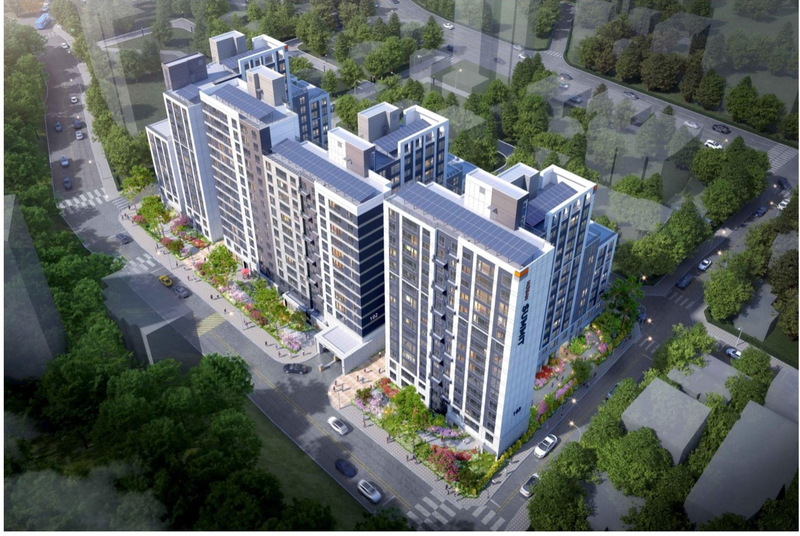
The Moa Housing project around 206-1 Sadang-dong, Dongjak District, will also move toward a construction start in 2027 after improvements to its project feasibility. The project comprises 217 homes and received approval for its implementation plan last September.
Under this review, the number of purchased rental homes was adjusted from 44 to 32. The Seoul Metropolitan Government reduced the burden of providing rental housing by applying the project feasibility adjustment factor and criteria for compensating tenant losses, among other measures.
The project is part of the Moa Town around 202-29 Sadang-dong. Plans are underway to supply a total of 1,725 homes across eight areas in this Moa Town. The site is northwest of Namseong Station on Subway Line 7, between Chongshin University and Kkachisan Neighborhood Park.
Of the 264 buildings in the area, 221 were completed more than 20 years ago, meaning older buildings account for 83.7% of the total. The Seoul Metropolitan Government plans to pursue construction after procedures such as relocation are completed.
The Moa Town management plan for the area around 791-1134 Mia-dong, Gangbuk District, was approved with revisions. It calls for a 337-home apartment complex, 124 more homes than the original 213. Of these, 34 will be rental homes.
The project site is a hilly area with an elevation difference of up to about 20 meters. Dilapidated or substandard buildings account for 93% of the total, and the Seoul Metropolitan Government has drawn up plans for housing layout and infrastructure improvements that take into account the landscape around Bukhansan Mountain and the area’s topography.
The roads on Samyang-ro 63-gil to the north and Samyang-ro 59-gil to the south will be widened, and a connecting road will be built on the west side. Roads around the complex will be improved to widths of 8 to 12 meters, depending on the section, and a 3-meter-wide pedestrian space will be provided between buildings and roads.
The complex will include a senior center, a daycare center, a small library and a children’s playground, among other facilities, while neighborhood commercial facilities will line Samyang-ro.
A project feasibility adjustment factor of 1.5 will be applied to the floor-area-ratio relaxation granted for the construction of rental housing.
Myeong No-jun, head of the Seoul Metropolitan Government’s Housing Office, said, “Through this review, we applied the project feasibility adjustment factor to improve the conditions for moving Moa Housing projects forward, and also drew up plans to improve roads, pedestrian environments and resident amenities in consideration of local characteristics. We will continue to rationalize regulations so that project feasibility and public benefit can be balanced, and actively support the swift progress of Moa Housing and Moa Town projects suited to local characteristics.”
[email protected] Choi A-young Reporter