One in Three Sejong Apartments Is Over 10 Years Old... Demand to Move into New Builds Is Piling Up
- Input
- 2026-10-23 10:14:22
- Updated
- 2026-10-23 10:14:22
According to Real Estate R114 data on the 23rd, Sejong Woome Lin Center Park, offered for sale in the city's 5-2 Living Area this August, drew 4,250 first-priority applicants for 240 units in the general offering, recording a competition ratio of 17.71 to 1. The two complexes supplied in the 5-1 Living Area last year also closed with average first-priority competition ratios of over 13 to 1. From last year through October this year, the average first-priority competition ratio in Sejong Special Self-Governing City was 14.21 to 1, ranking second nationwide after Seoul and demonstrating solid demand.
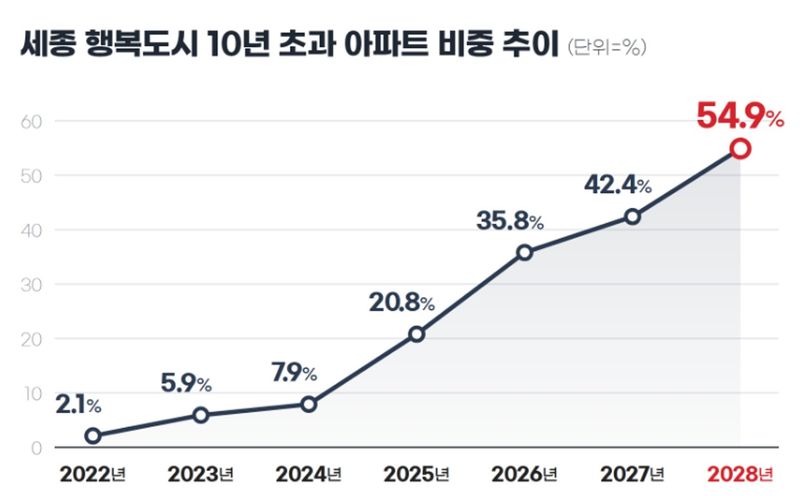
Behind this subscription boom are the worsening aging of the housing stock and a supply cliff. Housing supply in Sejong was concentrated in the early to mid-2010s, during the city's initial development. By the end of last year, 41,285 units—35.8% of the cumulative 115,306 units completed for occupancy—had already passed the 10-year mark since move-in. In particular, 32,310 units were completed in 2014–2015 alone, meaning the time has come for a full-scale renewal of the residential environment.
By contrast, new supply to absorb demand from people looking to move is extremely limited. Even combining all the units completed for occupancy over the past three years (from 2023 through last year), the total comes to just 7,481. In particular, the figures show that not a single unit is scheduled for occupancy in Sejong over the two years spanning this year and next. By 2028, the share of apartments in Sejong that are over 10 years old is projected to soar to 54.9% of the total, while the choice of new apartments will remain extremely limited, further worsening the supply-demand imbalance. Housing demand is also expected to strengthen further as plans are announced for the construction of the President's office in Sejong and the National Assembly Sejong Capitol, along with the relocation of 44 central government agencies.
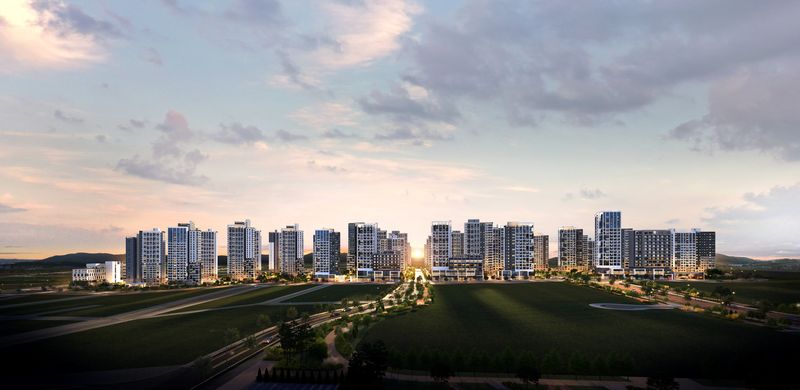
The 5-1 Living Area, where the complex will be built, was selected in 2018 as a national smart city pilot district. Advanced lifestyle infrastructure, including autonomous driving systems, robot delivery and smart healthcare, is scheduled to be introduced in stages. Planned sites for kindergartens and elementary, middle and high schools, as well as the Science and Culture Center, scheduled to open in 2029, are nearby. With pleasant natural surroundings, including the Geum River and Miho River, the development is attracting attention as one of the biggest offerings this fall, poised to draw buyers looking to move into newer homes.
[email protected] Jeon Min-kyung Reporter