“Don’t get complacent just because Samsung Electronics and SK hynix are thriving” ... Expert warns as China catches up in semiconductors
- Input
- 2026-10-23 06:31:52
- Updated
- 2026-10-23 06:31:52
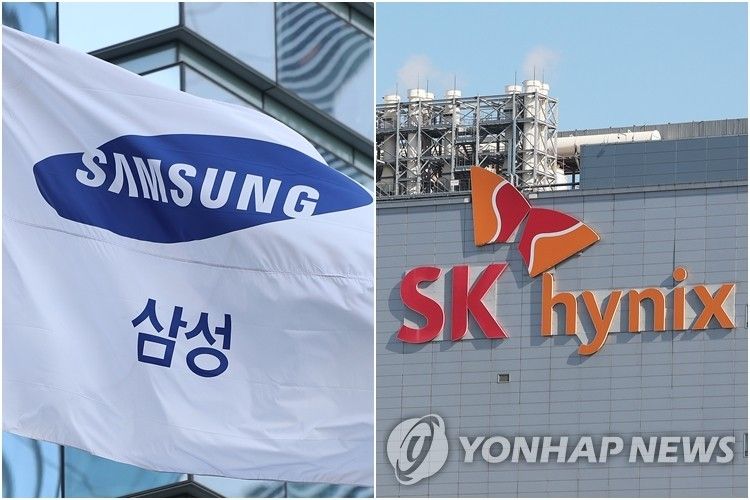
[Financial News] South Korean semiconductor companies, including Samsung Electronics Co., Ltd. and SK hynix, are posting record-high results amid rising demand for artificial intelligence (AI). But experts have warned that if they fail to respond effectively to China’s technological advances, they could lose their competitive edge, as Japan’s semiconductor industry did in the past.
Professor Seok-jun Kwon of the Department of Chemical Engineering at Sungkyunkwan University, who appeared on the YouTube channel Jeong Hyeong-don’s Untitled TV on the 21st, warned that South Korea should not underestimate the pace of growth in China’s semiconductor industry simply because it leads in advanced technologies, including high-bandwidth memory (HBM).
He also looked back at how South Korea’s semiconductor industry grew. Japanese companies once led the memory semiconductor market, but South Korean companies began to build up their competitiveness from the mid-1990s, he explained.
Professor Kwon said, “Our country was not always a memory semiconductor powerhouse like it is today,” and “we began catching up with Japan in the mid-1990s.” He added, “After that, we steadily widened the gap with Japanese companies, both in scale and in technology.”
Professor Kwon pointed to losing the price competition and business strategies centered on the domestic market as reasons Japan’s semiconductor industry lost its competitiveness. He said its competitiveness weakened as companies focused on developing products for their home market rather than on demand in overseas markets.
He said, “At one point, they made so many products optimized for the domestic market that global markets turned away from them,” and observed that Japanese companies had failed to respond quickly to new technological changes, such as the digital transformation and AI.
He warned that South Korea, too, should not focus solely on maintaining its current technological edge. He explained that the country needs to move beyond its existing business practices to counter Chinese companies that are strengthening their technological capabilities with massive investment.
Professor Kwon said, “South Korea should learn from Japan’s example as a cautionary tale,” adding, “If we remain confined to the old playbook, we could fall into decline.”
He also noted that US semiconductor sanctions had, in some respects, spurred China to develop its own technology. Professor Kwon explained, “US pressure initially slowed China’s technological progress, but in return it strengthened the drive to develop and manufacture technology domestically,” adding, “At some point, they began producing products of decent quality.”
He noted in particular that while China still lags behind South Korea in producing advanced HBM, it has secured the financial resources to compete on price.
Professor Kwon said, “China still isn’t very good at making HBM,” but added, “It’s no longer at a level we can dismiss, and it has the money to engage in a game of chicken.”
He explained that US export controls continue to constrain China’s semiconductor technology development. Key technologies and components developed in the United States are also used in the extreme ultraviolet (EUV) lithography equipment produced exclusively by Dutch company ASML.
Professor Kwon said, “ASML’s extreme ultraviolet (EUV) lithography equipment is produced under a monopoly, and many of its components and technologies were developed in the United States.” He noted that US sanctions have made it difficult for China to obtain or maintain advanced equipment.
He estimated that China could withstand US semiconductor sanctions until 2031–2032. However, he warned that if China succeeds in developing its own technology before then, the competitive landscape of the global semiconductor market could change significantly.
Professor Kwon said, “I think China can hold out until around 2031–2032,” but added, “If China manages to overcome its limitations through technological development, it could instead upend the global semiconductor industry.”
[email protected] Han Seung-gon Reporter