iPhone Duo deliveries not expected until next January... A hit or a supply crunch?
- Input
- 2026-10-22 18:09:20
- Updated
- 2026-10-22 18:09:20
■ In-store purchases restricted on launch day
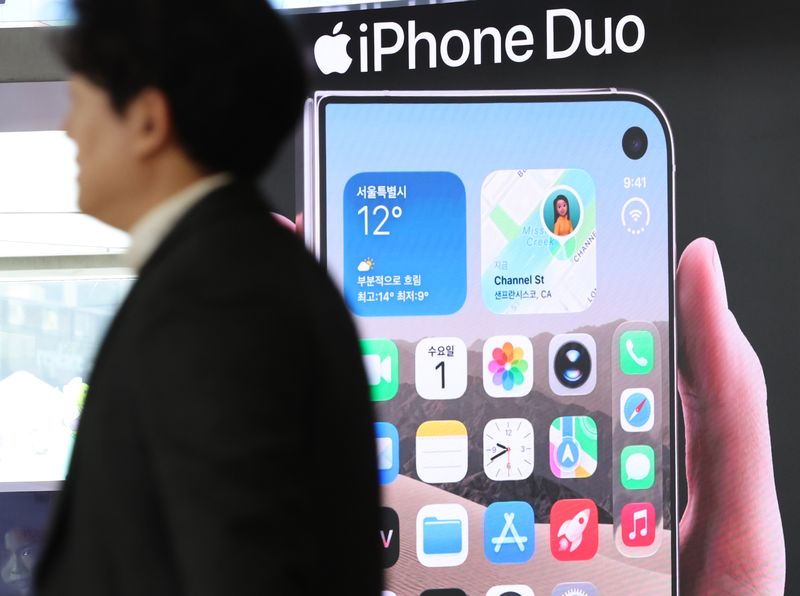
According to the information and communications technology (IT) industry on the 22nd, the iPhone Duo will go on sale officially in South Korea and elsewhere on the 23rd. However, customers will not be able to walk into an Apple Store and buy the device on launch day. Apple’s domestic website says in-store purchases of the iPhone Duo are unavailable. Customers must make a pickup reservation to collect the device at a store, and the restriction on walk-in purchases without a reservation reportedly applies in South Korea and Japan.
Apple’s online store lists January next year as the estimated delivery date for orders. When preorders opened on the 16th, delivery dates for every color and storage-capacity model were pushed into next year in about 30 minutes. The delay shows strong initial interest in the product, but it is not necessarily a reliable indicator of actual sales. Apple said preorder demand was unusual, but did not disclose domestic preorder sales or the size of its initial supply. Analysts also say initial supply may be limited. Meritz Securities previously found that production expansion was proving difficult because of yield issues not only with key components such as the iPhone Duo’s hinge and ultra-thin glass (UTG), but also during final assembly. Supply constraints for some materials were also cited as a factor adding to the burden.
Because foldable phones are designed so that the screen and hinge fold and unfold together, precision in fitting and assembling the components is critical. A low yield means more components and labor are needed to produce the same number of finished devices, making it difficult to ramp up production quickly, according to reports.
The possibility of production disruptions was raised even before preorders began. Foreign media outlets, including China’s Jiemian News, previously reported, citing a Foxconn supply-chain source, that the iPhone Duo’s final assembly yield was slightly above 60% as of the 17th of last month. This does not mean production preparations were 60% complete; rather, it means that around 60% of the units entering the final assembly process passed quality checks. Apple, however, has not commented officially on its final assembly yield.
■ Production disruption concerns raised before preorders
With the pressure mounting, Apple is expanding its materials and components supply chain in the United States. It recently said it would expand supply cooperation with U.S. titanium producer Perryman Company. The deal involves investing up to $100 million over the next three years to secure titanium for the iPhone Duo and other Apple products.
The iPhone Duo’s domestic retail price ranges from 3.29 million won for the 256GB model to 5.09 million won for the top-tier model. The rush of orders early in the preorder period despite the high price points to strong initial interest in the product. However, some say its true market reception will depend on whether orders continue after supply stabilizes and whether user reviews after launch lead to additional purchases.
Industry officials expect the pace at which additional units become available after the official launch to determine the initial sales trend. They say it is important to distinguish delayed deliveries caused by limited initial supply from whether the product becomes a hit with the wider public.
[email protected] Yoon Hong-jip Reporter