Laser treatment revives “degraded lithium” ... Yonsei University quadruples the lifespan of next-generation batteries
- Input
- 2026-10-22 17:20:56
- Updated
- 2026-10-22 17:20:56
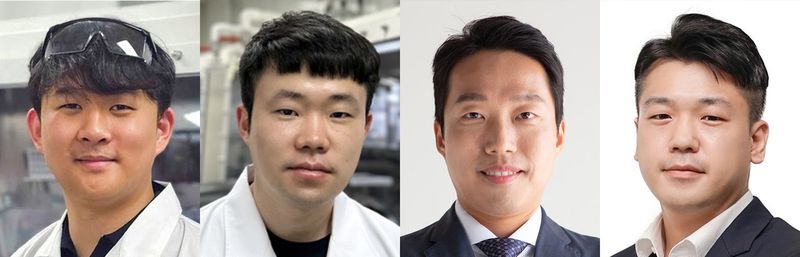
[Financial News] South Korean researchers have developed a technology that quadruples the lifespan of next-generation lithium-metal batteries, a key component of electric vehicles and urban air mobility (UAM), while also restoring lithium anodes that were discarded after deteriorating. The work has moved beyond a university laboratory, with a technology startup incorporated this month, raising hopes for commercialization.
A joint research team led by Professor Lee Hong-gyeong of Yonsei University’s Department of Materials Science and Engineering and Professor Lee Dong-gyeong of Kongju National University announced on the 22nd that it had developed a technique using pulsed lasers to remove the oxide layer from commercial lithium-metal anodes and smooth their surfaces. The findings were published in Energy Storage Materials, an international journal covering materials and energy.
A key feature of the technology is that it can restore even lithium whose performance has declined after exposure to air, much like rusting, making it as good as new. In experiments, laser treatment restored an oxidized lithium anode left in ambient air for four hours to performance comparable to that of an intact anode. This opens the way to significantly lowering battery manufacturing costs by recycling valuable lithium resources.
The treatment is also simple and cost-effective. Without using toxic chemicals or bringing abrasive equipment into direct contact with the anode, a single laser system sequentially removes the oxide layer and smooths the surface.
Batteries using lithium anodes treated this way operated stably for at least 200 charge-discharge cycles under high-capacity conditions close to those of commercial batteries, demonstrating a lifespan about four times longer than before.
Professor Lee Hong-gyeong of Yonsei University emphasized, “By precisely improving the surfaces of commercial lithium-metal anodes, whose quality varies, we have greatly increased the manufacturing reliability of next-generation batteries,” adding, “Being able to regenerate lithium whose performance has deteriorated will also contribute to resource efficiency.”
Alongside developing the technology, the research team has moved toward commercialization for industrial use. Kim Hyeong-dong, a researcher involved in the study, established a company called LiVive Solution this month and set up an integrated laser system in an on-campus dry room, launching a full-fledged technology startup.
The research was supported by a Ministry of Science and ICT-funded program, as well as the Hyundai Motor Company Joint Battery Research Center and others.
[email protected] Man-gi Kim Reporter