“Talk to ‘MOAI’ by phone and text”... SKT competes with Google and OpenAI with AI tailored to Koreans
- Input
- 2026-10-25 14:25:08
- Updated
- 2026-10-25 14:25:08
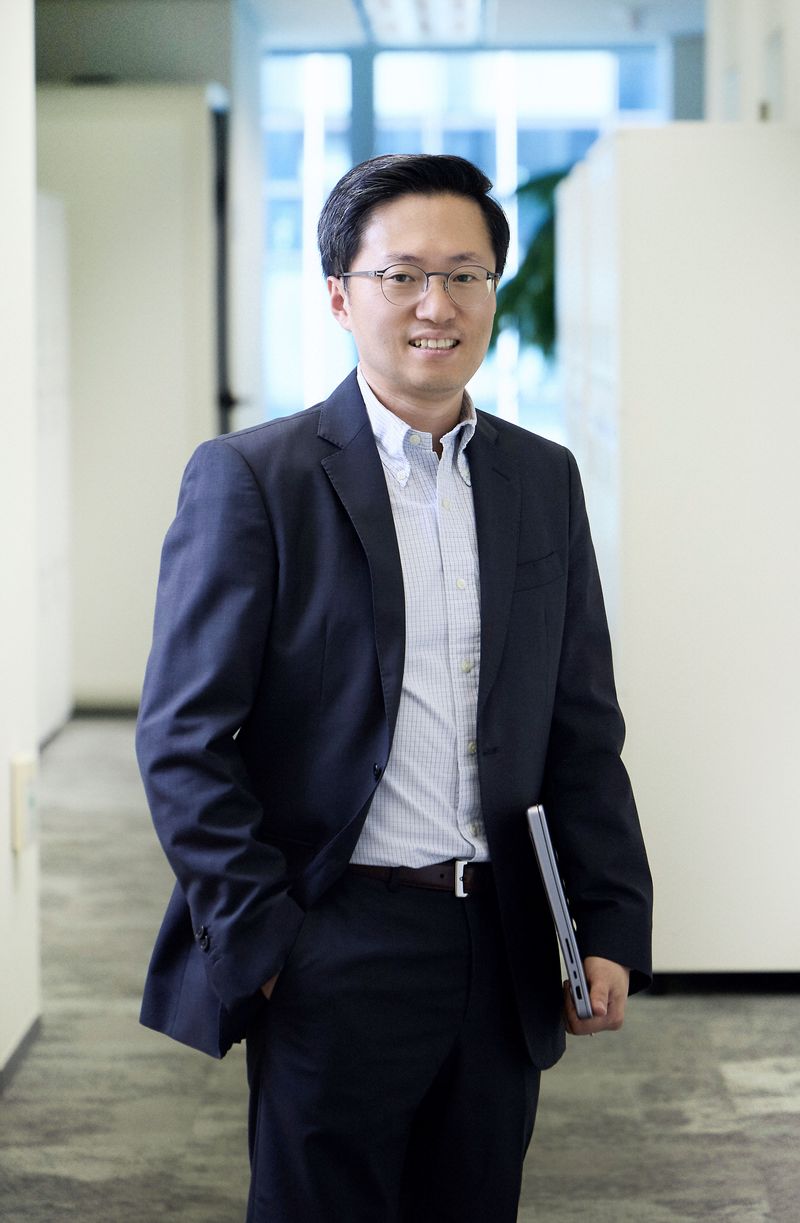
In an interview with Financial News on the 25th, Kim Ji-hoon, head of SK Telecom’s AI Business Division, outlined its MOAI strategy, which leverages the strengths of telecom services. The idea is to lower the barrier to using AI through phone calls and text messages, and to turn users’ requests into real-world actions, such as having AI make calls on their behalf.
Easy to use by phone and text... targeting young people and seniors first
The competitive edge of SK Telecom’s MOAI, as presented by Kim, lies in combining mobile phones with AI. The goal is to let users access AI directly through the phone calls and text messages they already use, without having to install a new app or get used to an unfamiliar user interface (UI).
Initially, the company plans to focus on young people and seniors as its main users. For young people, it plans to expand services in specific areas such as job information, résumé writing and interview coaching. For seniors, it is focusing on improving access to AI through phone calls and text messages.
Ultimately, the goal is to create an AI that everyone who uses a mobile phone can use with ease.
In competing with overseas AI services, the company is also emphasizing local lifestyle and public-service information and ease of use. “We will compete with overseas AI services such as ChatGPT and Gemini by drawing on our distinctive strengths,” Kim said. “We will set ourselves apart by providing the lifestyle and public-service information Koreans need in a thorough manner, and by offering an experience that lets them use AI naturally through familiar telecom channels such as phone calls and text messages.”
The aim is to address the problem of overseas AI services such as Google and OpenAI giving answers that do not fit Koreans’ culture and sensibilities.
Delegating phone calls is a key feature that demonstrates the combination of telecommunications and agentic AI. In a closed beta, SK Telecom plans to test a feature that lets AI make calls on users’ behalf. The aim is to see how users make use of an unfamiliar feature and identify use cases needed in everyday life.
Testing will expand beyond the accuracy of answers to include the results of carrying out actual tasks. The company will examine whether it has properly understood users’ intentions, as well as where failures occur or users drop off as their requests are carried out. “We will also verify at which stages failures or drop-offs occur when requests lead to actual actions, and plan to incorporate the findings into the official service in December,” Kim said.
For quality management, the company will draw on its experience operating A. and its in-house AI-based quality evaluation platform, SPeCTRA, among other tools. The development challenge is to provide consistent quality across different ways of using the service, such as phone calls and text messages, and to handle exceptional situations that arise when multiple services are connected.
To that end, SK Telecom is breaking down request scenarios and testing them repeatedly. It is checking not only whether conversations flow naturally, but also whether users can make requests in everyday language and get the results they want without any special training. As execution features expand, the company is placing greater emphasis on verifying task success rates and reliability.
Expanding links with public services... building a foundation for repeat use
Expanding links with public services is also a key task. Kim said public data needs to be organized so it is easier to use, and that more points of connection with government and local government systems are needed. He explained that technological development and institutional support must go hand in hand to turn information into practical administrative and everyday conveniences.“It is important to establish a foundation that enables AI to make stable use of public services and data,” Kim said. “Creating institutional frameworks and improving regulations so that services can be provided conveniently and reliably are also areas where we need to work continuously with the government.”
In the early stages of the business, the focus is on repeat use rather than monetization. SK Telecom is using models suited to each request as well as lightweight models to reduce computing costs, and is exploring ways to broaden revenue sources in the future through specialized services and partner-linked businesses. A specific revenue model has not yet been finalized.
“Ultimately, we believe service competitiveness will be determined by how easily and repeatedly people can use AI in their daily lives,” Kim said.
[email protected] Yoon Hong-jip Reporter