“Is covering teachers’ payroll costs alone enough?” Education superintendents’ council rebuts government’s explanation of grant funding
- Input
- 2026-10-22 15:10:52
- Updated
- 2026-10-22 15:10:52
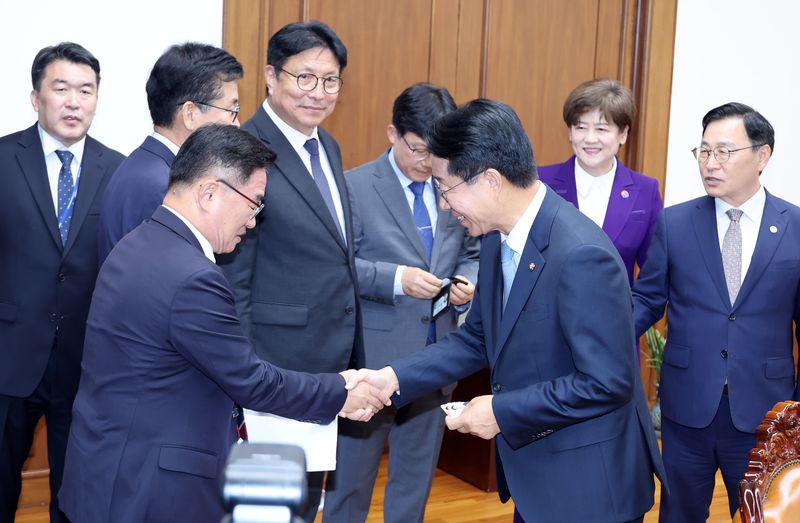
[Financial News] The Korean Council of Superintendents of Education said on the 22nd that the government’s explanation—that next year’s Local Education Subsidy Grants will increase by 7.2 trillion won, enough to cover teachers’ payroll costs—does not reflect actual conditions. The council said that, when this year’s supplementary budget is included in the calculation, next year’s grants will increase by only about 2.43 trillion won, or about 3.2%.
The council said the government was emphasizing only the scale of the grant increase without taking into account declining revenues and additional fiscal needs. It also urged the government to clearly state whether it had factored in major revenue shortfalls and how much funding would actually be available for school districts to spend after covering payroll costs and essential education needs.
Earlier, the Ministry of Finance and Economy said in an infographic post on the 14th that grants would increase by 7.2 trillion won, or 10.1%, comparing this year’s original budget of 71.7 trillion won with next year’s government proposal of 78.9 trillion won. Teacher payroll costs were projected to rise by 2.5 trillion won that year, which the government said left ample room. The government also said the reform plan eases the payroll burden by reflecting only 35% of the decline in student numbers.
The council, however, said the comparison did not account for the supplementary budget. This year’s grants rose to 76.4 trillion won after the supplementary budget was passed. On that basis, next year’s increase would be about 2.43 trillion won.
The council said that even if grants rose by 7.2 trillion won as the government claims, the funds actually left available would fall to about 2.83 trillion won. Subtracting the roughly 2.5 trillion won increase in payroll costs from the grant increase would leave 4.7 trillion won. But next year, grants are expected to decrease by about 274.1 billion won for the national contribution to free high school education and by about 1.6 trillion won in local education tax revenue from tobacco consumption tax. Subtracting the combined total of about 1.87 trillion won would leave 2.83 trillion won, the council said.
The council said the government is also pursuing a plan to transfer about 1.8 trillion won in education tax revenue that had been allocated to grants into the Special Account for Support for Higher and Lifelong Education starting next year, and that its impact on local education finances should be carefully assessed. This amount was not included in the calculation of available funds.
The council said the shortage of teachers also needs to be addressed. As of this year, there are 17,586 fewer non-curricular teachers—including health, nutrition, library and specialist counseling teachers—than legally required, and financial support is also insufficient for 503 fixed-term subject and special education teachers employed beyond the authorized staffing quota. An additional approximately 1.0889 trillion won a year would be needed to address these shortages, it said.
The council said that, in addition to payroll costs for school employees, essential expenses include school operating costs, meal costs, utility bills, and facility maintenance and repairs. It added that fiscal needs are also growing because of rising prices, upgrades to aging facilities, and new policies such as the integration of early childhood education and childcare.
The council has launched a second public information campaign with the 16 metropolitan and provincial offices of education to explain the actual conditions facing local education finances. The second set of infographic cards covers key issues including payroll costs, student and school numbers, electricity bills, school meals, care and after-school programs, free high school education, school facilities, and AI and digital education.
[email protected] Kim Man-gi Reporter