Margin limits for Samsung Electronics and SK Hynix cut from ₩2 billion to ₩300 million as securities firms curb concentrated leveraged bets
- Input
- 2026-10-22 16:11:25
- Updated
- 2026-10-22 16:11:25
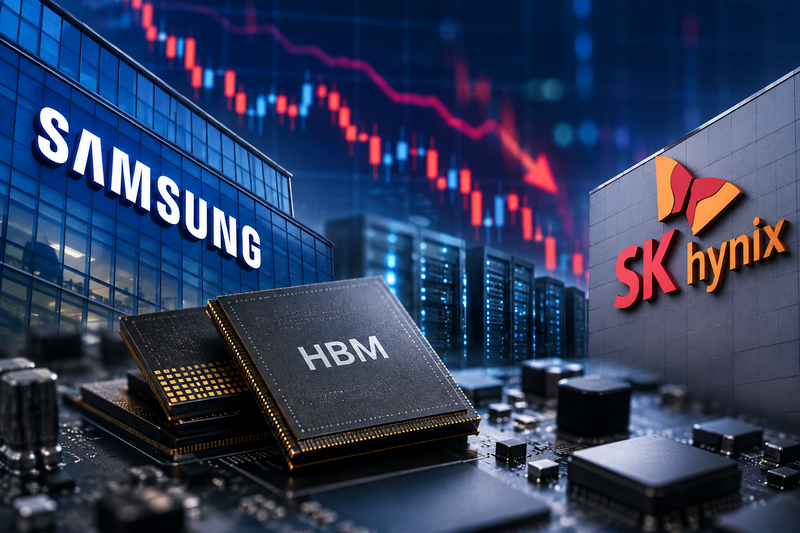
[Financial News] As volatility in South Korea’s stock market grows, increasing the risks of “debt-financed investing” (investing with borrowed money), securities firms are stepping up management of margin loans concentrated in Samsung Electronics and SK Hynix. They are seeking to rein in leveraged bets on particular stocks by limiting new margin purchases or lowering per-investor limits.
According to the financial investment industry on the 22nd, Shinhan Securities announced the previous day that, starting on the 26th, it would lower the margin loan limits for Samsung Electronics and SK Hynix from ₩2 billion to ₩300 million. The limits will fall to 15% of their previous level, sharply reducing investors’ capacity to make additional margin purchases of the two stocks.
Shinhan Securities said it could take further steps, including restricting new margin purchases, if the share of margin loans outstanding for individual stocks continues to exceed its management threshold. This means it could tighten controls further if the concentration persists after the limits are lowered. Shinhan also announced separately that day that Gaon Cable and Daewoo Engineering & Construction, among others, would be designated as unavailable for margin purchases and stock lending under its internal credit-extension restrictions.
The move follows the Korea Financial Investment Association’s measures, announced last month, to strengthen the voluntary management of margin lending. The association and 10 comprehensive financial investment service providers agreed to manage both the overall volume of credit extended and concentrations in particular stocks, in order to protect investors and prepare for increased market volatility.
Management of the overall volume of credit extended took effect on the 1st of this month, followed by the start of stock-specific concentration management on the 19th. If the outstanding margin loans for an individual stock exceed 15% of a securities firm’s total outstanding margin loans, the firm is to draw up its own management plan to reduce that share. Measures such as lowering limits or raising margin requirements are applied based on factors including investors’ use of margin loans, the concentration of their investment assets and market volatility.
As a result, the terms for trading the same stock now vary by securities firm, depending on its outstanding margin loans and the level of concentration. Some firms have restricted new margin purchases, while others have lowered limits or raised the deposit and collateral requirements investors must meet.
Hana Securities and Meritz Securities had previously restricted new margin purchases of Samsung Electronics and SK Hynix. Korea Investment & Securities cut the margin loan limits for the two stocks by half, from ₩2 billion to ₩1 billion. KB Securities lowered its limit for Samsung Electronics from ₩2 billion to ₩1.5 billion.
Samsung Securities raised Samsung Electronics’ margin deposit requirement and collateral maintenance ratio to 50% and 150%, respectively. A higher margin deposit requirement means investors must put up more of their own money when buying on margin; a higher collateral maintenance ratio means they must maintain more collateral relative to the amount borrowed. Kiwoom Securities opted to suspend new margin purchases of a stock if its outstanding margin loans exceed 15% of the firm’s total outstanding margin loans.
Meanwhile, KB Securities and Kiwoom Securities, among others, have stopped accepting new subscriptions to their automatic service for loans secured by sale proceeds, as part of efforts to strengthen credit-extension risk management. Securities firms are also considering or pursuing plans to reduce the number of stocks eligible for margin trading.
[email protected] Joo Won-gyu Reporter