Jeju pork accounts for 97.3% of national export value; Jeju livestock exports reach 7.3 times last year's level
- Input
- 2026-10-22 14:51:22
- Updated
- 2026-10-22 14:51:22
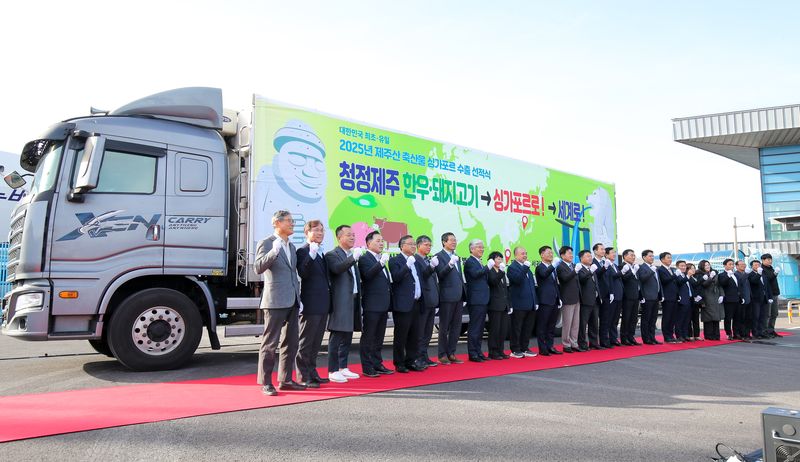
【Financial News, Jeju—Reporter Jeong Yong-bok】 Jeju pork accounted for 97.3% of South Korea's pork export value through September this year. Total exports of Jeju livestock products reached $3.29 million (about 4.4 billion won), 7.3 times the amount for the same period last year.
According to Jeju Special Self-Governing Province and the Korea International Trade Association on the 22nd, exports of Jeju livestock products from January to September this year totaled 173 tonnes. Export value rose by $2.84 million (about 3.8 billion won) from $450,000 (about 600 million won) in the same period last year.
That was also about 2.5 times the full-year export value of $1.32 million (about 1.7 billion won) last year. Exports of Jeju livestock products increased from $750,000 in 2023 to $1.03 million in 2024 and $1.32 million in 2025, and topped $3 million in just nine months this year.
By product, pork stood out for its share of national exports. Through September this year, Jeju pork accounted for $1.82 million, or 97.3%, of the $1.87 million (about 2.5 billion won) in national pork exports. By volume, 131 of the nationwide total of 135 tonnes came from Jeju.
Jeju chilled beef also accounted for 33.8% of the national export value, with $1.36 million (about 1.8 billion won) out of a total of $4.04 million (about 5.3 billion won). Jeju supplied 22 of the 58 tonnes exported nationwide.
Singapore was the market that drove export growth. Through September this year, exports to Singapore totaled $2.67 million (about 3.5 billion won), accounting for about 81% of all exports of Jeju livestock products. Exports to Hong Kong and Macau totaled $450,000 (about 600 million won), and shipments also went to Mongolia and the United Arab Emirates (UAE), among other markets.
The Singapore market opened after the two countries agreed to exports of Jeju-grown Korean beef and pork at the South Korea-Singapore summit on November 2 last year. The first shipment of 4.5 tonnes was loaded at Jeju Port on December 1 that year, and supplies to the local market have since expanded.
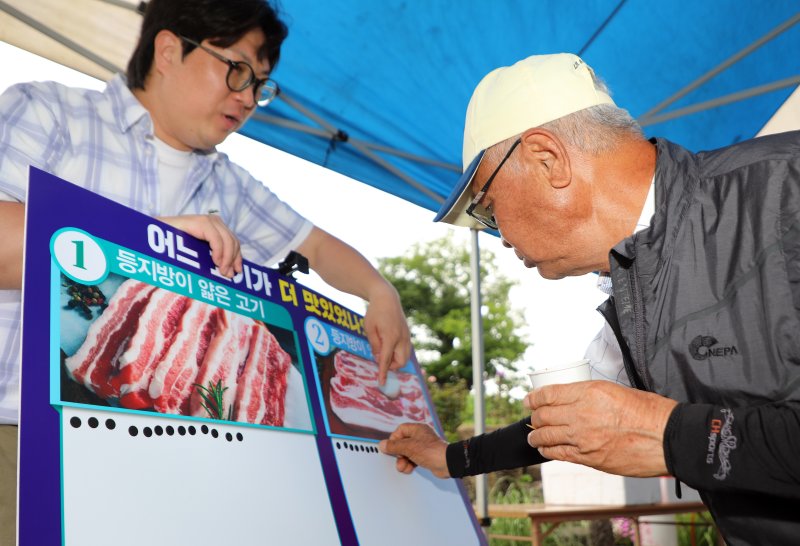
A key foundation for expanding exports is international recognition of livestock disease-control measures and compliance with importing countries' sanitary and quarantine standards. On May 29 last year, Jeju Province was first recognized by the World Organisation for Animal Health (WOAH) as an FMD-free zone where vaccination is practiced. The status was recertified at the 93rd WOAH General Session, held in Paris, France, this May.
FMD-free status in a zone where vaccination is practiced is granted to areas that maintain freedom from the disease through control measures meeting international standards, including vaccination and surveillance. This status has been an important foundation for meeting Singapore's quarantine requirements.
Export facilities have also expanded. Jeju now has nine facilities approved to export to Singapore: two slaughterhouses and seven processing plants. The number has grown through additional approval procedures from the four facilities first approved last November.
Jeju Province provides tailored consulting to businesses seeking to export overseas to help them obtain facility approval. It plans to maintain hygiene standards at existing export facilities while also expanding production and processing capacity in line with international standards.
However, with 81% of total export value concentrated in Singapore, diversifying export markets remains a challenge. Maintaining FMD-free status and ensuring hygiene management at export facilities are also key to sustaining exports.
Kim Yeong-jun, head of Jeju Province's Agriculture, Livestock and Food Bureau, said, “As exports of Jeju-grown Korean beef and pork have increased significantly, the importance of an export base that meets international animal-health and hygiene standards has also grown. We will support entry into overseas markets by maintaining FMD-free status in a stable manner and strengthening hygiene management at export facilities.”
[email protected] Jeong Yong-bok Reporter