Samsung C&T former and current employees receive suspended prison terms in first trial over inflated Gageodo breakwater costs
- Input
- 2026-10-22 16:48:51
- Updated
- 2026-10-22 16:48:51
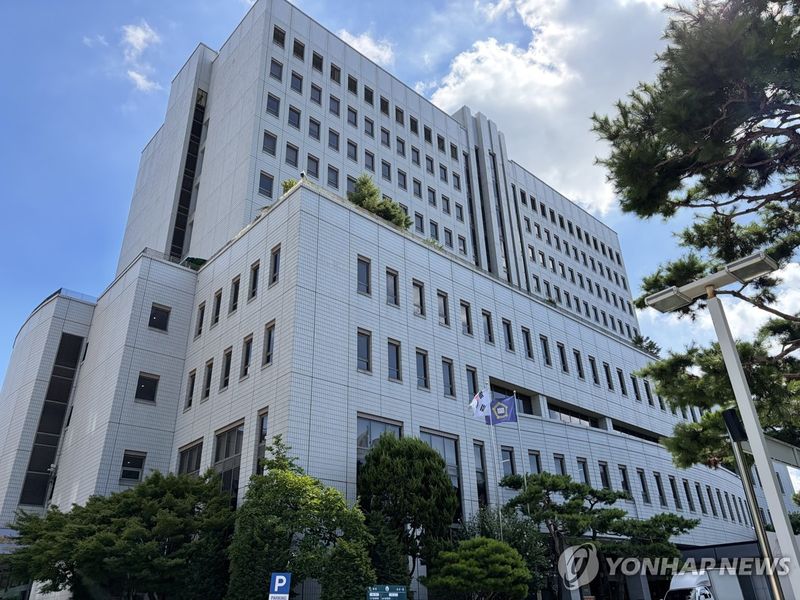
[Financial News] Former and current Samsung C&T employees who were indicted on charges of siphoning state funds by inflating construction costs for the “Gageodo Breakwater” project were all given suspended prison sentences in the first trial.
The 11th Criminal Division of Seoul Southern District Court, presided over by Judge Jang Chan, sentenced former and current Samsung C&T employees identified as Ko and Cho, along with Kim, an official at a design and supervision company, to three years in prison, suspended for five years. The other five defendants each received a sentence of two years and six months in prison, suspended for four years.
According to the Public Prosecution Office, they were indicted without detention in April 2023 on charges of misappropriating state funds by submitting to the Mokpo Regional Office of Oceans and Fisheries a design document that inflated the cost of ground improvement work from 19 billion won to 34.7 billion won. The work was part of a typhoon damage restoration project at Gageodo Port in Shinan County, Jeonnam-Gwangju Special Metropolitan City, around March 2016.
The court noted that “in publicly funded construction projects, separating the commissioning of design and construction is intended to ensure transparency, appropriate construction costs and budget savings through mutual checks between the designer and the contractor.” It added: “Taking advantage of the fact that Samsung C&T, the contractor, came to enter into a contract with the designer for revised detailed design services in place of the ordering agency due to the agency’s circumstances, it colluded with the designer to artificially inflate the design amount. By exhausting the entire budget allocated for the project, it wrongfully misappropriated national funds drawn from the public’s precious tax revenues.”
The court also explained that Samsung C&T received about 34.7 billion won in construction payments, including value-added tax, from the ordering agency, while only about 12.7 billion won was paid in direct costs to subcontractors and barge rental companies. It rebuked the defendants, saying, “They have consistently sought to evade responsibility, vehemently denying the crime, among other things.”
The court found that the defendants removed from the design documents detailed cost calculations showing such items as the number of workdays and surcharge rates, preventing the ordering agency from determining them. It found them guilty of fraud and obstruction of the execution of official duties by deceptive means, saying that officials at the ordering agency would not have signed an amended contract or paid the construction costs had they known the design documents were false and manipulated.
However, the court acquitted them of fraud under the Specific Economic Crimes Act and instead applied the general fraud offense. Its reasoning was that, since the construction was actually completed, the amount misappropriated should be the unjustified increase beyond legitimate construction costs, not the full 34.7 billion won in payments received. The court said the amount could not be calculated precisely based solely on the evidence submitted by prosecutors and did not accept the difference between the payments received and the direct costs as the amount misappropriated.
The court also found that the offense stemmed from a longstanding practice in the construction industry of bidding with unreasonably low construction costs and then seeking to make up the losses through improper means, such as false estimates during design changes or additional work. In determining the sentences, it also took into account that the ordering agency had asked Samsung C&T to enter into the design-services contract in its place, which in part encouraged collusion between the contractor and the designer.
After delivering the sentences, the court separately explained why it chose suspended sentences rather than immediate imprisonment. It said that 10 years had already passed since the offense and that the ill-gotten gains had gone to the company, not the individual defendants. The court stated, “It would be excessive to impose prison sentences now on defendants who carried out their work under the company’s direction.”
Earlier, the Korea Coast Guard (KCG) investigated the allegations and referred the case to the Prosecution Service in August 2020. After conducting supplementary investigations, including raids in 2022 on Samsung C&T’s headquarters and other companies involved, prosecutors indicted the defendants.
[email protected] Seong-hyun Park Reporter